 Save
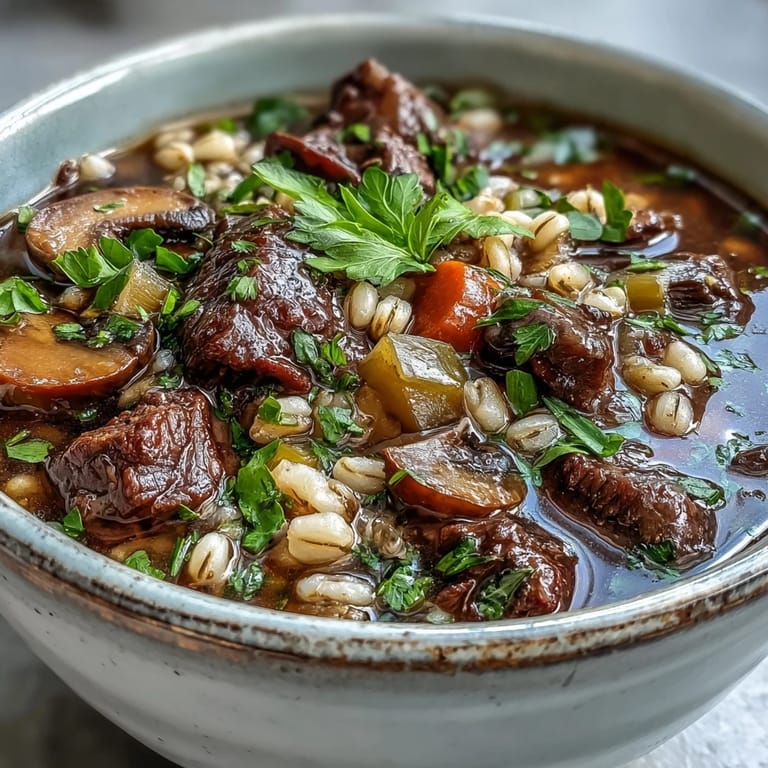
Save There's something about a pot of beef and barley soup simmering on the stove that makes a kitchen feel like home, especially when the weather turns cold and you're craving something that sticks to your ribs. My neighbor actually introduced me to this soup years ago when she brought a container over after my daughter was born, and I remember being struck by how the barley added this unexpected chewiness that made each spoonful interesting. The beef was so tender it practically melted, and the mushrooms gave it this deep, earthy complexity that canned soup could never touch. I've been making my own version ever since, tweaking it slightly each time until it became exactly what my family reaches for when we need comfort.
I made this soup for my book club last winter, and honestly, I was nervous because everyone there seems to have very particular tastes. But something magical happened when they tasted it—the conversation just kept flowing, bowls kept getting refilled, and someone asked for the recipe before they'd even finished their first serving. That's when I realized this soup does something special: it brings people together without requiring you to hover over the stove all evening.
Ingredients
- Beef stew meat (500 g / 1.1 lbs, cut into 1-inch cubes): Look for meat with some marbling because those fat lines will render into the broth and keep everything from tasting dry—avoid the leanest cuts for this reason.
- Pearl barley (100 g / 1/2 cup, rinsed): Rinsing it under cool water removes some of the starch so your soup doesn't end up cloudy and gummy by the second day.
- Onion (1 large, diced): This is your flavor foundation, so don't skip the step of cooking it until it's soft and slightly golden.
- Carrots (2 medium, sliced): They add natural sweetness that balances the umami from the beef and mushrooms.
- Celery (2 stalks, sliced): This might seem like a background player, but it's building the aromatic base that makes people ask what smells so good.
- Mushrooms (250 g / 9 oz cremini or white, sliced): Don't wash them under water because they'll get soggy—just wipe them with a damp paper towel and slice them on an angle for better browning.
- Garlic (2 cloves, minced): Mince it fine and add it right before the beef goes back in so it doesn't burn and turn bitter.
- Potato (1 medium, peeled and diced): This adds body and helps thicken the soup naturally without cream or flour.
- Diced tomatoes (1 can / 400 g / 14 oz with juices): Don't drain them because that juice carries acidity that brightens all the heavy flavors.
- Beef broth (1.5 L / 6 cups): Use good quality broth—the kind that gels when it cools, which means it's made from real bones and collagen.
- Bay leaf (1): This subtle flavor marker is easy to forget but makes a noticeable difference, and remember to fish it out before serving.
- Dried thyme (1 tsp): This herb is forgiving and adds an almost woody undertone that feels sophisticated.
- Dried parsley (1 tsp): It softens the intensity of the other herbs and adds a bit of brightness.
- Salt and black pepper: Season at the very end when you can taste how everything has come together.
- Olive oil (2 tbsp): Use something you don't mind heating to medium-high heat.
Tired of Takeout? 🥡
Get 10 meals you can make faster than delivery arrives. Seriously.
One email. No spam. Unsubscribe anytime.
Instructions
- Brown the beef properly:
- Heat your oil until it shimmers, then add the beef in a single layer and resist the urge to move it around—let it sit for a minute or two so it develops that golden crust that will deepen all the flavors. You'll hear it sizzle differently when it's ready to flip, and that sound is your cue.
- Build your flavor base:
- After removing the beef, the pot still has all those browned bits stuck to the bottom, and when you add the onions, carrots, and celery, they'll start scraping those up as they soften. This is the moment where your soup begins to taste like something special rather than just ingredients in water.
- Toast the mushrooms:
- Let them cook undisturbed for a couple minutes so they release their moisture and begin to brown at the edges—this is when they lose their raw, squeaky texture and become meaty and substantial.
- Wake up the garlic:
- One minute is really all you need, just enough time to smell that pungent, warm aroma fill the kitchen without letting it burn and turn acrid.
- Bring everything together:
- Return the beef, add the potatoes, tomatoes, barley, broth, and herbs, then give it a good stir so nothing is stuck to the bottom. This is when you realize how much food is actually in that pot.
- Simmer low and slow:
- Once it reaches a boil, drop the heat way down and cover it partially so steam can escape but the liquid doesn't evaporate too quickly. Set a timer for an hour but don't stress about checking it constantly.
- Check for doneness:
- The barley should be tender but still have a slight chew, and the beef should fall apart easily when you press it with your spoon. If either needs more time, simmer uncovered for another 15 to 20 minutes so the broth can reduce slightly and concentrate.
- Season and serve:
- This is your moment to taste and adjust—add salt slowly because broth is already salty, and crack fresh pepper over top. Remember to fish out that bay leaf, and serve it steaming in bowls where people can admire all the good stuff inside.
 Save
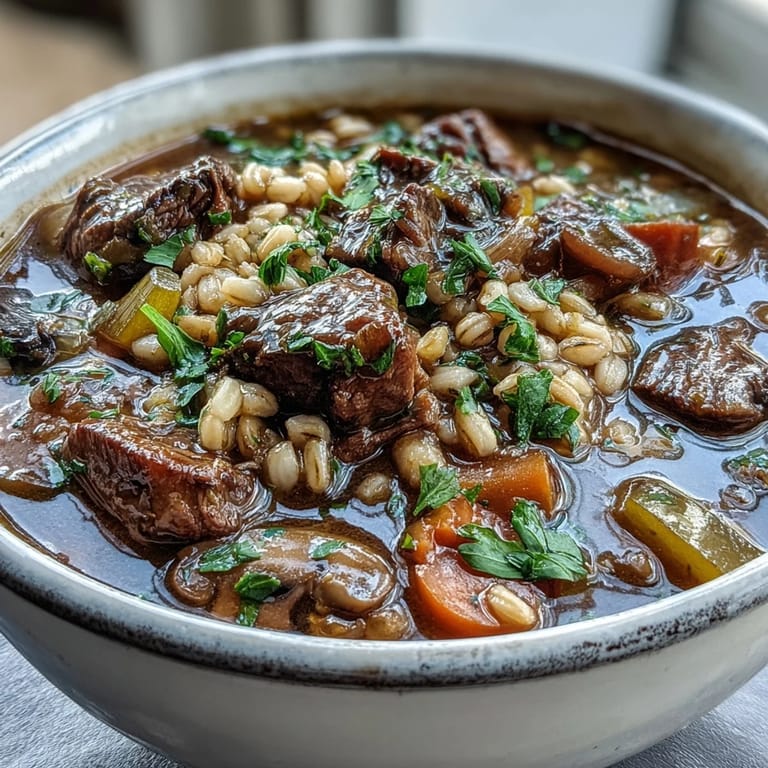
Save One evening I made this soup for my sister who was going through a rough breakup, and she sat at my kitchen counter with a bowl cradled in her hands, not really talking but just breathing in the steam. After a few quiet minutes, she said it tasted like the kind of food that makes you believe things will be okay, and I understood exactly what she meant—that's when comfort food stops being about hunger and becomes about healing.
Variations That Work
If you want to dress this up or dial it down depending on what's happening in your life, there are a few directions you can take it. A splash of dry red wine added after browning the beef adds a subtle complexity and makes it feel more like something you'd serve at a dinner party rather than just a weeknight meal. For a lighter version, swap the beef broth for chicken or vegetable broth, which will let the mushroom and barley flavors shine through more brightly without that heavy beef richness.
Shortcuts and Speed Moves
Sometimes you want the soup but don't have ninety minutes, and that's totally valid—use ground beef instead of stew meat and you'll cut the cooking time in half because there's no waiting for chunks to become tender. You can also add fresh kale or spinach in the last ten minutes if you want something green in there without it turning into mush, and honestly, a handful of fresh herbs at the end wakes the whole thing up in a way dried herbs can't quite do.
Storage and Next-Day Magic
This soup actually tastes noticeably better the next day because the flavors have had time to marry and deepen, and the barley continues absorbing all that brothy goodness. Let it cool to room temperature before putting it in the fridge, and it'll keep for about four days—or you can freeze it in portions and pull it out on mornings when you need something warm and sustaining.
- If it thickens too much when chilled, just stir in a bit of broth or water when you reheat it until it's back to the consistency you like.
- Don't reheat it at full blast—medium heat on the stovetop lets it warm through gently without the barley turning mushy.
- Fresh parsley stirred in right before serving makes even day-four soup taste like you just made it.
 Save
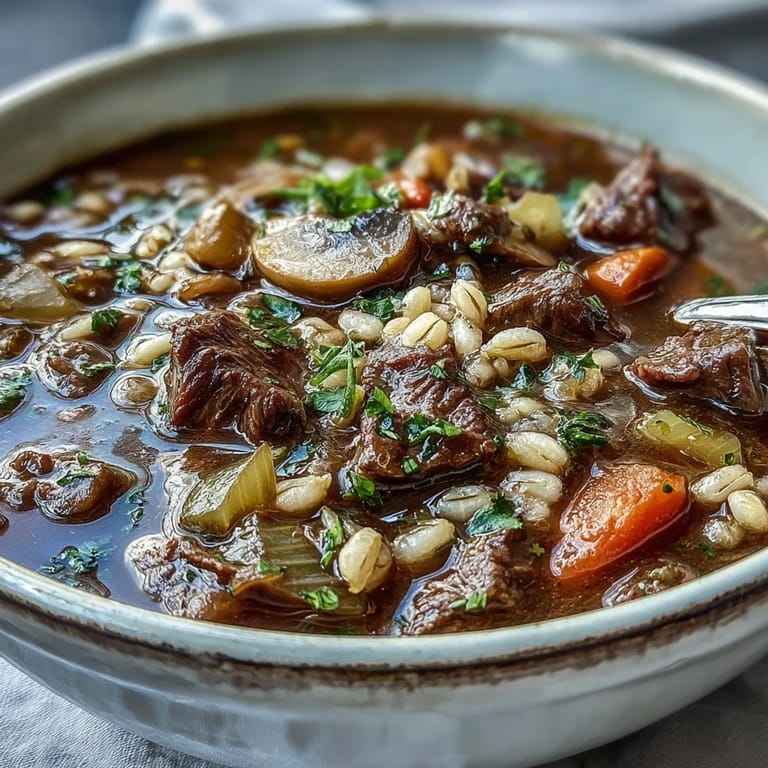
Save This soup has become my go-to when I want to feel like I'm taking care of people without the stress of an elaborate meal. There's real generosity in a bowl of this, and that's why it keeps finding its way onto my table.
Your Questions Answered
- → How long does it take to make this soup?
The total time is approximately 1 hour and 50 minutes, including 20 minutes of preparation and 1 hour and 30 minutes of cooking time to tenderize the beef and barley.
- → Can I make this soup ahead of time?
Yes, this soup actually tastes better the next day as flavors continue to develop. Store in the refrigerator for up to 3-4 days or freeze for up to 3 months.
- → What cuts of beef work best?
Beef stew meat or chuck roast cut into cubes works well. These tougher cuts become tender and flavorful during long simmering. For a quicker version, lean ground beef can be substituted.
- → Is pearl barley gluten-free?
No, pearl barley contains gluten. If you need a gluten-free option, substitute with rice, quinoa, or additional vegetables like diced potatoes or turnips.
- → Can I use different vegetables?
Absolutely. Feel free to add leafy greens like kale or spinach in the last 10 minutes, swap potatoes for turnips, or add parsnips for extra sweetness and nutrition.
- → How do I store leftovers?
Cool completely and refrigerate in an airtight container for 3-4 days. The barley will continue absorbing liquid, so you may need to add more broth when reheating. Freezing works well for up to 3 months.