 Save
Save The steam rising from the pot reminded me why I started making these bowls every Sunday. My kitchen would fill with the earthy smell of miso dissolving into broth, and I'd stand there stirring, watching the paste bloom into clouds of umami. It wasn't fancy, but it felt like I was doing something right. Sometimes I'd add extra ginger just because the smell made me feel awake. These bowls became my reset button after long weeks.
I made this for a friend who was convinced she didn't like miso, and she finished the entire bowl without saying a word. When she finally looked up, she asked if I'd been hiding this recipe from her on purpose. I hadn't, I just never thought to share it until that night. Now she texts me every few weeks asking if it's miso bowl season, even though I make it year round. It's the kind of dish that wins people over quietly, one slurp at a time.
Ingredients
- Boneless, skinless chicken thighs or breasts: Thighs stay juicier during grilling, but breasts work if you watch the heat and don't overcook them.
- White miso paste: This is the soul of the dish, salty and sweet and fermented in the best way, it dissolves into the broth like magic.
- Low sodium soy sauce: Keeps the saltiness in check so the miso can shine without turning the broth into a salt bomb.
- Rice vinegar: Adds a gentle tang to the marinade that brightens the chicken without making it sour.
- Honey or maple syrup: Balances the savory with just enough sweetness, and helps the chicken caramelize on the grill.
- Fresh ginger: Grate it fine so it melts into the marinade, leaving warmth without fibrous bits.
- Garlic: Minced small so it clings to the chicken and perfumes the whole kitchen when it hits the hot pan.
- Toasted sesame oil: A few drops go a long way, nutty and rich, it makes everything taste more intentional.
- Soba noodles or whole wheat spaghetti: Soba has that earthy buckwheat flavor, but whole wheat spaghetti works in a pinch and holds the broth just as well.
- Low sodium chicken broth: The base of your soup, choose a good one because it matters more than you think.
- Shiitake mushrooms: They add a meaty texture and deep umami that makes the broth feel fuller.
- Carrot: Julienned thin so they cook fast and add color and a touch of sweetness.
- Baby bok choy: Halved so the leaves wilt and the stems stay crisp, giving you two textures in one vegetable.
- Snow peas: Snap them in at the end so they stay bright green and crunchy.
- Baby spinach or kale: Stir it in off the heat and it wilts perfectly without turning to mush.
- Soft boiled eggs: Creamy yolks that break into the broth and make everything richer, totally optional but worth it.
- Scallions: Sliced thin for a sharp, fresh bite that cuts through the richness.
- Toasted sesame seeds: A little crunch and nuttiness sprinkled on top makes each spoonful more interesting.
- Fresh cilantro or parsley: Adds brightness and a pop of green, use whichever you have or like better.
- Nori strips: Optional, but they add a subtle ocean flavor that feels authentic.
- Chili oil or Sriracha: For those who like heat, a drizzle wakes up every bite.
Tired of Takeout? 🥡
Get 10 meals you can make faster than delivery arrives. Seriously.
One email. No spam. Unsubscribe anytime.
Instructions
- Mix the marinade:
- Whisk the miso, soy sauce, vinegar, honey, ginger, garlic, and sesame oil in a shallow bowl until it's smooth and glossy. Make sure the miso dissolves completely or you'll get salty pockets on the chicken.
- Marinate the chicken:
- Turn the chicken in the marinade until every piece is coated, then cover and refrigerate for at least 30 minutes. If you have time, let it sit overnight so the flavors really sink in.
- Cook the noodles:
- Boil the soba according to the package, usually about 4 to 5 minutes, then drain and rinse under cold water to stop the cooking. Toss with a little sesame oil so they don't clump together while you finish everything else.
- Grill the chicken:
- Heat your grill pan or skillet until it's really hot, then cook the chicken for 4 to 5 minutes per side until it hits 165 degrees inside. Let it rest for 5 minutes before slicing so the juices stay in the meat.
- Build the broth:
- Bring the chicken broth and water to a simmer, then whisk in the remaining miso paste until it dissolves into the liquid. Don't let it boil hard or the miso can get grainy.
- Add the vegetables:
- Drop in the mushrooms, carrots, bok choy, and snow peas, then simmer for 3 to 4 minutes until tender but still crisp. Stir in the spinach or kale off the heat and let it wilt gently.
- Assemble the bowls:
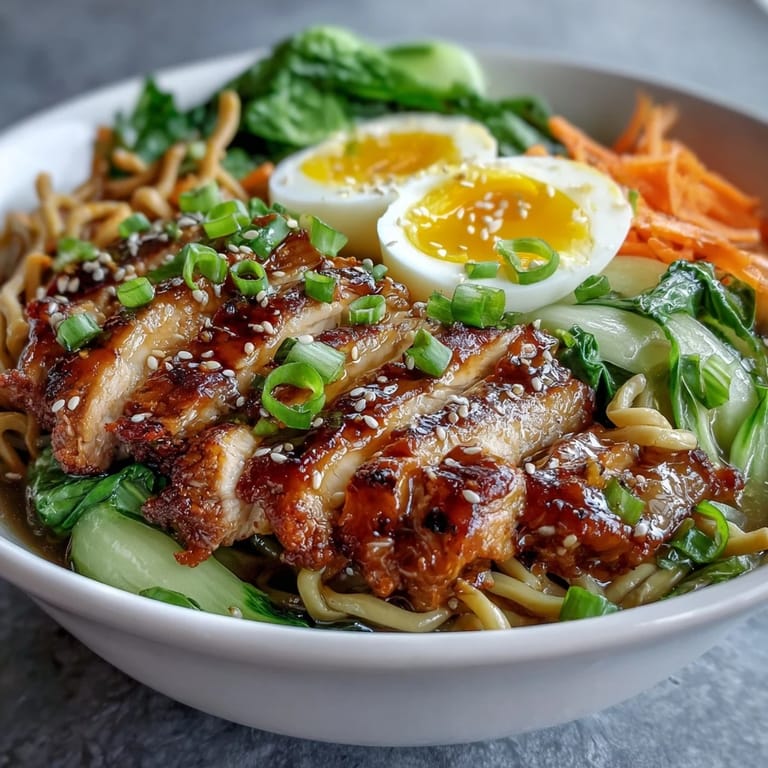
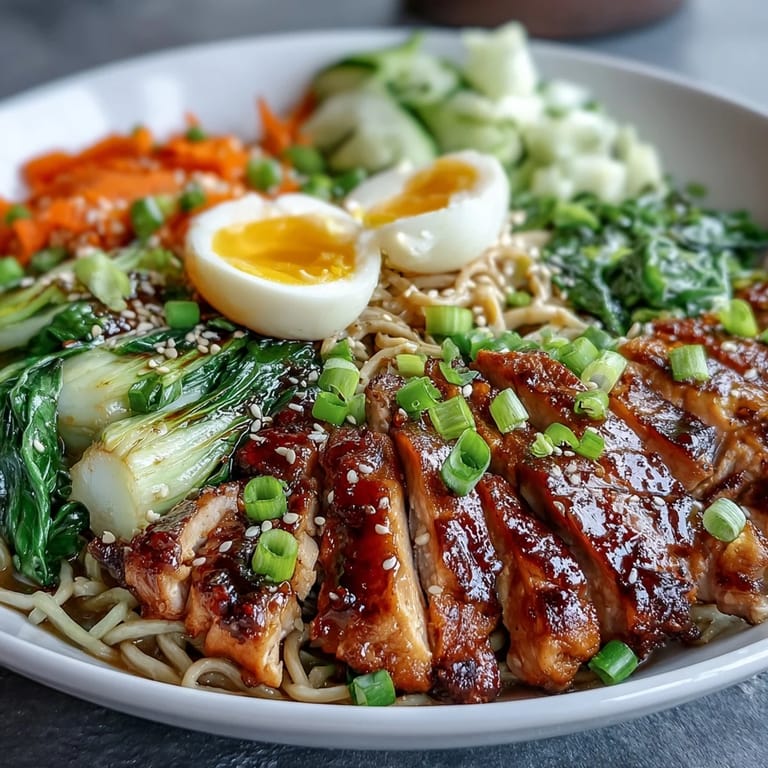
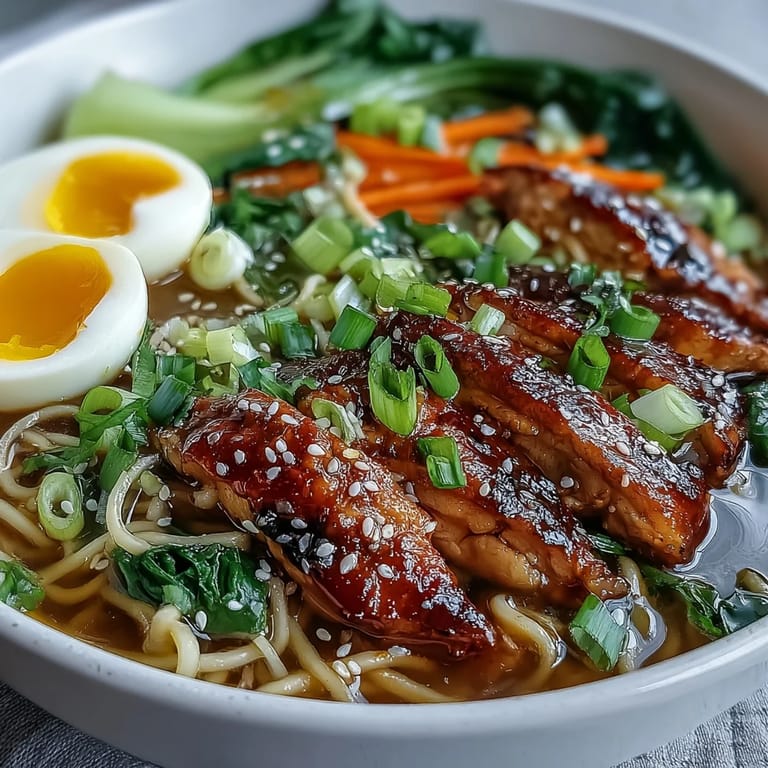
- Divide the noodles between two bowls, arrange the sliced chicken on top, then ladle the hot broth and vegetables over everything. The heat from the broth will warm the noodles back up perfectly.
- Top and serve:
- Add the soft boiled egg halves, scallions, sesame seeds, cilantro, and nori strips, then drizzle with chili oil if you want. Serve immediately while the broth is steaming hot.
 Save
Save One winter night, I made these bowls for myself and ate them curled up on the couch with the TV on low. The broth was so warm and savory that I didn't want to finish it, I just kept sipping and watching the steam rise. It wasn't a special occasion, just a Tuesday, but it felt like I was taking care of myself in a way that mattered. That's when I realized this recipe wasn't just about dinner, it was about creating a moment of comfort whenever I needed it.
Choosing Your Protein
Chicken thighs have more fat and flavor, so they stay tender even if you overcook them a little. Breasts are leaner and cook faster, but they can dry out if you're not careful with the heat. I've also swapped in extra firm tofu, pressed and marinated the same way, and it soaks up the miso beautifully. If you're feeling adventurous, try thinly sliced pork tenderloin or even shrimp for a lighter twist. The marinade works with almost anything, so use what you have or what sounds good.
Customizing Your Vegetables
I've thrown in broccoli florets, edamame, snap peas, and even thinly sliced bell peppers when I'm cleaning out the fridge. The key is to add harder vegetables first so they have time to soften, then stir in the delicate greens at the end. Sometimes I'll use frozen mixed vegetables if I'm in a rush, and they work just fine. Don't overthink it, this recipe is forgiving and flexible. Whatever you add, just make sure it's cut small enough to eat with chopsticks or a spoon.
Storing and Reheating
Keep the broth, noodles, and toppings in separate containers so nothing gets soggy overnight. When you're ready to eat, reheat the broth on the stove until it's steaming, then pour it over the noodles and chicken in your bowl. The heat will bring everything back to life without overcooking the vegetables or turning the noodles to mush.
- Add fresh toppings like scallions and sesame seeds right before serving for the best texture.
- If the broth tastes a little flat the next day, stir in a tiny bit more miso or a splash of soy sauce.
- Leftover chicken is great sliced cold over a salad or tucked into a wrap for lunch.
 Save
Save This bowl has become my go to when I want something nourishing without a lot of fuss. It's warm, filling, and tastes like I spent hours in the kitchen even though I didn't.
Your Questions Answered
- → Can I make this dish vegetarian?
Yes, simply replace the chicken with extra-firm tofu and use vegetable broth instead of chicken broth for a delicious plant-based version.
- → What type of noodles work best?
Soba noodles are ideal for their nutty flavor and texture, but whole wheat spaghetti or gluten-free noodles work well as substitutes.
- → How long should I marinate the chicken?
Marinate for at least 30 minutes, though overnight marination will develop deeper, more complex flavors. Bring to room temperature before cooking.
- → Can I prepare components ahead of time?
Yes, marinate the chicken up to 8 hours in advance and prep vegetables the day before. Store broth separately from noodles to prevent sogginess.
- → What vegetables can I substitute?
Broccoli, edamame, snap peas, or any quick-cooking vegetables work wonderfully. Just adjust cooking times to maintain a crisp-tender texture.
- → How do I make this gluten-free?
Use 100% buckwheat soba noodles or certified gluten-free noodles, and replace soy sauce with tamari to make the dish completely gluten-free.