 Save
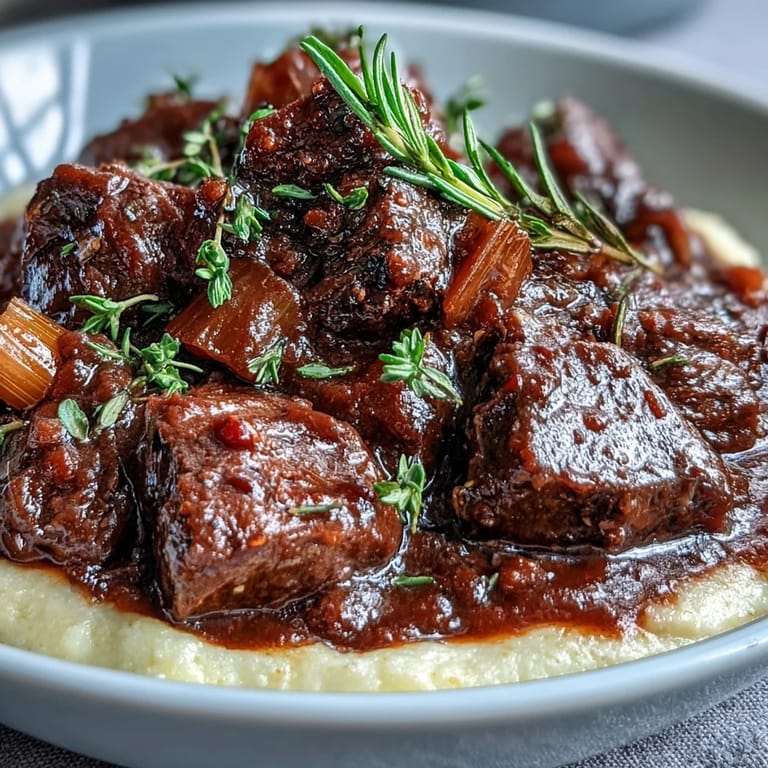
Save The first time I opened a bottle of sloe gin for cooking instead of sipping, my partner raised an eyebrow from across the kitchen. It felt almost rebellious to pour that deep purple liquid into a pot of browned venison, but the moment it hit the pan and filled the room with sweet, wild berry steam, I knew something special was happening. This stew became my answer to those bone-cold evenings when only something slow-cooked and soul-warming will do. The venison turns so tender it practically dissolves on your tongue, and the polenta underneath soaks up every bit of that rich, slightly fruity gravy.
I made this for a small dinner party on a snowy February night, and everyone went quiet after the first bite. One friend, who usually talks through entire meals, just nodded slowly and reached for seconds before anyone else had finished their firsts. The juniper berries and thyme made the whole dish smell like a winter forest, and the polenta, buttery and soft, was the perfect contrast to the hearty meat. It is the kind of meal that makes people linger at the table long after the plates are empty.
Ingredients
- Venison shoulder or stewing venison (800 g): This cut becomes incredibly tender with slow cooking and has a deep, earthy flavor that stands up beautifully to bold ingredients like sloe gin and juniper.
- Olive oil (2 tbsp): Essential for browning the meat properly and building that foundational caramelized flavor in the bottom of the pan.
- Onion, carrots, and celery: The classic aromatic base that sweetens and deepens as it cooks down, creating a rich backdrop for the stew.
- Garlic (2 cloves): Adds a warm, savory punch that ties all the vegetables together.
- Tomato paste (2 tbsp): Concentrates umami and helps thicken the sauce while adding a subtle tang.
- Sloe gin (150 ml): The star ingredient that brings a wild, slightly tart berry sweetness and a gorgeous color to the stew.
- Beef or game stock (400 ml): Provides the savory liquid base and amplifies the meaty richness of the venison.
- Redcurrant jelly (1 tbsp): A traditional British touch that balances the savory with a hint of fruity sweetness.
- Bay leaves and thyme: These herbs infuse the stew with woodsy, aromatic warmth that smells like a countryside kitchen.
- Juniper berries (1 tsp, crushed): They add a piney, floral note that pairs naturally with game meat.
- Polenta (150 g): Quick-cooking or traditional, it becomes creamy and comforting, the perfect vehicle for soaking up the stew.
- Whole milk and water: Cooking polenta in milk instead of all water makes it luxuriously creamy and rich.
- Butter and Parmesan (40 g and 50 g): Stirred in at the end, they transform polenta into something silky, savory, and irresistible.
Tired of Takeout? 🥡
Get 10 meals you can make faster than delivery arrives. Seriously.
One email. No spam. Unsubscribe anytime.
Instructions
- Brown the venison:
- Heat the olive oil in a large, heavy-based casserole over medium-high heat and brown the venison cubes in batches, making sure not to crowd the pan. This step builds deep flavor and color, so let each piece get a good sear before setting it aside.
- Cook the vegetables:
- In the same pan, add the onion, carrots, and celery, scraping up any browned bits stuck to the bottom. Cook for 5 to 7 minutes until softened, then stir in the garlic and tomato paste for another minute until fragrant.
- Deglaze with sloe gin:
- Return the venison to the pan and pour in the sloe gin, letting it bubble and reduce slightly for about 2 minutes. The smell at this stage is intoxicating, sweet and sharp and full of promise.
- Simmer the stew:
- Add the stock, redcurrant jelly, bay leaves, thyme, and crushed juniper berries, then season with salt and pepper. Bring everything to a gentle simmer, cover, and cook on low heat for 2 hours, stirring occasionally until the venison is fall-apart tender.
- Make the polenta:
- While the stew is cooking, heat the milk and water in a saucepan until just simmering, then gradually whisk in the polenta. Stir constantly over low heat for 5 to 10 minutes until thick and creamy, then stir in the butter and Parmesan and season with salt.
- Serve:
- Remove the bay leaves and thyme sprigs from the stew, then ladle the rich venison and gravy over generous portions of creamy polenta. Garnish with fresh parsley or thyme if you like.
 Save
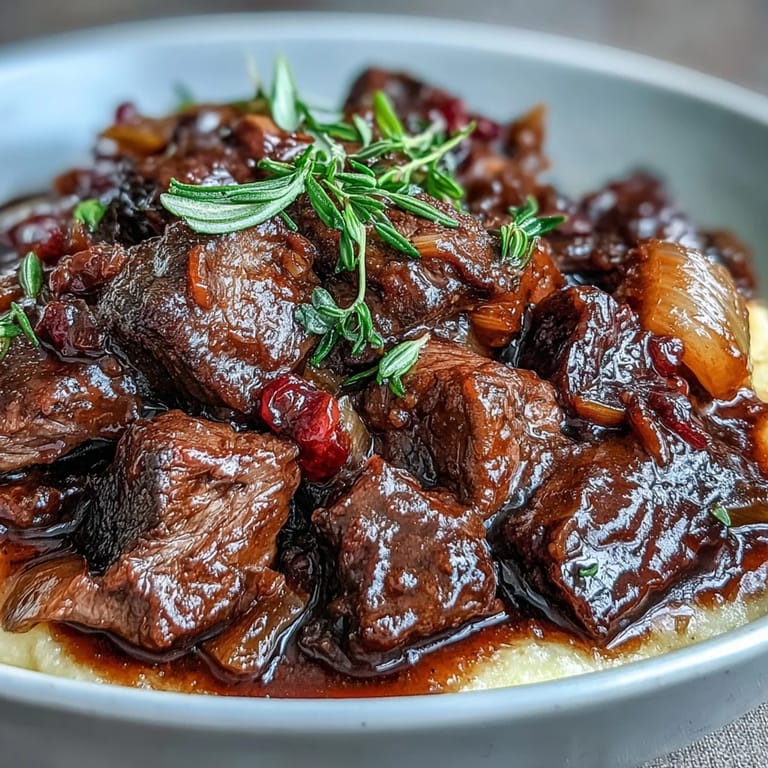
Save There is a moment, about halfway through the cooking time, when the kitchen smells so good that you start checking the pot every ten minutes even though you know it is not ready. That anticipation is part of the magic of this dish. When I finally served it that first time, watching the polenta soak up the dark, glossy gravy, I realized this was the kind of recipe I would make over and over, not just because it tastes incredible, but because it turns an ordinary winter evening into something memorable.
Choosing Your Venison
Venison shoulder or stewing cuts are ideal because they have enough connective tissue to break down into tender, flavorful bites during slow cooking. If you can only find venison steaks, cut them into chunks but know they may cook faster and require less time. Ask your butcher for advice, they often have offcuts perfect for stewing that are more affordable and just as delicious. Wild venison has a stronger, gamier flavor than farmed, so adjust your seasoning and consider adding a splash more sloe gin or redcurrant jelly to balance it.
Making Polenta Foolproof
The key to smooth, creamy polenta is whisking it into simmering liquid gradually and stirring almost constantly while it cooks. I learned this the hard way after serving a bowl with stubborn lumps that no amount of stirring could fix. Using a mix of milk and water instead of all water makes it taste richer and more luxurious. If it thickens too much, whisk in a little extra warm milk or stock until it reaches the consistency you love. Leftover polenta sets firm in the fridge and can be sliced and grilled the next day for a completely different texture.
Storing and Reheating
This stew tastes even better the next day after the flavors have had time to meld together overnight. Store it in an airtight container in the fridge for up to three days, or freeze it for up to three months. Reheat gently on the stovetop, adding a splash of stock or water if it has thickened too much. Polenta does not reheat as well and is best made fresh, but you can keep it warm in a low oven if you need to hold it for a little while.
- If freezing, leave out the polenta and make it fresh when you reheat the stew.
- Let the stew cool completely before transferring it to freezer-safe containers to prevent ice crystals.
- Label everything with the date so you remember when you made it, future you will be grateful.
 Save
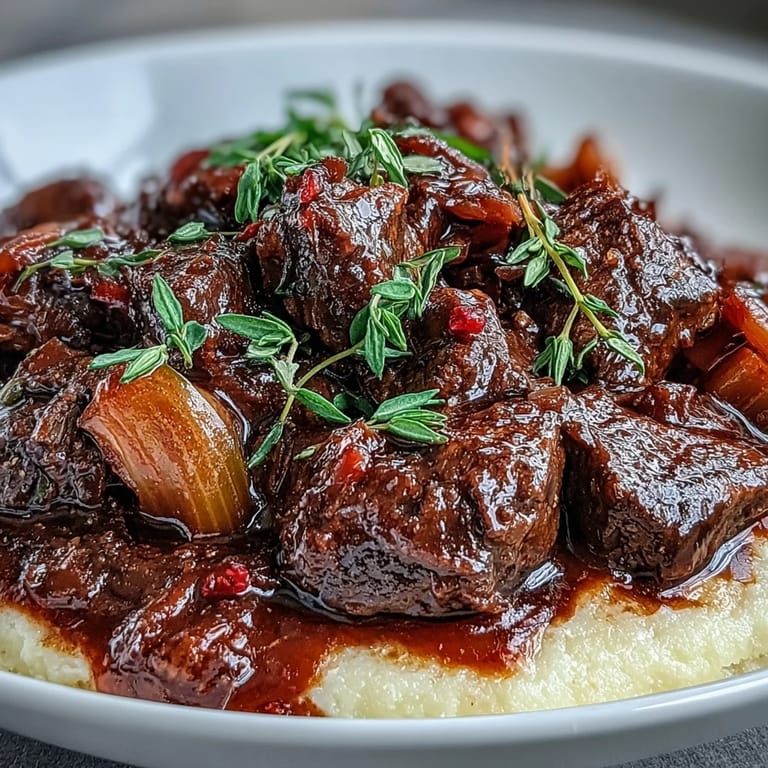
Save This is the kind of dish that makes you feel like a proper cook, even if you are still learning. Serve it to people you love on a cold night, and watch them settle into their chairs with satisfied sighs.
Your Questions Answered
- → Can I substitute the venison with another meat?
Yes, beef chuck or lamb shoulder work well as alternatives. Both have similar texture and benefit from slow braising. Adjust cooking time as needed based on the cut's tenderness.
- → What can I use instead of sloe gin?
Port, blackberry liqueur, or a good quality red wine make excellent substitutes. Each brings its own character while maintaining the dish's depth and richness.
- → Can I make this ahead of time?
Absolutely. The stew actually improves when made a day ahead as flavors meld together. Reheat gently and prepare fresh polenta just before serving for best results.
- → How do I prevent lumps in the polenta?
Add polenta gradually while whisking continuously into simmering liquid. Never add it all at once. Maintain steady heat and keep stirring throughout cooking for smooth, creamy results.
- → Is this dish freezer-friendly?
The venison stew freezes beautifully for up to three months. Cool completely before freezing. Polenta is best made fresh, though you can prepare it ahead and reheat with extra milk or butter.
- → What wine pairs best with this dish?
Full-bodied red wines like Shiraz, Cabernet Sauvignon, or Malbec complement the rich venison perfectly. Their robust tannins balance the meat's gamey flavors and the sweet notes from the sloe gin.