 Save
Save My uncle arrived from Riyadh one winter with a small jar of loomi tucked into his suitcase, insisting we needed to make proper kabsa. I'd eaten it at weddings before, but never understood the magic until he walked me through it that afternoon—how the spices bloom when they hit the hot oil, how the meat releases its richness into the broth. That single meal changed how I cooked rice forever.
I made this for my daughter's tenth birthday dinner, and she asked for seconds before the first bite was finished. Her friends went quiet when they tasted it—that particular kind of quiet that means something unexpected just happened on their tongue. That's when I realized kabsa isn't just a recipe; it's how you say 'you matter' in rice and spice.
Ingredients
- Bone-in lamb or chicken pieces, 1 kg: The bones give the broth its deep, savory foundation—don't skip them for boneless cuts.
- Vegetable oil, 1 tbsp: Just enough to coax color from the onions without greasing the dish.
- Large onion, finely sliced: Slice thin and patient; golden onions are the bridge between raw and cooked.
- Garlic, 3 cloves minced: Add after the onion so it blooms without burning.
- Ground cumin, 2 tsp: The backbone—warm, earthy, unmistakably itself.
- Ground coriander, 2 tsp: Subtle and slightly citrusy; it lifts everything around it.
- Ground cinnamon, 1 ½ tsp: A whisper of sweetness that shouldn't announce itself.
- Ground black pepper, 1 ½ tsp: More than usual; it adds bite and balance to the warmth.
- Ground turmeric, 1 tsp: Color and earthiness, but measure carefully or it overwhelms.
- Ground cardamom, 1 tsp: The spice that makes people ask what that flavor is—don't tell them, just smile.
- Ground cloves, ½ tsp: A pinch is all you need; they're bold and persistent.
- Ground allspice, ½ tsp: It smooths the rough edges and brings harmony.
- Dried bay leaves, 2: Remove them at the end—they're flavor workers, not for eating.
- Dried black lime (loomi), 1 pierced: Optional but essential for authenticity; the sourness balances the sweetness of raisins.
- Medium tomatoes, 2 chopped: They break down into the broth, adding body and slight acidity.
- Medium carrot, grated: It softens into sweetness and disappears visually but not tastefully.
- Basmati rice, 3 cups rinsed and soaked: Soaking matters—it lets the grains separate and cook evenly.
- Chicken or lamb stock, 5 cups: Homemade is better, but good quality matters more than homemade.
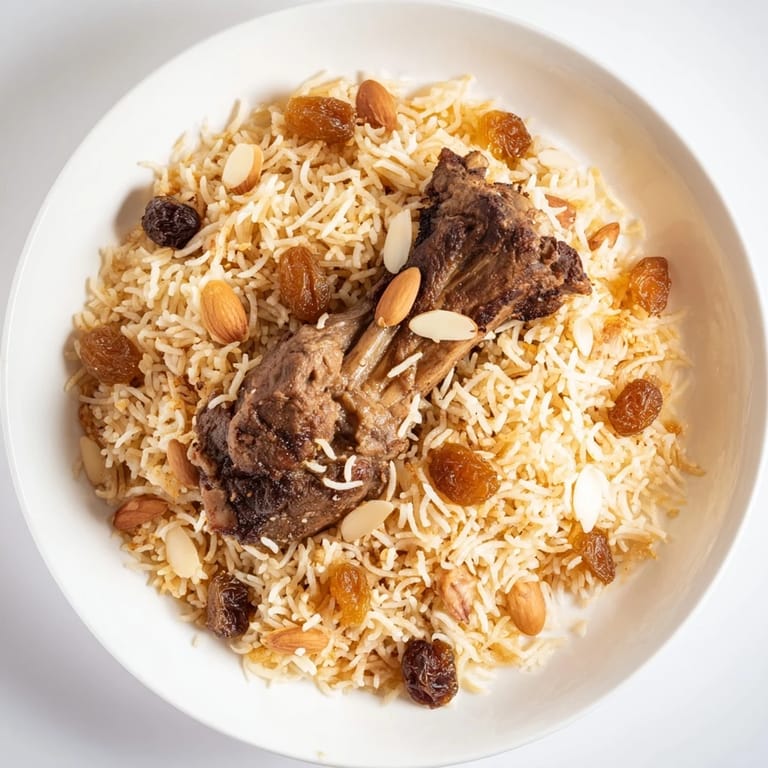
- Golden raisins, ½ cup: Their sweetness is the counterpoint to all that spice and meat richness.
- Slivered almonds, ½ cup toasted: Toast them yourself if you can—the difference is quiet but real.
- Fresh parsley, ¼ cup chopped (optional): Green and bright at the end, a small kindness.
- Salt, to taste: Added twice—once to the broth, again at the very end.
Tired of Takeout? 🥡
Get 10 meals you can make faster than delivery arrives. Seriously.
One email. No spam. Unsubscribe anytime.
Instructions
- Heat and caramelize:
- Warm the oil until it moves easily in the pan, then add your thin onion slices. Let them soften and turn golden at the edges—this takes patience, about 5 minutes, and it's worth every second because this is where the flavor foundation begins.
- Add aromatics:
- Stir in the minced garlic and let it wake up in the hot oil for just one minute. You'll smell it immediately, sharp and alive.
- Brown the meat:
- Push the meat into the pan and let it sit undisturbed for a moment before stirring. You're not just cooking it; you're building a crust that holds flavor.
- Toast the spices:
- This moment matters—pour in all your spices at once, stirring constantly for about a minute. The kitchen will smell like a souk, and you'll know you're doing it right.
- Add aromatics again:
- The tomatoes and grated carrot go in now, and they'll simmer with the spices for a few minutes, softening and releasing their sweetness into the building sauce.
- Build the broth:
- Pour in your stock and bring everything to a boil, then lower the heat and cover. This is where the meat becomes tender—let it do its quiet work for 35 to 40 minutes if using chicken, closer to an hour for lamb.
- Separate meat from broth:
- Carefully lift out the cooked meat and set it somewhere warm while you tend to the rice. The broth is now seasoned and rich.
- Add the rice:
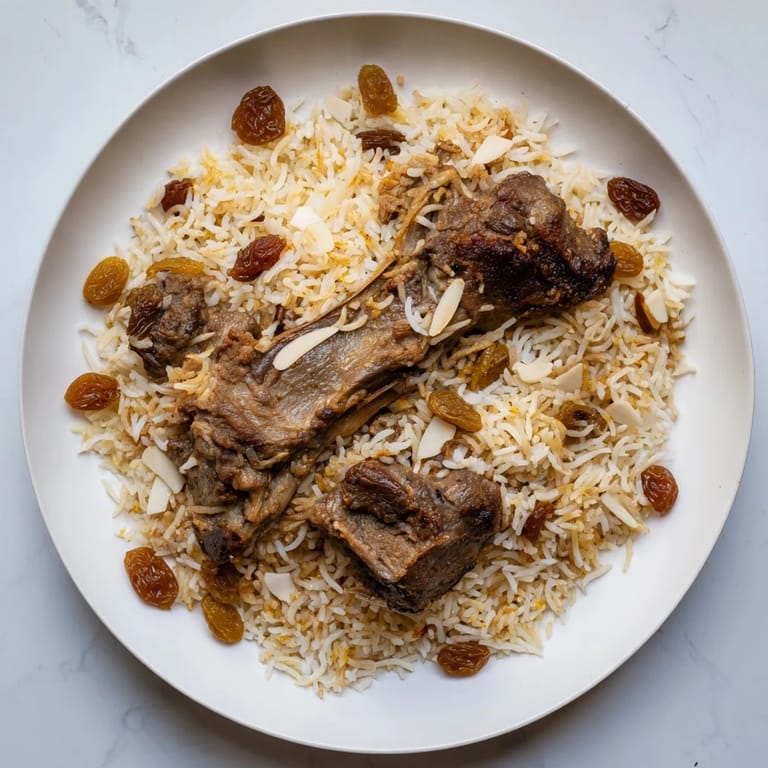
- Stir your soaked, drained rice directly into the hot broth, tasting and adjusting salt. Nestle the warm meat back into the rice, scattering the raisins on top.
- Steam and rest:
- Cover and cook on low heat for 25 to 30 minutes until the rice is fluffy and has absorbed the broth. You'll hear it stop sizzling when it's done.
- Final touches:
- Remove the bay leaves and black lime, fluff gently with a fork, and transfer to a platter. Crown it with toasted almonds and green parsley, and step back to admire what you've made.
 Save
Save I learned early on that kabsa isn't eaten in silence. It's made for tables where people linger, where second helpings happen without asking, and where someone eventually says, 'You have to teach me how to make this.' That's the real measure of the recipe.
Choosing Your Meat
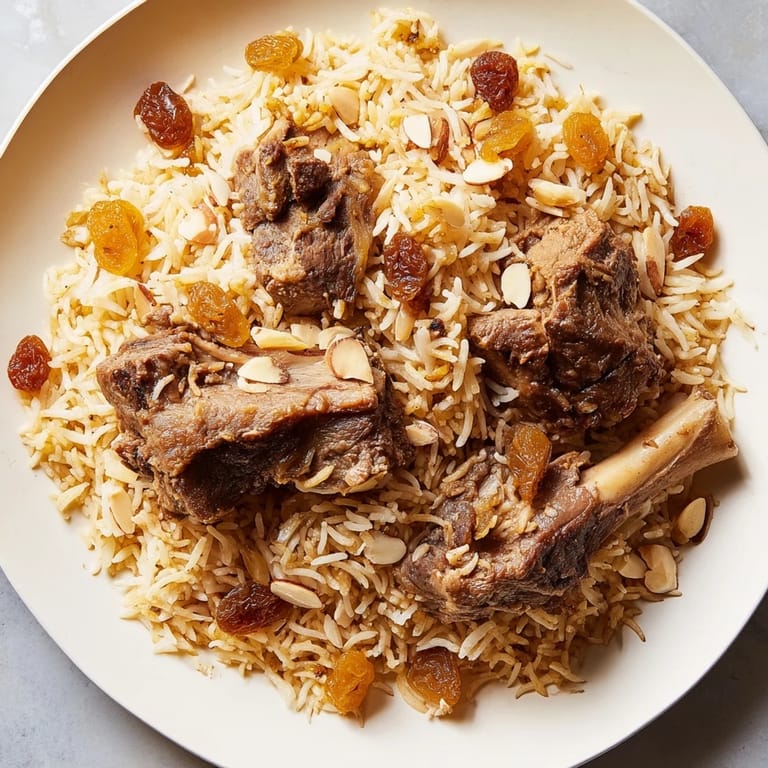
Lamb is traditional and worth seeking out for its deeper, more complex flavor that stands up to the spices beautifully. Chicken is lighter and cooks faster, making it practical for weeknight versions. Beef works too, though it sits somewhere between them in richness. The bones matter more than the exact cut—they're what turns broth into something that coats your mouth with warmth.
The Spice Balance
These spices aren't meant to scream individually; they're a choir where each voice matters but none overpowers. Cinnamon and cardamom provide the sweetness, while cumin and coriander ground it in savory reality. The cloves and allspice are the whispers that make you pause and listen. If you've never toasted whole spices and ground them yourself, this is the dish that might convince you to start.
Timing and Temperature
The difference between undercooked rice that's slightly hard and perfectly tender rice is often just five minutes, so start checking at the 25-minute mark. Listen to the pot—the gentle simmer becomes quiet stillness when the liquid is absorbed. Never rush this with high heat; low and slow is the only way kabsa works.
- If your rice seems dry before it's tender, add warm broth a quarter cup at a time and keep the heat low.
- If it's still soupy after 30 minutes, remove the lid and increase heat slightly until the liquid reduces.
- Let it rest covered for 2 minutes after removing from heat—the residual steam finishes everything beautifully.
 Save
Save Kabsa is patient food. It asks you to slow down, to taste as you cook, to understand that the best meals are built with intention and time. Make it for people you want to know better.
Your Questions Answered
- → What type of meat works best in Saudi Kabsa?
Lamb or chicken pieces with bone-in are preferred for their flavor and tenderness when slow-cooked in Kabsa.
- → Can I substitute the spices in this dish?
While the traditional spice blend is key for authenticity, you may adjust cardamom, cinnamon, and cumin levels to taste.
- → How important is soaking the basmati rice beforehand?
Soaking helps remove excess starch and ensures the rice cooks up fluffy and separate in the dish.
- → What role do the raisins and almonds play?
Golden raisins add a subtle sweetness, while toasted almonds bring a crunchy, nutty balance to the texture.
- → Is it necessary to use dried black lime (loomi)?
Loomi imparts a distinctive tangy aroma, but it’s optional and can be omitted without losing the dish's essence.
- → What are good side dishes to serve with this meal?
A fresh tomato-cucumber salad and cooled yogurt complement the rich flavors and offer refreshing contrast.