 Save
Save The first time I encountered shakshuka, it wasn't in a cookbook—it was at a cramped Tel Aviv café where the chef slid a cast-iron pan onto my table still bubbling, the eggs quivering gently in their crimson sauce. I watched other diners tear hunks of pita and scoop up the runny yolks like it was the most natural thing in the world. That casual intimacy of sharing one pan, the way people crowded around it without ceremony, stuck with me. Now whenever I make this at home, I chase that same feeling of something both humble and celebratory.
I made this for friends on a Sunday morning when nobody had slept much, and the shakshuka became this quiet anchor to the table. People stopped scrolling through their phones, stopped mid-conversation—there was just the sound of forks clinking, the smell of cumin and cilantro filling the kitchen, and this unspoken agreement that we were doing something right. That's when I realized shakshuka isn't really about the ingredients; it's about creating a moment where everyone gets quiet and present.
Ingredients
- Olive oil: Use good oil here because it's not being drowned out by other flavors—it becomes part of the background warmth of the dish.
- Yellow onion and red bell pepper: These build the foundation of sweetness and body; don't skip the chopping step, they need time to soften and lose their raw edge.
- Garlic and red chili: Add these together so they bloom into fragrance without burning, a moment where your whole kitchen smells like possibility.
- Crushed and fresh tomatoes: The combination gives you depth from the canned and brightness from the fresh; tomato paste is the secret that makes the sauce cling to vegetables instead of staying thin.
- Ground cumin, sweet paprika, coriander, and cayenne: These spices are what make shakshuka unmistakably Middle Eastern, warming and slightly earthy without being aggressive.
- Large eggs: Room temperature if you can manage it, so they cook evenly and the whites set while yolks stay soft and runny.
- Fresh parsley and cilantro: Scatter these at the very end, they stay bright and alive and cut through the richness of the eggs.
- Feta cheese: Optional but honestly it transforms the whole thing—salty, creamy, and completely worth it.
Tired of Takeout? 🥡
Get 10 meals you can make faster than delivery arrives. Seriously.
One email. No spam. Unsubscribe anytime.
Instructions
- Warm the oil and build your base:
- Heat olive oil over medium until it shimmers, then add the chopped onion and bell pepper. Let them soften for 5 to 7 minutes, stirring occasionally—you want them tender and beginning to turn golden at the edges, not raw and crunchy.
- Bloom the aromatics:
- Stir in the minced garlic and chopped chili, cooking for just a minute until the smell hits you and fills the whole kitchen. This is when you know the garlic is awake but not burnt.
- Build the sauce:
- Add crushed tomatoes, fresh chopped tomatoes, and tomato paste all at once, stirring until everything combines into a rich, unified sauce. The tomato paste dissolves into the liquid and deepens the whole thing, making it glossy and intentional.
- Season and simmer:
- Sprinkle in your cumin, paprika, coriander, and cayenne (if you want heat), then salt and pepper to taste. Stir well and let it simmer for 10 to 12 minutes until it thickens slightly and the flavors marry together—you should be able to drag a spoon through it and see the pan bottom briefly.
- Create wells and crack eggs:
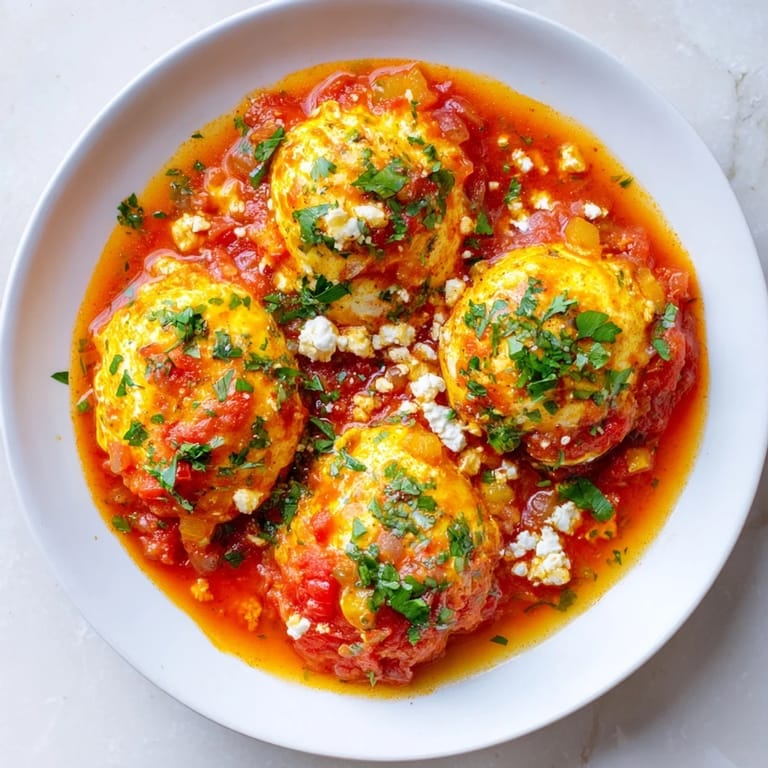
- Reduce heat to low, then use the back of a spoon to gently press down four small wells in the sauce, spacing them around the pan. Crack one egg into each well, trying to keep the yolk whole and centered if you can manage it.
- Cook gently until set:
- Cover the pan with a lid and let it cook for 6 to 8 minutes—peek once or twice if you need to, looking for whites that are opaque and firm but yolks that still jiggle slightly when you give the pan a gentle shake. This is where the magic happens, where creamy meets silky meets spiced.
- Finish and serve:
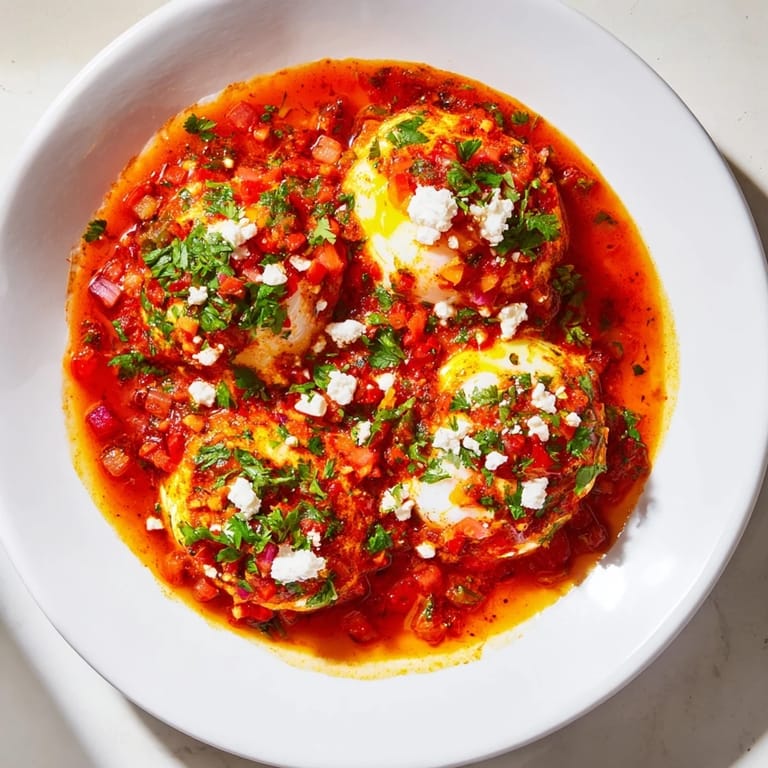
- Take the pan off heat, scatter parsley and cilantro across the surface while everything is still steaming, and add crumbled feta if you're using it. Serve straight from the pan with warm pita or crusty bread for scooping.
 Save
Save I ruined a batch once by getting impatient and cranking the heat, convinced the eggs would never set. Instead, I turned around to grab bread and found the sauce boiling aggressively, the eggs chunking up into scrambled bits. Since then I treat the last few minutes like a meditation: low heat, patience, and the lid stayed on. The reward was worth the waiting.
The Magic of Spice Layering
What makes shakshuka different from just eggs in tomato sauce is how those spices work together—cumin brings earthiness, paprika adds mild sweetness and color, coriander softens everything with a faintly citrusy note, and cayenne lurks in the background ready to warm your throat. They're not fighting; they're rounding out each other's edges. Once you understand that balance, you realize you can dial it up or down depending on your mood, whether you want something cozy or something that makes you reach for water.
Variations That Still Feel Like Shakshuka
I've added sautéed spinach right before the eggs, wilting it into the sauce so it becomes silky and dark, giving the dish an almost creamy texture. Other times I'll roast eggplant separately and nestle it into the wells alongside the eggs. Fresh herbs like mint or even a pinch of sumac at the end change the whole personality while keeping the soul intact.
- Try a spoonful of labneh or thick Greek yogurt swirled into each well right before serving—the cool tanginess against hot spiced eggs is transcendent.
- Smoked paprika instead of regular paprika shifts the whole mood toward something smokier and more complex if you have time to sit with it longer.
- Don't be shy about adjusting chili and cayenne to match your heat tolerance; some versions want to whisper, others want to shout.
Why Cast Iron Changes Everything
A cast-iron pan holds heat differently than regular stainless steel, creating those tiny browned edges where the sauce touches the metal and giving you a dish that stays hot when it reaches the table. It also just looks right when you set it down in front of people—there's something about the visual weight of cast iron that says this matters, this is intentional.
 Save
Save This dish is one of those rare meals where everyone relaxes around it, where the food itself becomes a reason to slow down and sit a while. Make it for people you want to linger with.
Your Questions Answered
- → What type of pan is best for cooking this dish?
A large skillet or cast-iron pan with a lid is ideal to evenly cook the sauce and gently poach the eggs.
- → How can I adjust the spiciness?
Include or omit the chili and cayenne pepper to suit your preferred heat level.
- → Can I add other vegetables to enhance the flavor?
Yes, sautéed spinach or eggplant can be added for variation and extra texture.
- → What garnishes complement this dish?
Fresh parsley and cilantro brighten the flavors, while crumbled feta adds creamy texture if desired.
- → What are suitable accompaniments?
Serve with warm pita, crusty bread, or a side of labneh or Greek yogurt for a balanced meal.