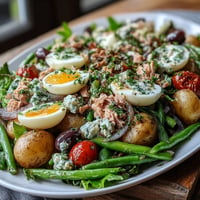
 Save
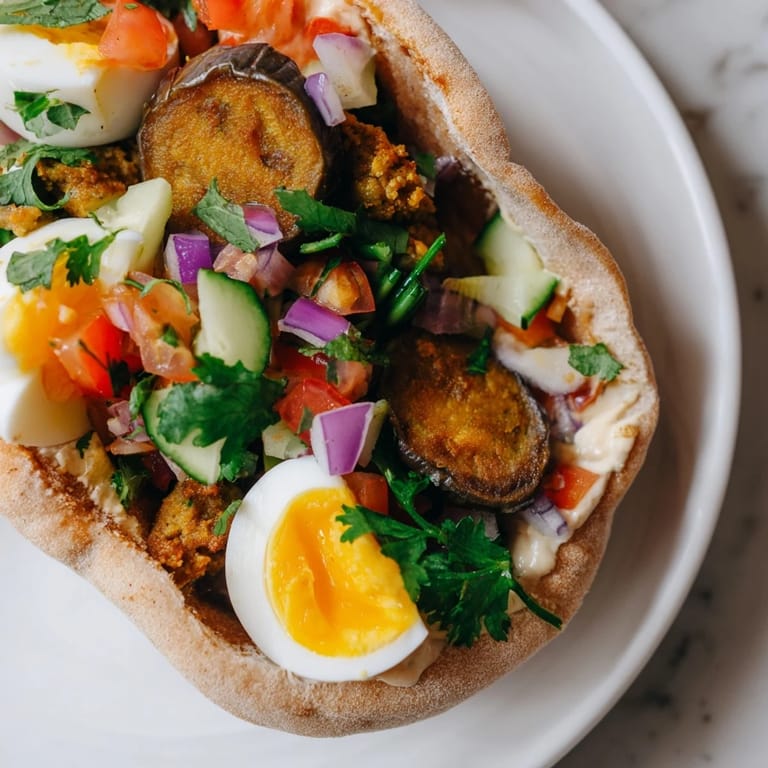
Save The first time I understood sabich was standing in a tiny stall in Tel Aviv at dusk, watching a vendor work with the kind of practiced speed that only comes from making the same thing a thousand times. He handed me a warm pita and I bit into layers I didn't know could coexist so perfectly—crispy eggplant giving way to creamy tahini, bright salad cutting through everything, and those sliced eggs binding it all together. I've been chasing that moment ever since, and honestly, making it at home comes remarkably close.
My partner was skeptical about eggplant until I made this for dinner one night—watched her demolish two of them and ask for the recipe immediately. There's something about the way the fried exterior shatters against your teeth while the inside stays tender that converts people. Now whenever we have guests, someone asks if we're making sabich.
Ingredients
- Medium eggplants: Look for ones that feel heavy for their size and have smooth, tight skin—they'll have fewer seeds and cook more evenly, less chance of that bitter taste.
- All-purpose flour: Just enough to give the eggplant a delicate crust, not a thick batter like you're making tempura.
- Vegetable oil: You need enough to shallow-fry, and the oil temperature matters more than you'd think for getting that golden exterior.
- Large eggs: The hard-boiled ones add substance and their richness balances the bright flavors beautifully.
- Tomatoes and cucumber: Dice them small and uniform so they integrate into every bite rather than being separate textures.
- Fresh parsley: Fresh herbs make the entire salad taste alive—don't use dried here, it changes everything.
- Tahini paste: The creamy backbone that ties everything together; get the unsweetened kind and it should be smooth, not grainy.
- Lemon juice: Both in the salad and tahini sauce, it's what gives sabich its signature bright edge.
- Pita breads: Warm them right before serving so they're soft enough to hold everything without falling apart.
- Amba: The pickled mango sauce is traditional and adds a funky sweetness that you can't replicate—worth seeking out if you can.
Tired of Takeout? 🥡
Get 10 meals you can make faster than delivery arrives. Seriously.
One email. No spam. Unsubscribe anytime.
Instructions
- Salt the eggplant and let it rest:
- Slice your eggplants into rounds about half an inch thick, sprinkle with salt, and leave them on paper towels for fifteen minutes. You'll see moisture bead up on the surface—this step removes that watery bitterness and helps them fry up crispy instead of soggy.
- Fry the eggplant until golden:
- Pat the slices dry, dust lightly with flour, and fry in hot oil until the edges turn deep golden and the surface feels crispy when you tap it. Two to three minutes per side, and don't move them around too much—let them sit and develop that crust.
- Hard-boil the eggs while the eggplant cooks:
- Get water boiling, add eggs, then reduce to a simmer for nine minutes exactly. Ice bath immediately so the yolks stay bright yellow and the shells come off cleanly.
- Make the Israeli salad fresh:
- Dice everything into small, uniform pieces so it reads as one cohesive salad rather than separate vegetables. Toss with lemon juice, olive oil, and salt right before serving so it doesn't get soggy.
- Whisk the tahini sauce until silky:
- Start with tahini and a little water, whisk vigorously—it'll look grainy at first, then suddenly turn creamy and light. Add lemon juice and garlic, taste, and adjust the consistency with more water if needed.
- Warm the pita and assemble:
- Split the pita just enough to create a pocket, then layer everything in: eggplant first so it's still warm, then eggs, then the salad, then a generous drizzle of tahini. Add amba, pickles, and hot sauce to taste.
 Save
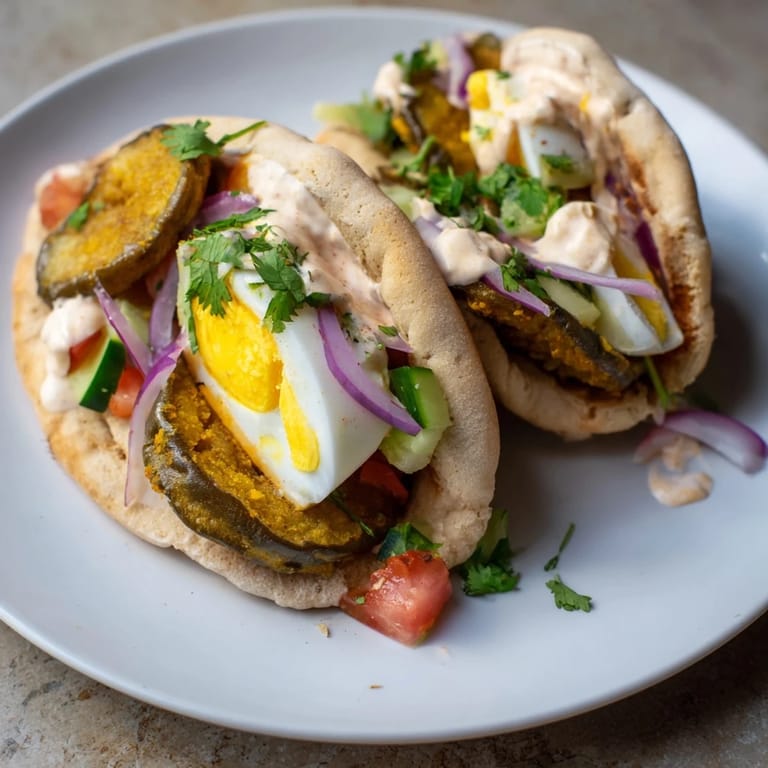
Save There's a moment when you've got everything ready—the eggplant still warm on its paper towel, the salad glistening, the tahini sitting smooth in its bowl—where you realize sabich isn't fancy, but it's honest. It's street food elevated by technique and intention, the kind of thing that tastes like someone actually cared about what they were making.
The Fried Eggplant Secret
Most people fry eggplant in batches and it gets cold by the time they've finished. The trick is to have everything else ready first—your salad made, your eggs sliced, your tahini whisked, your pita warming—so you can fry the eggplant last and get it straight into the pita while it's still crackling. If you have to wait around with cooked eggplant, it absorbs the oil and loses that texture that makes the whole thing work.
Tahini Consistency Matters More Than You Think
A good tahini sauce should coat a spoon and drip slowly, not pool like soup or sit stiff like paste. If you're adding tahini to the pita and it's too thick, it sits in a lump; too thin and it runs out the sides. The consistency is what lets it integrate with all the other layers and create a cohesive bite. Add water a tablespoon at a time, taste as you go, and you'll develop a feel for exactly how much you need.
Building Your Own Sabich
Once you understand the foundation—the fried eggplant, the bright salad, the creamy tahini—you own this dish. If you can't find amba, use a combination of hot sauce and a drizzle of pomegranate molasses. Prefer roasted eggplant to fried? That works too, just brush it with oil and roast at 425 degrees until the edges char. The structure is flexible; the principles aren't.
- Make the salad and tahini in the morning; fry the eggplant right before eating.
- Warm your pita in a dry skillet for thirty seconds per side to bring out its yeasty flavor.
- Taste everything separately before you assemble—this is the moment to adjust salt, lemon, or spice.
 Save
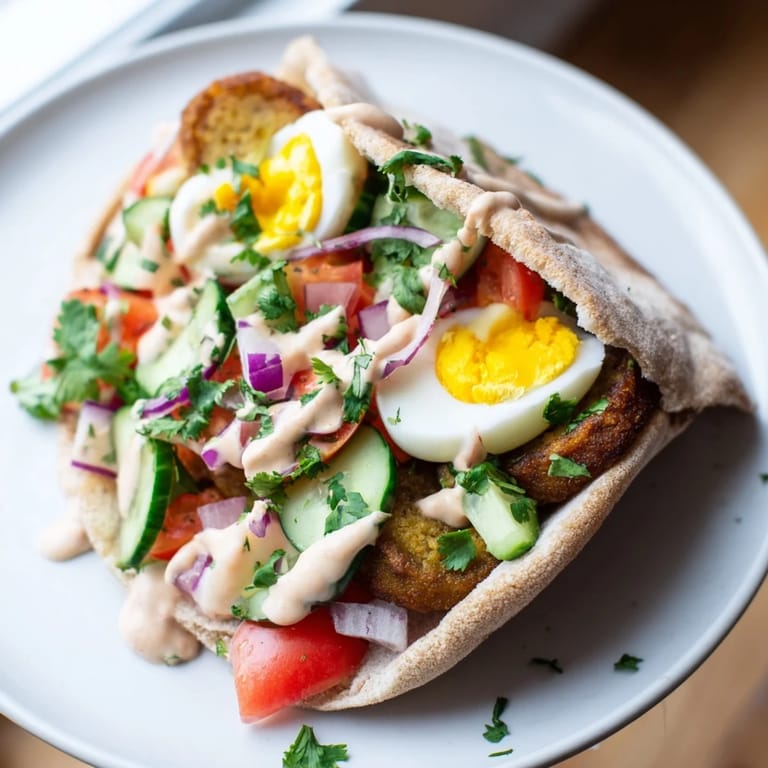
Save Sabich is the kind of food that tastes better when you're not thinking too hard about it—when you just bite through the warm pita and let all those flavors and textures surprise you. Make it once and you'll understand why people line up for it on the street.
Your Questions Answered
- → What is the best way to fry eggplant for this dish?
Slice the eggplant into 1/2-inch rounds, salt to draw out moisture, pat dry, dredge lightly in flour, and fry in medium-high vegetable oil until golden brown on both sides.
- → How is the tahini sauce prepared?
Whisk together tahini paste, water, fresh lemon juice, minced garlic, and salt until smooth, adjusting water for desired consistency.
- → Can this dish be made vegan?
Yes, by omitting the hard-boiled eggs or replacing them with tofu, the dish accommodates a vegan diet without compromising flavor.
- → What ingredients make the Israeli salad?
Diced tomatoes, cucumber, finely chopped red onion, fresh parsley, lemon juice, extra-virgin olive oil, salt, and pepper combine to create the salad.
- → Are there any common allergens to be aware of?
Common allergens include gluten from pita and flour, sesame in tahini, and eggs. Gluten-free pita and egg substitutes can be used for adaptations.
- → What optional toppings enhance the flavor?
Pickled mango sauce (amba), hot sauce, fresh cilantro, and sliced pickles can be added to customize taste and texture.