 Save
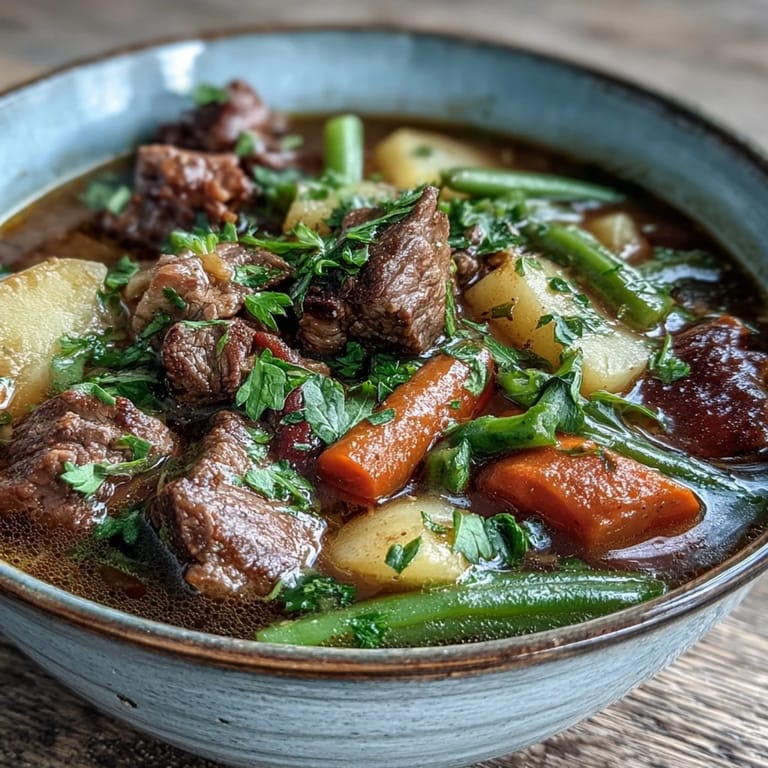
Save There's something about the sound of beef sizzling in a hot pot that makes you feel like you're actually accomplishing something in the kitchen. My grandmother used to say a good soup could fix almost anything—a bad day, a cold, even an argument with a friend. This beef and vegetable soup became my go-to version after I stopped trying to replicate hers exactly and just started paying attention to what made mine sing. The magic isn't in some secret ingredient; it's in taking your time to brown that beef properly and letting everything simmer until the kitchen smells like comfort itself.
I made this for my neighbor Marcus when he came home from the hospital, and watching him eat two bowls without saying much told me everything I needed to know about whether the recipe was working. The next week he asked if I could make it again, which meant I'd accidentally created something that felt like actual care in a bowl. That's when I realized this soup does something beyond just filling your stomach—it tells someone you're thinking about them.
Ingredients
- Beef chuck (1.5 lbs, cut into 1-inch cubes): This cut has enough marbling and connective tissue to become silky tender during long cooking, unlike leaner cuts that toughen up.
- Olive oil (2 tbsp): Use enough to coat the pot—skimping here means the beef won't brown properly and you'll lose that caramelized depth.
- Onion, carrots, and celery (the holy trinity): They create the flavor foundation that makes people ask what makes your soup taste different from everyone else's.
- Garlic (3 cloves, minced): Add it after the other vegetables soften or it'll burn and turn bitter on you—lesson learned the hard way.
- Potatoes and parsnip (optional): The parsnip adds an earthy sweetness that regular potatoes alone can't quite achieve, but it's not make-or-break.
- Green beans and peas: These go in at different times because green beans need longer to soften while peas stay bright if you add them at the end.
- Canned diced tomatoes (14.5 oz): The acidity cuts through the richness of the beef and adds a subtle brightness you'd miss if you skipped them.
- Beef broth (8 cups): Use quality broth—the stuff that tastes like actual beef, not the salty water version that lurks in some pantries.
- Bay leaves, thyme, oregano: These three are your seasoning backbone; don't substitute dried herbs for fresh here because the long cooking time suits dried better.
- Salt and pepper: Taste as you go because beef broth varies wildly in saltiness between brands.
- Fresh parsley (for garnish): It's not decoration—it brings a bright, grassy note that reminds you this is still a fresh-tasting soup despite all the slow cooking.
Tired of Takeout? 🥡
Get 10 meals you can make faster than delivery arrives. Seriously.
One email. No spam. Unsubscribe anytime.
Instructions
- Brown the beef like you mean it:
- Heat olive oil until it shimmers, then add beef in a single layer (work in batches if your pot is crowded). Don't stir constantly—let each side sit and develop a dark crust, about 5–7 minutes total. This is where the soup's soul gets built, so don't rush it.
- Build your flavor base:
- In the same pot, add onion, carrots, and celery without cleaning out the brown bits stuck to the bottom. After 5 minutes, add garlic and cook just until fragrant—you're looking for softened vegetables, not mushy ones.
- Bring everything together:
- Return the beef to the pot and add potatoes, green beans, tomatoes with their juice, broth, and all your seasonings at once. This is when your kitchen stops smelling like a restaurant and starts smelling like dinner.
- Let time do the work:
- Bring to a boil, then drop to a low simmer and cover. Stir occasionally and let the beef become so tender it practically falls apart, around 1 hour 15 minutes. The soup will darken and deepen as it cooks, which is exactly what you want.
- Add peas at the finish:
- After the beef is tender, add frozen peas and cook uncovered for 10–15 minutes until everything is soft and the soup has thickened slightly from the potato starch. This timing keeps the peas from turning into little gray bullets.
- Taste, adjust, serve:
- Fish out the bay leaves, then taste and add salt or pepper to your preference. Ladle into bowls and finish each one with a scatter of fresh parsley.
 Save
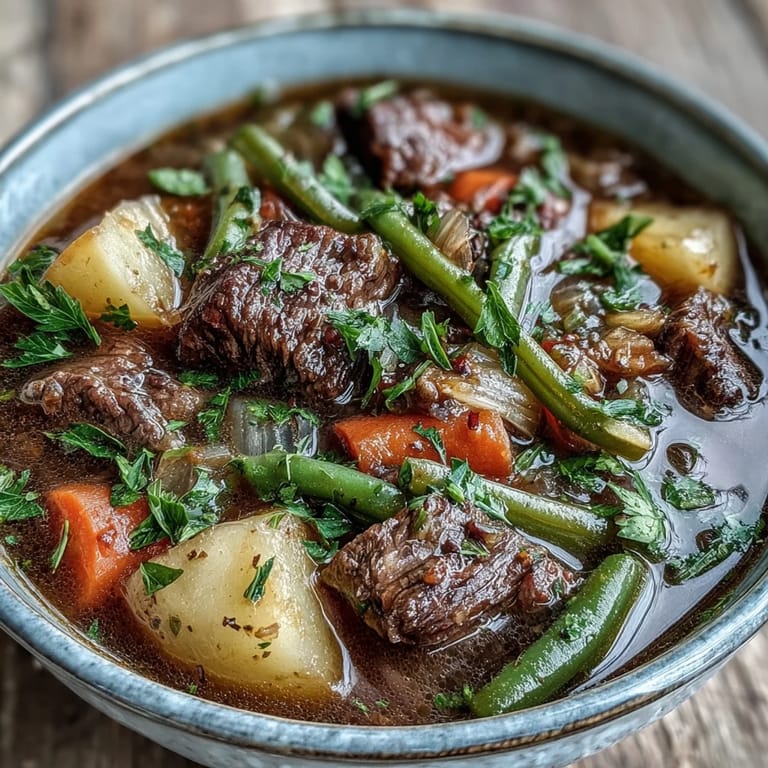
Save My daughter asked me once why homemade soup tastes so different from canned, and I realized it's because when you make it yourself, you're not just combining ingredients—you're paying attention. Every choice matters, from when you add each vegetable to how long you let it bubble. That attention is the secret ingredient no label will ever list.
Why This Soup Stays in My Regular Rotation
Once you make a pot of this soup, you understand why people have always turned to it during tough weeks or cold snaps. It's not fancy, but it's reliable in a way that matters. There's something deeply satisfying about looking into a pot and seeing actual vegetables and real meat, knowing exactly what went into it because you put it there yourself.
Seasonings That Make the Difference
The herb combination of thyme and oregano might seem standard, but it's standard because it works. If you want to experiment, a splash of Worcestershire sauce adds a savory depth that makes people pause mid-spoonful and ask what's in it. Smoked paprika is another route if you want something slightly more dramatic without changing the soup's character.
Storage, Serving, and Next-Day Magic
Beef and vegetable soup genuinely tastes better on day two or three once the flavors have settled and deepened, which makes it the rare recipe that actually rewards you for planning ahead. I always make extra knowing it'll be in my fridge ready for lunch. Crusty bread is non-negotiable—the kind you can drag through the broth without it dissolving.
- Leftovers keep for 4 days refrigerated, and the soup thickens as it sits, so add a splash of broth when reheating if needed.
- Freeze portions in containers for up to 3 months, though it's usually gone long before then.
- Reheat gently on the stovetop rather than blasting it in the microwave so nothing splutters and the flavors warm evenly.
 Save
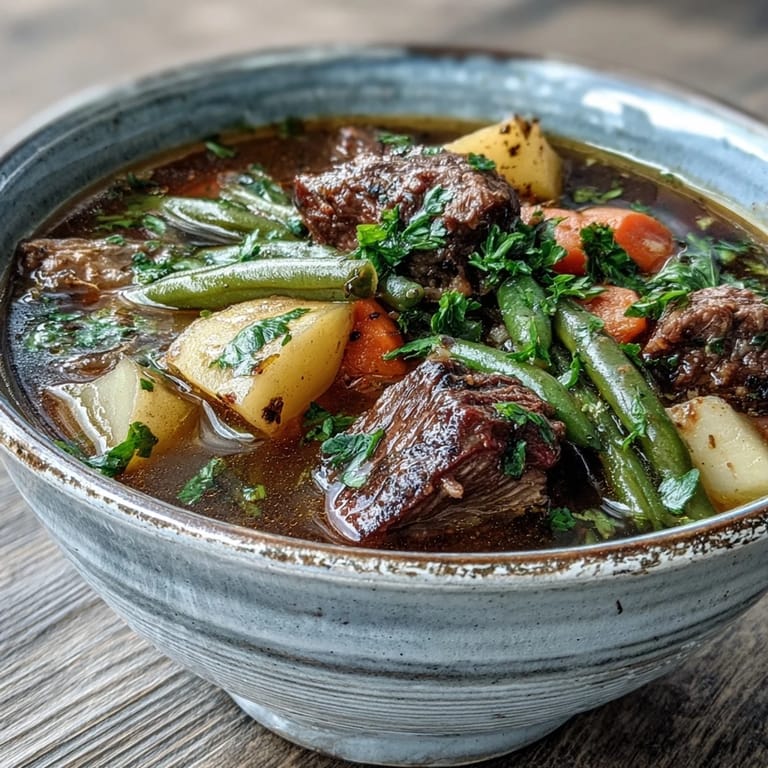
Save This soup is the kind of recipe that doesn't need explanation or apology—it just sits there on the table, warm and honest and exactly what everyone needed. Make it for someone you care about, or make it for yourself on a day that needs some quiet comfort.
Your Questions Answered
- → What cut of beef works best for this soup?
Beef chuck is ideal because it becomes tender during long simmering. Cut into 1-inch cubes for even cooking.
- → Can I make this soup in a slow cooker?
Yes. Brown the beef first, then add all ingredients to the slow cooker. Cook on low for 7-8 hours or high for 4-5 hours until beef is tender.
- → How should I store leftovers?
Refrigerate in airtight containers for up to 4 days. The flavors deepen overnight, making leftovers even more delicious.
- → Can I freeze this soup?
Yes. Cool completely before freezing in portions for up to 3 months. Thaw overnight in the refrigerator before reheating.
- → What vegetables can I substitute?
Try turnips, rutabaga, or sweet potatoes instead of regular potatoes. Add kale or spinach during the last 10 minutes for extra greens.
- → How can I make the broth richer?
Add a splash of Worcestershire sauce or beef bouillon. For extra depth, include a Parmesan rind while simmering.