 Save
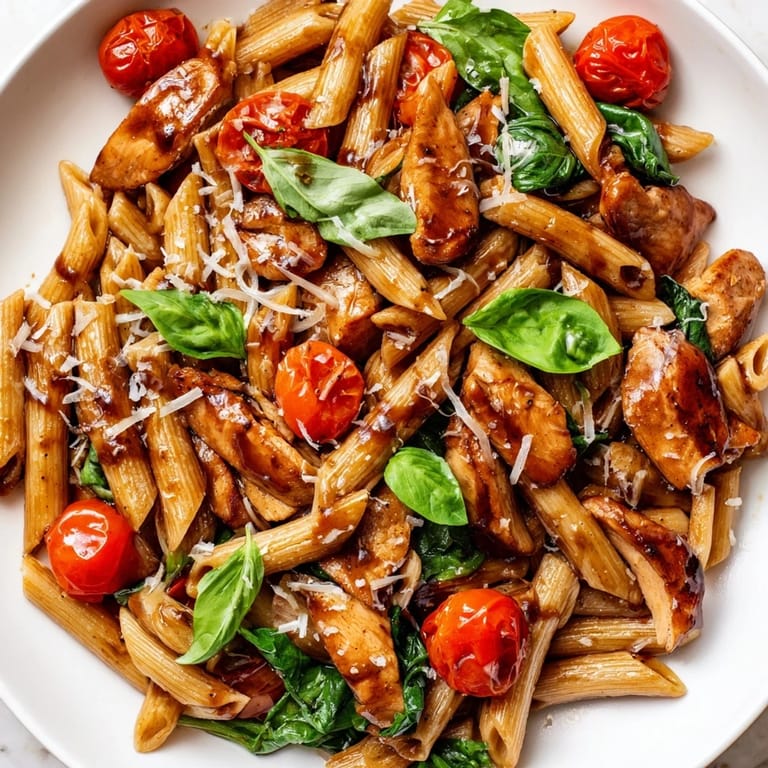
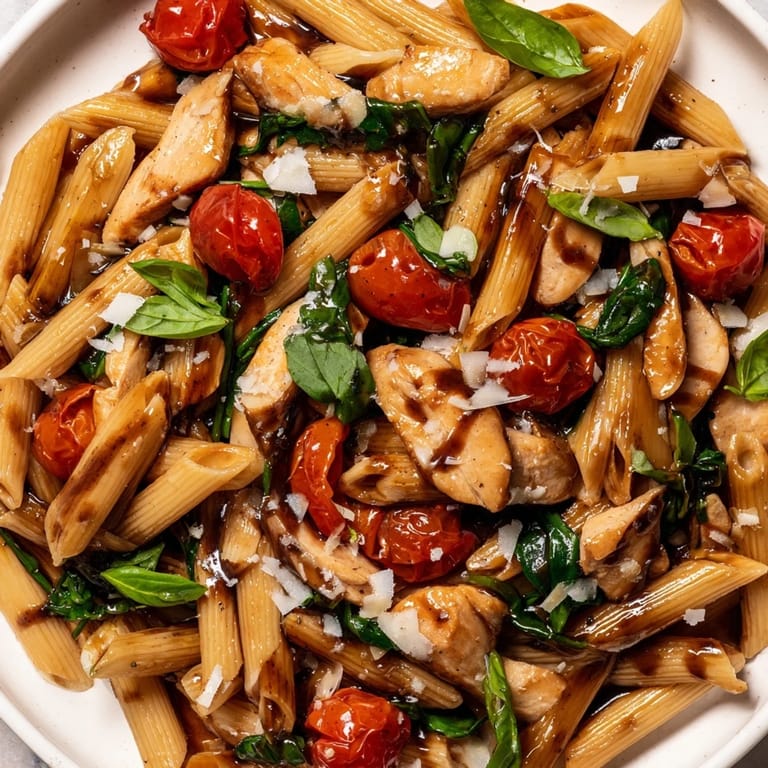
Save Last spring, I was standing in front of my pantry at six o'clock on a Tuesday, staring at a bottle of balsamic vinegar I'd bought months ago and never opened. I had chicken thawing, a box of penne, and no plan. What came together in the next half hour became one of those accidentally perfect dinners that you end up making over and over. The balsamic reduced into this glossy, sweet-tart glaze that clung to everything, and I remember thinking, why don't I cook like this more often?
I made this for my sister the first time she came over after moving back to town. She'd been living on takeout and cereal for weeks, and when she took her first bite, she got quiet in that way that means the food is doing its job. We didn't talk much that night, just ate and poured wine and let the basil smell fill up the kitchen. It's become our catch up dinner ever since.
Ingredients
- Boneless, skinless chicken breasts (500 g): Slicing them thin helps them cook fast and soak up the glaze; if they're uneven, pound them gently first so nothing overcooks.
- Penne or spaghetti (350 g): Penne holds the glaze in its ridges, but spaghetti twirls beautifully; use what makes you happy, and always salt the pasta water like the sea.
- Garlic (3 cloves, minced): Fresh garlic is non negotiable here; it blooms in the oil and perfumes everything, so mince it fine and don't let it burn.
- Cherry tomatoes (200 g, halved): They burst into jammy little pockets of sweetness and acid, balancing the richness of the glaze; don't skip them.
- Fresh baby spinach (60 g): It wilts down to almost nothing but adds color and a whisper of earthiness; toss it in at the very end so it stays bright.
- Olive oil (3 tbsp, divided): Use a decent one since it's part of the glaze; the fruity, peppery notes really come through.
- Balsamic vinegar (60 ml): This is the star; as it reduces, it gets thick and glossy and just a little sweet, so don't cheap out on a harsh, overly acidic bottle.
- Honey (1 tbsp): It rounds out the vinegar's sharpness and helps the glaze cling to the chicken like it's supposed to.
- Dijon mustard (1 tsp): Just a touch adds subtle tang and helps emulsify the glaze so it coats instead of pools.
- Dried Italian herbs (1 tsp): A simple blend of oregano, basil, and thyme does the lifting; if you have fresh, use double and add them later.
- Salt and black pepper: Season every layer, from the chicken to the pasta water; it's the difference between good and unforgettable.
- Parmesan cheese (30 g, grated): Freshly grated melts into the pasta and adds that nutty, salty finish; the stuff in the green can won't cut it here.
- Fresh basil leaves (optional): Torn at the last second, they bring a pop of color and a sweet, aromatic lift that makes the whole dish feel alive.
Tired of Takeout? 🥡
Get 10 meals you can make faster than delivery arrives. Seriously.
One email. No spam. Unsubscribe anytime.
Instructions
- Cook the pasta:
- Bring a large pot of heavily salted water to a rolling boil, then add your pasta and cook until al dente, usually a minute or two shy of the package time. Before you drain it, scoop out about half a cup of that starchy pasta water and set it aside; it's liquid gold for bringing the sauce together later.
- Sear the chicken:
- Heat a tablespoon of olive oil in a large skillet over medium high heat until it shimmers, then add the chicken strips in a single layer, seasoning them with salt, pepper, and Italian herbs. Let them sizzle undisturbed for a couple minutes to get a golden crust, then flip and cook until they're just cooked through, about 5 to 7 minutes total; pull them out and set them aside on a plate.
- Sauté the aromatics:
- Add another tablespoon of oil to the same skillet, toss in the minced garlic, and stir for about 30 seconds until it smells like heaven and turns just golden. Add the halved cherry tomatoes and let them cook for 2 to 3 minutes, stirring occasionally, until they start to blister and soften into little flavor bombs.
- Make the balsamic glaze:
- In a small bowl, whisk together the balsamic vinegar, honey, Dijon mustard, and the last tablespoon of olive oil until it's smooth and emulsified. This is your glaze, and it's about to transform everything.
- Glaze the chicken:
- Return the chicken to the skillet with the tomatoes, pour the balsamic mixture over the top, and stir everything together. Let it simmer for 2 to 3 minutes, watching as the sauce thickens and clings to the chicken in a glossy, gorgeous coat.
- Toss with pasta and spinach:
- Add the drained pasta and the fresh spinach to the skillet, then toss everything together with tongs, adding splashes of reserved pasta water as you go to loosen the sauce and help it coat every strand. The spinach will wilt almost instantly, and the pasta should be slick and shiny, not dry or clumpy.
- Serve:
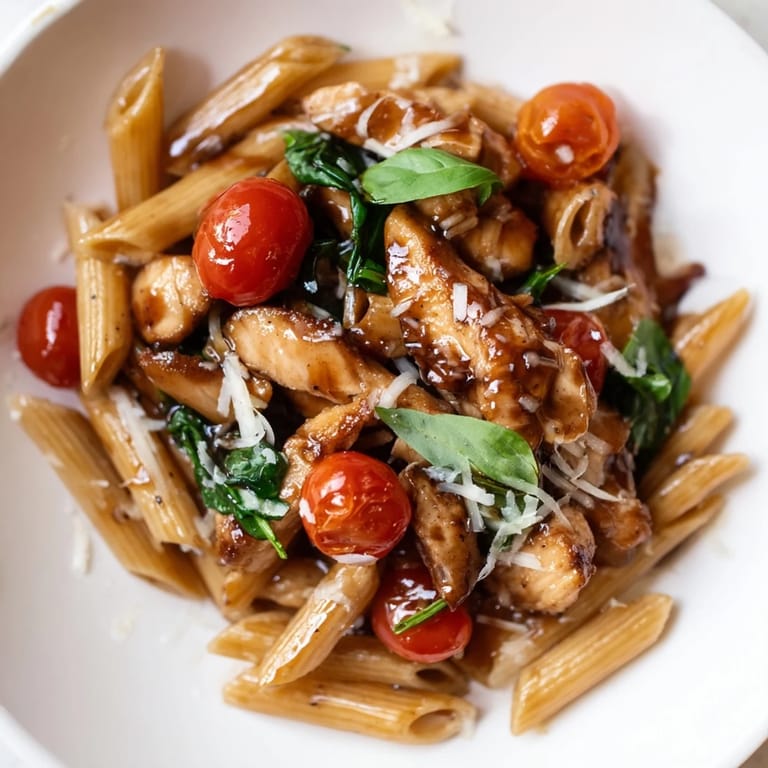
- Pull the skillet off the heat, taste and adjust the seasoning if needed, then divide among bowls and top each serving with a generous sprinkle of Parmesan and torn fresh basil if you have it.
 Save
Save The night I brought this to a potluck, I watched a friend scrape her plate clean and then ask if there was more in the kitchen. There wasn't, but she made me promise to text her the recipe before she left. It's become the dish I make when I want people to feel cared for without making a big deal out of it.
Choosing Your Pasta Shape
Penne works beautifully here because the ridges and hollow centers trap the glaze and little bits of tomato, giving you flavor in every bite. Spaghetti is more elegant and fun to twirl, and it picks up the sauce in a different way, clinging to each strand. I've also used rigatoni, fusilli, and even orecchiette when that's what I had on hand, and it always works as long as you cook it properly and toss it while everything is still hot. The key is to match the pasta's texture to the sauce so nothing feels dry or disconnected.
Making It Your Own
This recipe is forgiving and loves to be adapted. Swap the spinach for peppery arugula, hearty kale, or even shredded zucchini if that's what's in season. If you want to make it vegetarian, skip the chicken and use thick slices of sautéed mushrooms or pan fried tofu; both soak up the balsamic glaze like a dream. You can also add a pinch of red pepper flakes to the garlic for a subtle kick, or stir in a handful of sun dried tomatoes for extra depth. I've made it with leftover rotisserie chicken in a pinch, and it still tastes like I put in effort.
Storing and Reheating
Leftovers keep well in an airtight container in the fridge for up to three days, though the pasta will soak up some of the sauce as it sits. When you reheat it, add a splash of water, broth, or even a drizzle of olive oil to bring it back to life, and warm it gently in a skillet over medium heat, stirring frequently. The microwave works in a pinch, but the stovetop gives you better control and keeps the texture from getting gummy. If you're planning to make it ahead, undercook the pasta by a minute and store everything separately, then toss it all together when you're ready to serve.
- Let everything cool completely before storing to avoid condensation and sogginess.
- If you have extra glaze, store it separately and drizzle it over the reheated pasta for a fresh hit of flavor.
- This dish doesn't freeze well because the pasta texture suffers, so it's best enjoyed within a few days.
 Save
Save This is the kind of dinner that makes weeknights feel a little less ordinary, and it never fails to deliver. I hope it becomes one of those recipes you turn to when you want something comforting, impressive, and completely doable all at once.
Your Questions Answered
- → Can I prepare this dish ahead of time?
This pasta is best served immediately for optimal texture and glaze consistency. However, you can prep ingredients in advance—slice chicken, mince garlic, and halve tomatoes up to 4 hours ahead. Store separately in the refrigerator until ready to cook.
- → What pasta shapes work best for this dish?
Penne and spaghetti are ideal as suggested, but rigatoni, fusilli, or linguine also capture the balsamic glaze beautifully. Avoid tiny shapes like orzo, which won't hold the sauce as effectively.
- → How do I prevent the chicken from drying out?
Slice the chicken breasts into thin, uniform strips before cooking. This ensures even cooking and faster searing. Avoid overcooking by removing from heat once the internal temperature reaches 165°F (74°C).
- → What can I substitute for spinach?
Arugula, kale, or fresh basil work wonderfully. For a heartier option, try sautéed mushrooms or zucchini. Add tender greens at the end to preserve their brightness and texture.
- → Is this suitable for a gluten-free diet?
Yes, simply use gluten-free pasta as a direct substitute. The Dijon mustard is typically gluten-free, but verify the label. All other ingredients are naturally gluten-free, making this easily adaptable.
- → Can I make a vegetarian version?
Absolutely. Replace chicken with an equal weight of sautéed mushrooms, tofu, or chickpeas. Cook mushrooms until tender and golden; for tofu, press first to remove excess moisture before pan-frying until crispy.