 Save
Save I discovered the power of visual balance the night I accidentally knocked over a traditional charcuterie board while rearranging it for the third time. Everything tumbled, and as I swept up the mess, I realized I'd been overthinking the arrangement. That's when the idea struck: what if the board itself told a story of harmony? The yin-yang board emerged from that moment of chaos—a meditation on balance that transforms a simple cheese spread into something that feels almost philosophical. Now, whenever I set one up, guests pause before eating, genuinely moved by the symmetry.
My friend Maya arrived stressed from a brutal work week, and I remember her face when she saw the board—she actually sat down and studied it before eating anything. We spent the next hour just talking and grazing, moving slowly from one side to the other, and she told me later it felt like the board gave her permission to slow down. That's when I realized this wasn't just appetizer; it was an invitation to breathe.
Ingredients
- Fresh blackberries (150 g): These are your design element and flavor anchor—choose ones that are plump and dark, as they'll create that striking visual line and add a subtle tartness that bridges both sides.
- Goat cheese (100 g): The creamy, tangy foundation of the light side; it's mild enough to let other flavors shine but has enough character to stand on its own.
- Young Manchego or white cheddar (100 g): This keeps the light side interesting with a touch of sweetness and texture that contrasts beautifully with the softer goat cheese.
- Pear (1 small): Slice it just before serving to prevent browning; its delicate sweetness is what makes the light side feel refined.
- White grapes (50 g): They're your palate cleanser, offering refreshing bursts that make you want another bite of cheese.
- Raw almonds (30 g): Leave them whole for visual impact and pleasant crunch; raw ones stay fresher longer than roasted.
- Rice crackers or light-colored crackers (30 g): These are neutral vehicles that don't compete—choose ones without too much seasoning so they complement rather than distract.
- Aged blue cheese (100 g): This is bold, creamy, and slightly funky; it's the emotional core of the dark side, so choose one you genuinely enjoy.
- Aged Gouda or sharp cheddar (100 g): The richness here pairs beautifully with the blue's intensity, creating depth without chaos.
- Black plum (1 small): Its dark skin and subtle sweetness echo the berries and make the dark side feel cohesive.
- Red or black grapes (50 g): These add pops of juiciness to the darker palette, preventing it from feeling too heavy.
- Roasted hazelnuts (30 g): Roasting brings out their deeper flavor, making them a perfect match for aged cheeses.
- Dark rye crisps or seeded crackers (30 g): The earthiness and texture here anchor the dark side, adding sophistication.
- Fresh mint leaves: These provide visual freshness and a cooling element that plays beautifully against both cheeses.
- Edible flowers (optional): Pansies, violas, or calendula petals add whimsy and remind people this is meant to be enjoyed with all the senses.
Tired of Takeout? 🥡
Get 10 meals you can make faster than delivery arrives. Seriously.
One email. No spam. Unsubscribe anytime.
Instructions
- Start with your canvas:
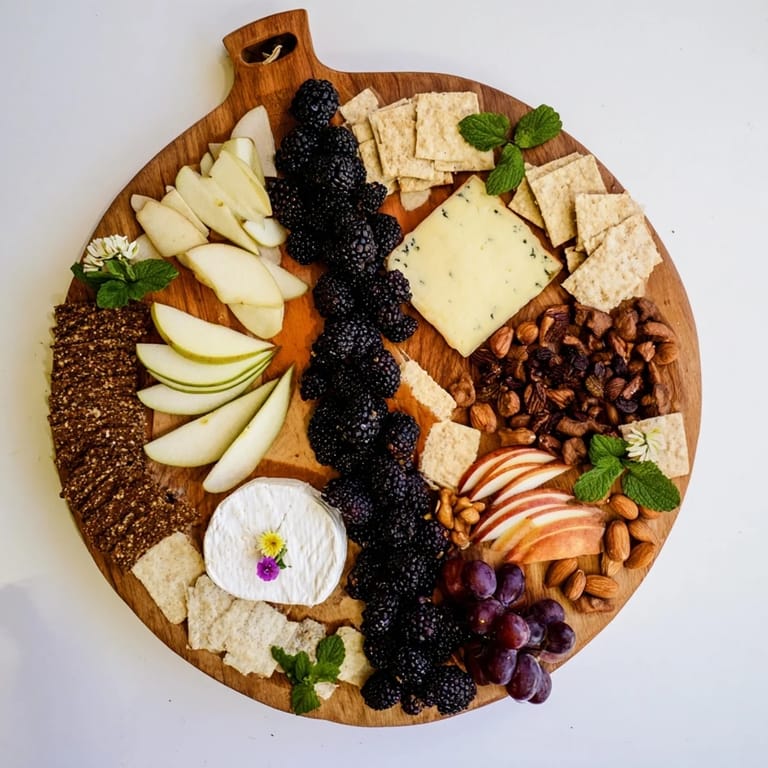
- Place your large round board in front of you—this is your stage. Take a breath and imagine the line you want to draw with the blackberries, slightly off-center, curving gently like it's alive.
- Create the dividing line:
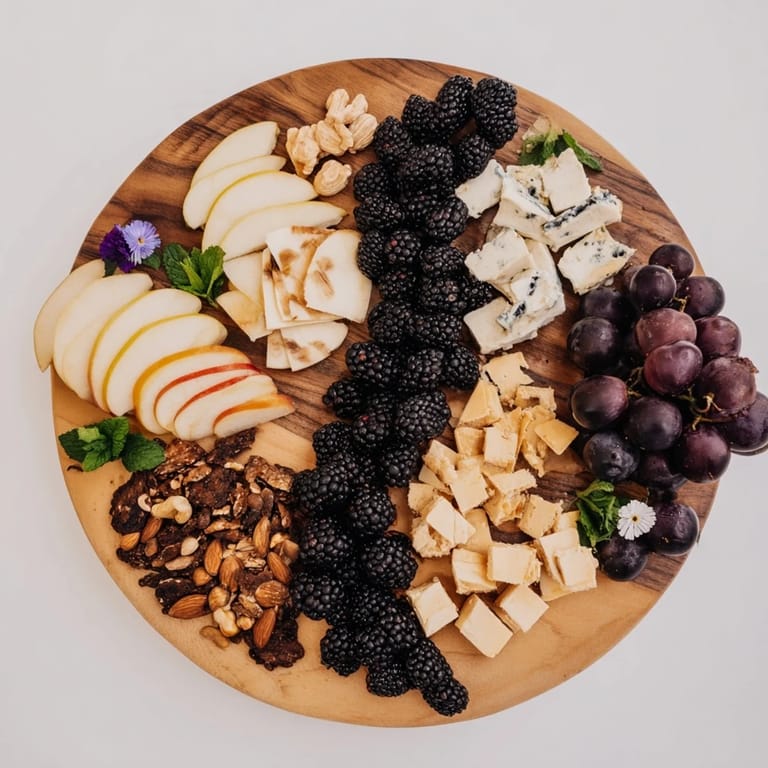
- Arrange the fresh blackberries in a gentle curve across the center, mimicking that iconic yin-yang symbol. Don't be rigid about it—nature isn't perfectly symmetrical, and neither should this be.
- Build the light side:
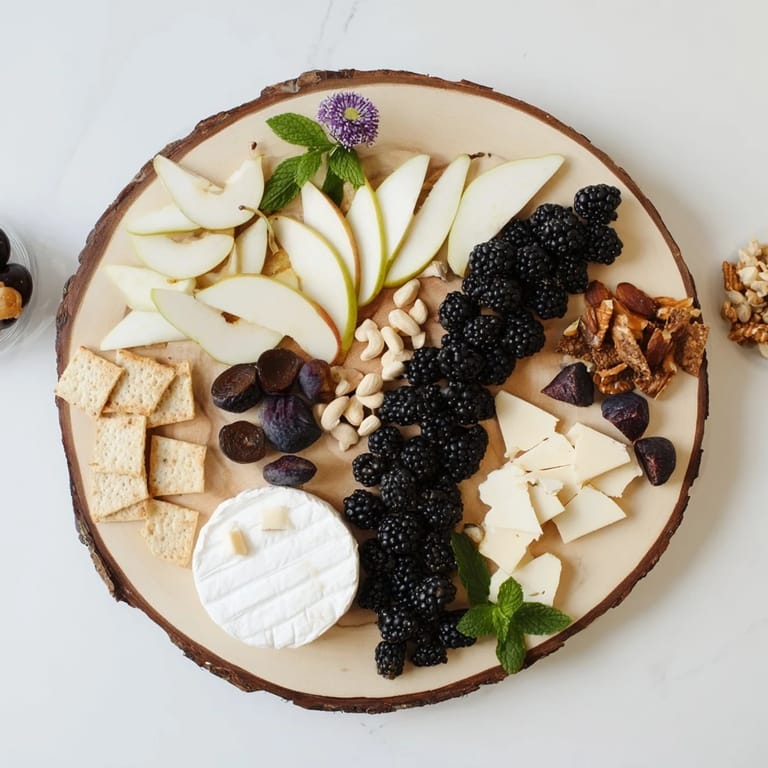
- On one half, arrange your goat cheese slices, Manchego cubes, pear slices, white grapes, raw almonds, and rice crackers in little clusters rather than rows. Leave small breathing room between groups so it feels organized, not crowded.
- Build the dark side:
- Mirror this approach on the dark half with your blue cheese, aged Gouda, plum slices, dark grapes, roasted hazelnuts, and rye crisps. The repetition of arrangement creates visual harmony even though the flavors are completely different.
- Add the final touches:
- Scatter fresh mint leaves across both sides and tuck edible flowers into corners where they'll catch the light. Step back and study it—if something feels off balance, adjust it. This is about what feels right to you.
- Serve with intention:
- Bring it to the table and pause for a moment before anyone digs in. Let people see the whole picture before they taste it—that moment of appreciation is part of the recipe.
 Save
Save I'll never forget when my teenage nephew came home from his first bad day in high school and saw this board waiting. He didn't say much, but he sat at the counter picking through it methodically, moving from light to dark and back again, like the board was quietly teaching him something about contrast and balance. Sometimes the most profound meals are the ones we don't plan for.
The Philosophy Behind the Design
This board isn't just beautiful—it's a teaching moment wrapped in cheese. The yin-yang concept reminds us that opposite flavors actually need each other. The sharp blue cheese makes the sweetness of the pear hit harder; the mild goat cheese provides refuge from the intensity. When you eat this way, understanding builds naturally with each bite. It's the kind of appetizer that makes people slow down and think, even if they don't realize they're doing it.
Timing and Temperature Tips
The twenty-minute timeline is deceptively simple because most of the work is arrangement, not cooking. Set up your workspace with all your components organized before you start assembling—I lay everything out in small bowls along one side of the kitchen counter so I can see exactly what I have to work with. Cheese tastes best when it's had time to come to room temperature, so if you've pulled everything from the fridge, give yourself a few extra minutes while you arrange. Trust me, that little patience pays off in flavor.
Flavor Pairings and Wine Moments
Think of this board as a conversation between wines and cheeses. A crisp Sauvignon Blanc or Albariño complements the light side beautifully, while a Pinot Noir or even a light Cabernet honors the dark side's deeper notes. I've also had remarkable luck serving it with natural wines—something about their unpredictability matches the adventure of this board. Don't overthink it though; I've had just as much fun with sparkling water and good company, letting the cheese speak for itself.
- White wines should be well-chilled; red wines should breathe for about fifteen minutes before serving.
- If you're not drinking alcohol, a pomegranate spritzer or herbal tea can bridge both sides beautifully.
- Set glasses away from the board so there's room for people to move around and graze freely.
 Save
Save The greatest gift of this board is how it teaches us that balance isn't boring—it's beautiful. Make it, share it, and watch how people eat differently when they're presented with intention and harmony.
Your Questions Answered
- → How should I arrange the blackberries on the board?
Arrange the blackberries in a curved line across the center of the board to mimic the yin-yang divide, separating the light and dark elements.
- → What cheeses work best for the light side?
Soft goat cheese and young Manchego or white cheddar provide a mild, creamy contrast ideal for the light side.
- → Can I substitute the fruits and nuts?
Yes, seasonal or preferred fruits and nuts can be swapped to suit taste or availability while maintaining balance.
- → What garnishes enhance the presentation?
Fresh mint leaves and edible flowers add visual contrast and a refreshing aroma to the board.
- → How can I make this suitable for gluten-free diets?
Choose gluten-free rice crackers and dark rye crisps or seeded crackers labeled gluten-free to keep the board suitable.
- → What drinks pair well with this board?
A crisp white wine or a light-bodied red complements the balance of flavors found on the board.