 Save
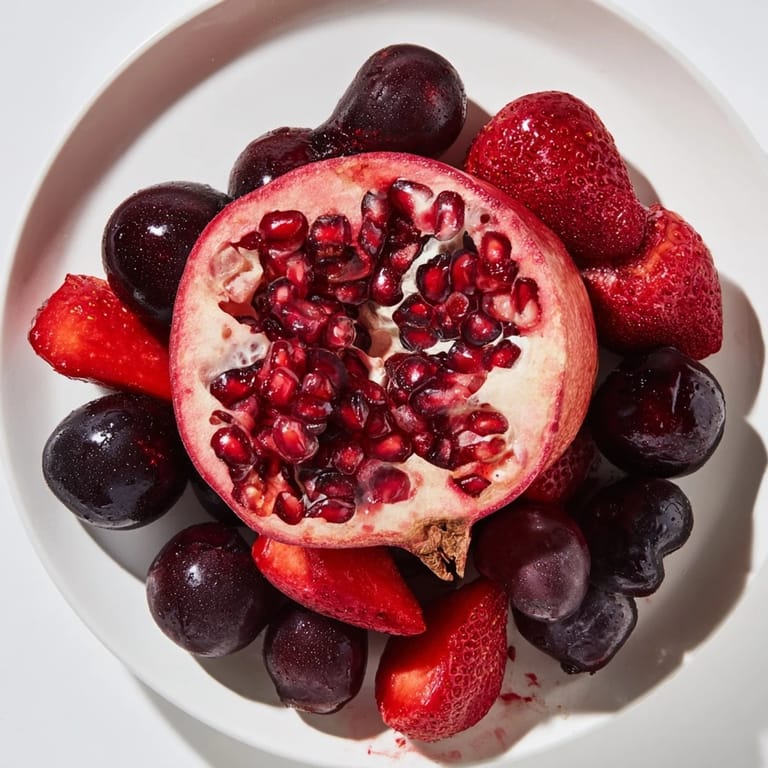
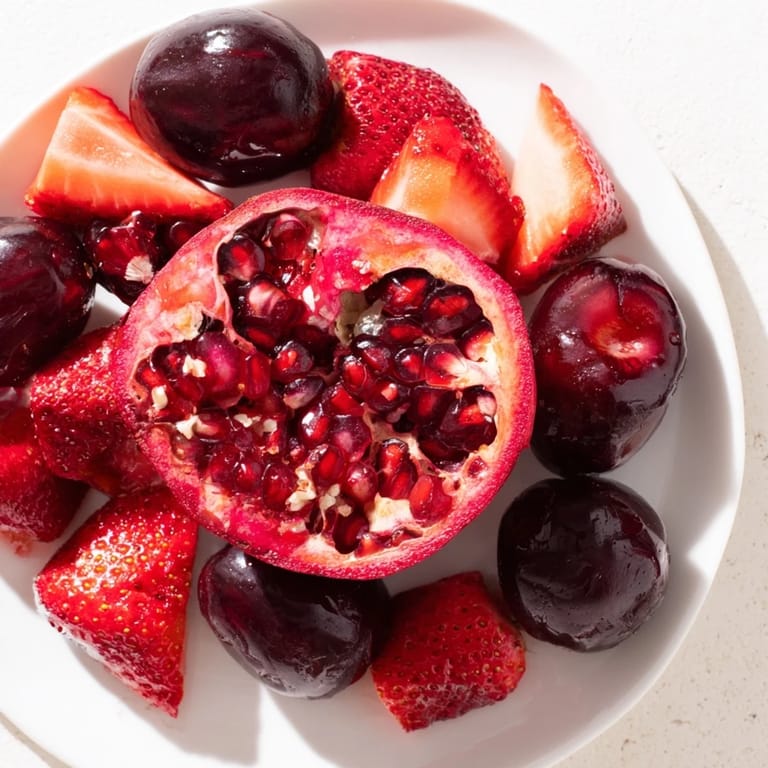
Save I was arranging a simple fruit spread on a platter when I cut open a pomegranate and held up those two halves—the seeds catching the kitchen light like tiny rubies. That's when it clicked: what if the whole platter became a color story, with the pomegranate as the beating heart of it all? The idea of building outward from deep crimsons to pale pinks felt like painting with fruit, and honestly, it changed how I think about serving platters. No rules, just color fading into color, and somehow it became the most effortless impressive thing I've made.
My friend Sarah brought her new partner to dinner, and I'd been nervously planning the menu all week. Then I remembered this platter and suddenly felt calm—it looked stunning, tasted fresh, and meant I could focus on actually being present instead of stressed over a stove. Watching them both reach for the watermelon cubes while talking and laughing reminded me that the best food is the kind that lets you disappear into conversation.
Ingredients
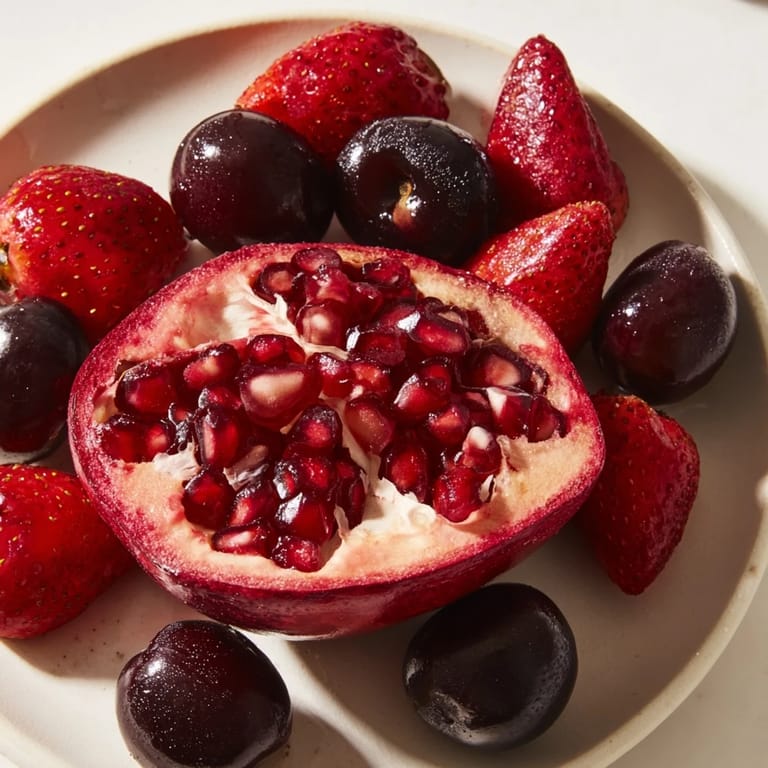
- 1 large pomegranate, halved: The star of the show—those jewel-like seeds are both beautiful and delicious, and the halved structure gives your platter its anchor point and visual drama.
- 1 cup dark cherries, pitted: Start your color gradient here with the deepest, richest reds you can find; they set the tone for everything that follows.
- 1 cup red grapes: They're sturdy enough to not bruise easily and roll into the gaps between other fruits, filling your arrangement naturally.
- 1 cup strawberries, hulled: Cut them in half so the bright interior shows, and they'll nestle perfectly between cherries and grapes.
- 1 cup raspberries: These are delicate, so add them last and handle gently; they're the bridge between deep red and true pink.
- 1 cup watermelon, cubed: The pale pink flesh catches light beautifully, and the slight juice keeps everything looking fresh and glistening.
- 1 cup pink grapefruit segments: Their tartness balances the sweetness of other fruits, and the natural segments already look artful on the platter.
- 1 cup dragon fruit, cubed: The pale pink with tiny black seeds feels almost exotic, but it's mild enough that it won't overpower the other flavors.
- 1 cup apple slices (pink or blush varieties): Choose crisp varieties like Pink Lady so they stay firm; they're your transition into the pale edge of your color wheel.
- 1 cup pear slices: Cut them close to serving time, or they'll brown; they're the softest, most delicate note at the platter's outer ring.
- Fresh mint leaves and edible rose petals (optional): Scatter these just before serving for aroma and extra visual texture—they're the finishing touches that make people pause before eating.
Tired of Takeout? 🥡
Get 10 meals you can make faster than delivery arrives. Seriously.
One email. No spam. Unsubscribe anytime.
Instructions
- Set your stage:
- Place the pomegranate halves cut-side up dead center on your platter—this is your anchor, so position them slightly off-center if your platter is round, which creates better visual balance. Step back and imagine the space you're filling.
- Lay down the deep reds:
- Arrange cherries, red grapes, and halved strawberries in a loose crescent around the pomegranate, overlapping them slightly so there are no hard edges. You're not being precious here—let them tumble naturally into place.
- Build the pink bridge:
- Next to your reds, layer raspberries, watermelon cubes, and grapefruit segments in a flowing ring that shifts the color from crimson to soft pink. Watch how the eye follows the gradient; that's the magic happening in real time.
- Edge with pale whispers:
- The outer ring gets dragon fruit, apple slices, and pear slices—these almost-white fruits create a gentle fade that makes the whole platter feel intentional rather than random. Arrange the apples and pears close to serving time so they don't brown.
- Finish with grace:
- Scatter mint leaves and rose petals across the platter just before guests arrive, letting them land where they will. Cover with plastic wrap if you're making this ahead, and refrigerate—it stays fresh for a few hours.
 Save
Save My daughter once asked why I'd made a platter instead of a dessert, then realized halfway through eating it that every single fruit was exactly sweet enough, exactly the right temperature, exactly what she didn't know she wanted. That's when I understood this isn't just appetizer theater—it's an invitation to eat with your eyes and hands and taste buds all at once.
Adapting to What's in Season
The beauty of this platter is that it bends to whatever the market has right now. In summer, add red currants, fresh lychees, and sliced peaches where things feel sparse. Fall brings pomegranate seeds themselves, which are stunning scattered across, and firmer apples that hold their shape beautifully. Winter is actually perfect because imported berries show up in jewel tones, and pears are at their best. Spring might bring fresh strawberries and lighter, crisper apples—let the season dictate your colors, and the platter will always feel right.
The Color Gradient: Why It Matters
What makes this platter work isn't complexity—it's the simple principle of moving from dark to light, from deep to pale. The human eye naturally follows that transition, and your guests will too, almost without thinking about it. I've served this with completely different fruits depending on what was available, and as long as I kept that gradient logic in mind, it always looked intentional and stunning. The pomegranate in the center anchors everything, giving the eye somewhere to rest and come back to.
Serving and Storage Wisdom
This platter is at its most beautiful the moment it hits the table, so arrange it no more than an hour before your guests arrive—or better yet, assemble it in front of them if you're feeling confident. Apples and pears are your concern here; a light mist of lime juice keeps them from browning without making anything taste like lime, and it's nearly invisible on the platter. If you're not serving immediately, cover it loosely with plastic wrap and refrigerate; the cold also makes the fruits crisper and more refreshing on the palate.
- Chill your platter in the freezer for 5 minutes before arranging if you have the time—cold fruits stay fresher looking longer.
- The pomegranate halves can be prepped ahead and stored cut-side down on a damp paper towel in the fridge until you're ready to arrange.
- This platter pairs beautifully with champagne, prosecco, or a chilled rosé, and honestly, sparkling water with fresh mint works too.
 Save
Save This platter became my answer to "how do I make something beautiful without fussing," and I think that's what makes it worth making again and again. It's proof that sometimes the simplest approach—good fruit, your hands, a bit of intention about color—is exactly enough.
Your Questions Answered
- → How do I prevent the apple and pear slices from browning?
Lightly drizzle lime juice over the apple and pear slices to maintain their fresh appearance and prevent oxidation.
- → Can I substitute the fruits based on seasonality?
Yes, feel free to use seasonal alternatives such as red currants, pomegranate seeds, lychees, or peaches to keep the platter fresh and vibrant.
- → What is the best way to arrange the fruits for an appealing look?
Arrange fruits in overlapping layers following the color gradient from deep reds near the pomegranate center, transitioning to pinks, then pale pinks and whites on the outer edge.
- → Are there any allergens to be aware of?
This platter contains no common allergens, but ensure optional garnishes like mint and rose petals are free from cross-contamination.
- → What tools are recommended for preparing this platter?
A sharp paring knife, cutting board, large serving platter, and small bowls for organizing fruits make preparation easier and neater.