 Save
Save There's something about assembling a Turkish meze platter that turns an ordinary evening into something special. My first real encounter with this tradition happened in a small Istanbul neighborhood where my friend's family laid out an spread that seemed to grow with every person who walked through the door—hummus, olives, cheeses, grape leaves—each component simple but together creating this beautiful conversation starter. I've made versions of it countless times since, and every time someone reaches for that warm pita and loads it up, I feel like I've given them a little piece of that moment.
I learned the real magic of this platter one Sunday when my neighbor brought over her elderly mother from Ankara, and they both got quiet when they saw what I'd arranged. There was this moment where the mom picked up a piece of feta, tasted it, and just nodded at me—no words needed. That's when I understood this isn't really about following steps; it's about honoring a tradition that means something to people.
Ingredients
- Chickpeas (1 can, 400 g): The foundation of real hummus; draining and rinsing them removes the starch that would make it gluey instead of silky.
- Tahini (2 tbsp): This is where most homemade hummus fails—use raw sesame paste, not the roasted kind, or your hummus will taste burnt.
- Extra-virgin olive oil (3 tbsp total): The quality matters more than you'd think; a peppery one adds depth that cheap oil can't touch.
- Garlic (1 clove): Mince it fine and let it sit for a minute before blending so the flavor develops without turning sharp.
- Fresh lemon juice (2 tbsp): Bottled juice will make your hummus taste tinny; squeeze it yourself and taste as you go.
- Ground cumin (1/2 tsp): Toast it in a dry pan for thirty seconds before using if you want to wake up the flavor.
- Salt and pepper: Start with less than you think you need; you can always add more.
- Stuffed grape leaves (12): Store-bought is fine, but if you find fresh ones at a Middle Eastern market, they taste less metallic.
- Feta cheese (100 g): Buy it in bulk from a Mediterranean market rather than pre-crumbled; it holds its shape better on the platter.
- Beyaz peynir or extra feta (100 g): Beyaz is a Turkish white cheese that's milder than feta if you can find it, but feta works beautifully too.
- Kasseri or halloumi (100 g): This cheese has a higher melting point, so it holds up if the platter sits out longer than expected.
- Mixed Turkish olives (100 g): Buy them from the bulk bin if possible; pre-packaged ones sometimes taste like the jar they came in.
- Dried oregano (1/2 tsp): The olive oil carries the flavor; sprinkle it on just before serving so it stays fragrant.
- Fresh vegetables: Cucumber and tomato are non-negotiable for the color contrast and palate cleansing quality they add.
- Warm pita or flatbread: Toast it if you made it ahead, or wrap it in a clean towel to keep it soft.
Tired of Takeout? 🥡
Get 10 meals you can make faster than delivery arrives. Seriously.
One email. No spam. Unsubscribe anytime.
Instructions
- Blend the hummus base:
- Pour your drained chickpeas into the food processor with tahini, olive oil, and garlic, then pulse until it starts coming together before adding the wet ingredients. This prevents the mixture from getting gluey at the start.
- Balance the seasoning:
- Add lemon juice a splash at a time, then the cumin and a pinch of salt, pulsing between each addition so you can taste and adjust. You want it bright and creamy, not dense or sour.
- Achieve the right texture:
- Keep processing until it's completely smooth but still has character—about two minutes total. If it's too thick, add a tablespoon of cold water and pulse again.
- Taste and refine:
- Transfer to your serving bowl and taste on a piece of pita; this is where you catch any seasoning gaps before guests arrive. A whisper of sumac or smoked paprika on top makes it look intentional.
- Arrange the dolmas:
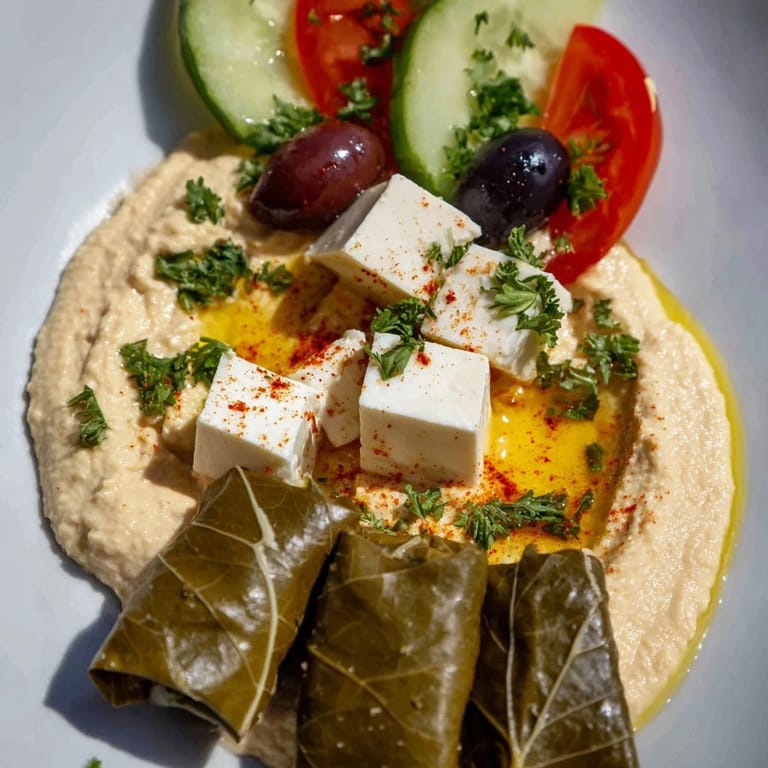
- Place them on one section of the platter so they stay warm and don't soak up flavors from the other components. They look elegant when arranged in slightly overlapping rows.
- Compose the cheeses:
- Cut them into bite-sized cubes and arrange in their own clusters so people can see the variety without mixing them together. This little visual separation actually matters for how people experience the flavors.
- Dress the olives:
- Toss them with olive oil and oregano no more than five minutes before serving, or the salt will draw out their liquid. Put them in a small bowl so they don't stain the cheese or spread olive oil everywhere.
- Build the platter:
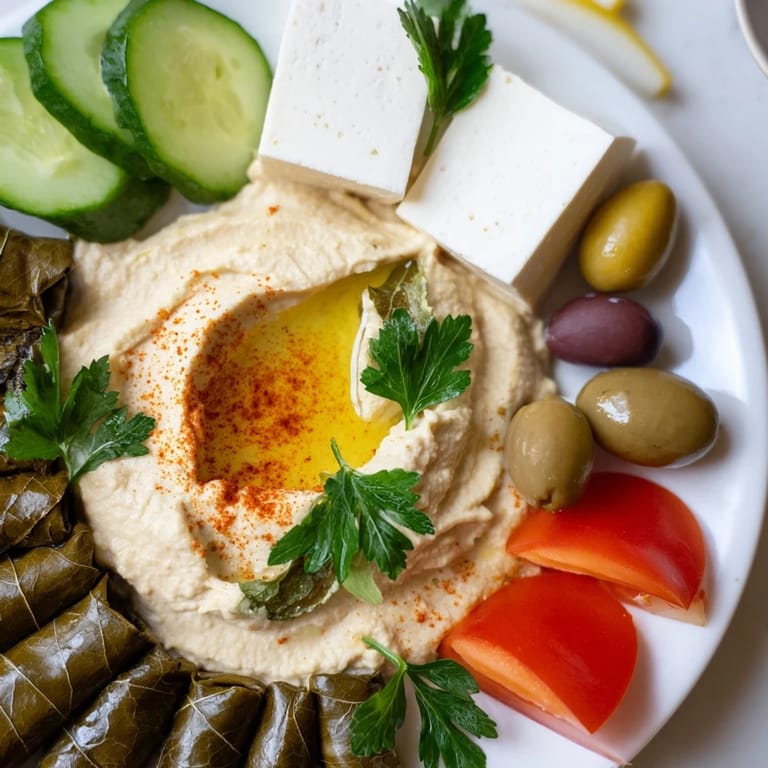
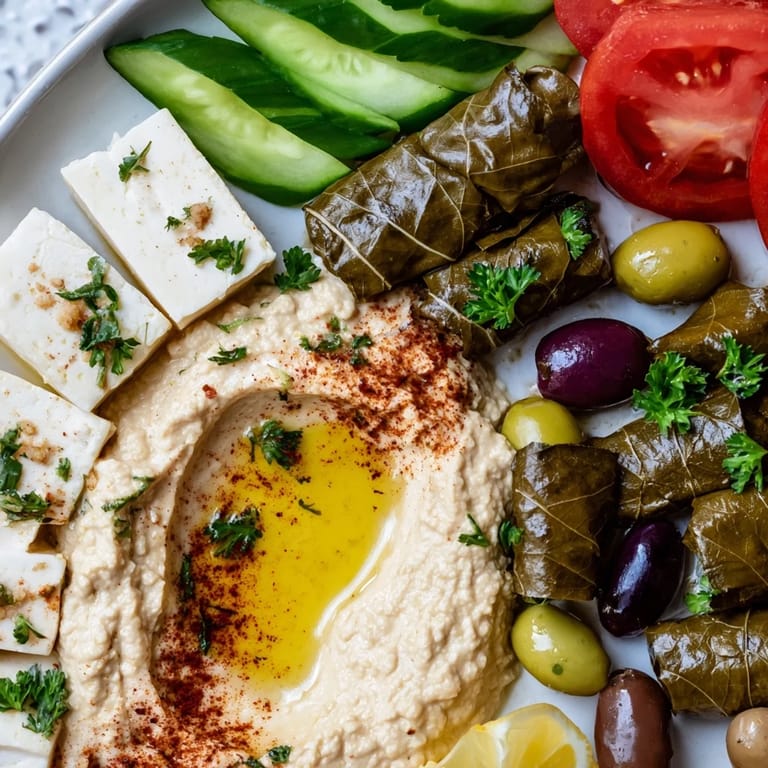
- Start with the hummus bowl as your anchor, then work outward with the other elements, leaving gaps for the fresh vegetables. You want it to look abundant but organized, not chaotic.
- Finish with freshness:
- Scatter the cucumber and tomato slices around the edges, squeeze a little lemon juice over the vegetables, and finish with a generous handful of fresh parsley. The bright green makes everything else pop.
- Serve warm:
- Bring the platter to the table alongside warmed pita cut into triangles, and let people build their own bites.
 Save
Save One time I made this platter for a group of Turkish exchange students at my friend's house, and I was nervous about getting it 'right.' Halfway through setting it up, one of them just started helping me arrange things, adjusting the olive placement and adding more parsley without asking—like it was muscle memory. We finished it together in comfortable silence, and suddenly I understood that this dish doesn't need perfection; it just needs intention.
The Heart of Turkish Hospitality
Meze isn't really about individual dishes—it's about the rhythm of sharing, the way a meal becomes a conversation. In Turkish culture, you're meant to linger over these small bites, to taste alongside someone else, to pass things back and forth. When you build this platter, you're not just feeding people; you're creating a table where sitting together feels like the main event. Every cheese, every olive, every grape leaf wrapped around herbs is an invitation to stay longer and enjoy the company.
Making This Your Own
The beautiful thing about meze is that it welcomes improvisation. If you find roasted red peppers at the market, add them—their sweetness plays off the salty cheeses perfectly. Grilled eggplant brings a smoky depth that nobody expects. Even spiced walnuts work if you toast them with a pinch of sumac and let them cool. The base stays the same, but your version will reflect what you found, what looked good that day, what your guests prefer. This flexibility is actually the most authentic part of the tradition.
Pairings and Perfect Moments
If you can find Turkish wine, a crisp Narince is transcendent alongside this platter—it cuts through the richness without overshadowing the delicate flavors. Raki, that anise-forward spirit, transforms into milky white when you add water (a ritual unto itself), and it pairs beautifully with the salty and briny elements. But honestly, cold water and good conversation work just fine too. The ritual matters more than the specific bottles.
- Keep the platter in a cool spot before serving; cheese that's slightly cold holds its shape better and tastes cleaner.
- Set out small plates and napkins so people can build composed bites rather than grabbing directly from the platter.
- Don't stress about perfection—the best platters look lived-in and generous, not sterile.
 Save
Save There's something deeply satisfying about setting down a meze platter and watching people's faces light up. This dish carries the warmth of a tradition that spans centuries, and every time you make it, you're part of that story.
Your Questions Answered
- → What is dolmas in this platter?
Dolmas are stuffed grape leaves typically filled with rice, herbs, and spices. They add a savory and aromatic element to the platter.
- → Can I make the hummus ahead of time?
Yes, hummus can be prepared in advance and stored in the fridge. It often tastes better after the flavors meld for a few hours.
- → What cheeses are included and can I substitute them?
The platter features feta, beyaz peynir, and kasseri or halloumi. You can substitute similar salty, firm cheeses based on availability.
- → How should I serve this platter?
Serve the platter with warm pita or flatbread, arranging each component attractively for easy sharing. Fresh garnishes add color and brightness.
- → Is this platter suitable for vegetarians?
Yes, all components are vegetarian-friendly, focusing on plant-based ingredients and cheeses without meat or seafood.
- → Can I add other items to the platter?
Absolutely, roasted peppers, grilled eggplant, or spiced nuts can enhance variety and flavors on the platter.