 Save
Save I discovered the magic of geometric cheese arrangements at a gallery opening in Brooklyn, where the caterer had arranged a platter that echoed the Art Deco crown building outside the window. Standing there with a glass of Champagne, I realized cheese didn't have to be thrown together casually—it could tell a visual story. That moment sparked an obsession with how simple ingredients could be transformed into architecture.
My friend Sarah brought this to a dinner party where someone had just bought an apartment with actual Art Deco details, and the platter matched the molding on the walls perfectly. She got more compliments on that cheese board than on the main course, which made us both laugh so hard we nearly dropped the honeycomb. That's when I knew this arrangement was worth perfecting.
Ingredients
- Aged cheddar: Slice it paper-thin with a mandoline or wire slicer—the thinner it is, the more elegant the fan shapes become, and the cheese gets a chance to shine.
- Gruyère: Its nuttiness holds up beautifully in overlapping arrangements, and it won't get as brittle as milder cheeses.
- Manchego: This adds a pale golden layer that photographs like butter and tastes faintly of caramel.
- Creamy brie: Wedges form the sturdy base of each arch, anchoring the whole visual composition.
- Blue cheese: Cut into small triangles to crown the arches like Art Deco spires pointing to the sky.
- Seedless grapes: Bunches stay vibrant and fill the negative space between cheese fans without requiring any prep.
- Pear and apple: Slice them just before arranging so they don't brown; they add freshness and break up the richness of all that cheese.
- Roasted almonds: Their texture contrasts beautifully with soft cheeses, and they catch the light when scattered across the board.
- Dried apricots: A whisper of sweetness that balances salty aged cheeses perfectly.
- Honeycomb or quality honey: Drizzle it near the brie for a touch of luxury that makes people feel like they're at somewhere special.
- Baguette slices: Toast them lightly so they don't get soggy, or serve room-temperature for a softer bite.
- Assorted crackers: Mix textures—seeds, herbs, plain—so everyone finds something they love.
Tired of Takeout? 🥡
Get 10 meals you can make faster than delivery arrives. Seriously.
One email. No spam. Unsubscribe anytime.
Instructions
- Slice your cheeses paper-thin:
- Use a wire slicer or mandoline set to the thinnest setting so each slice drapes elegantly without breaking. I learned this the hard way after mangling half a block with a regular knife.
- Create the first arch:
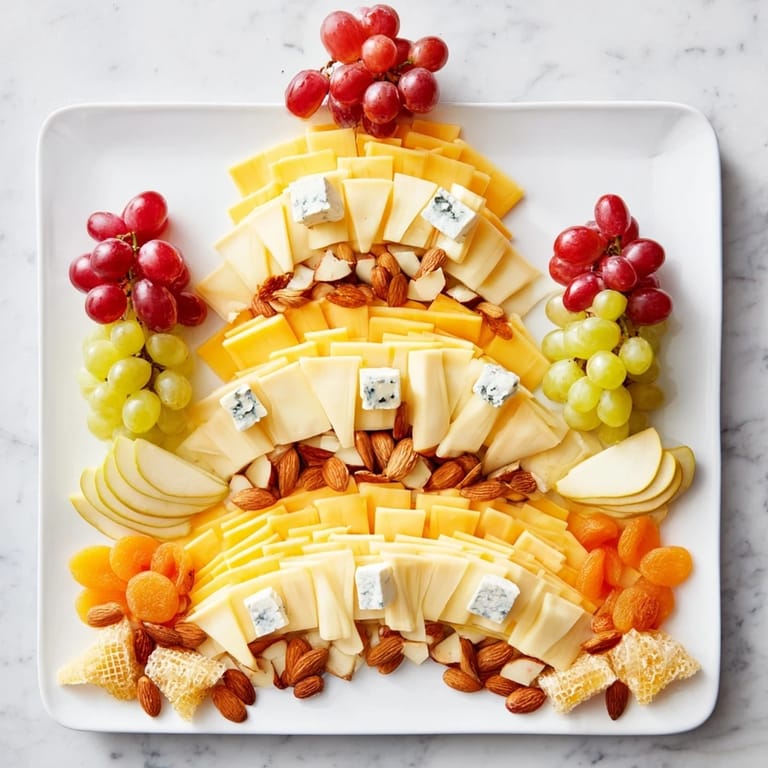
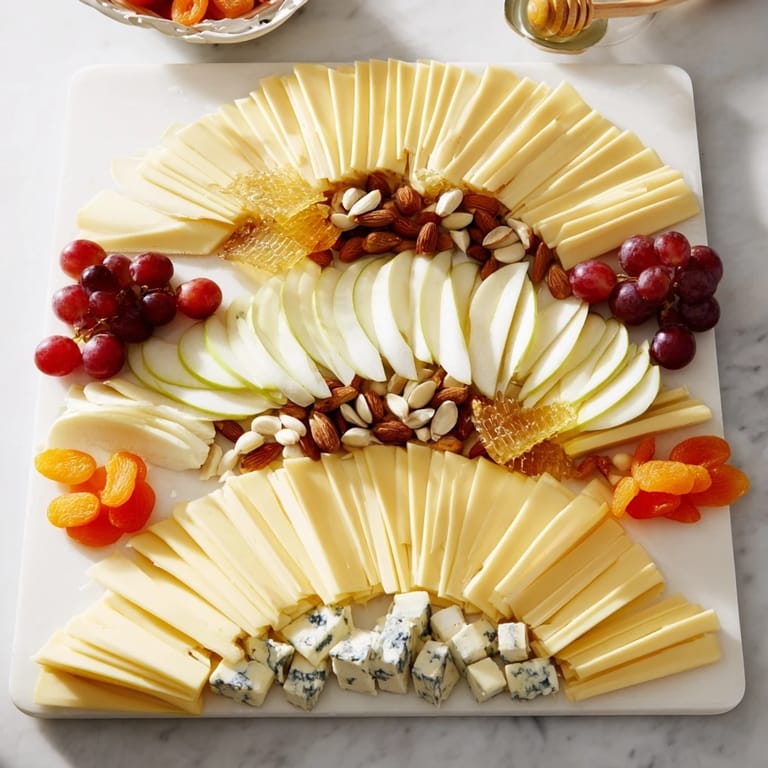
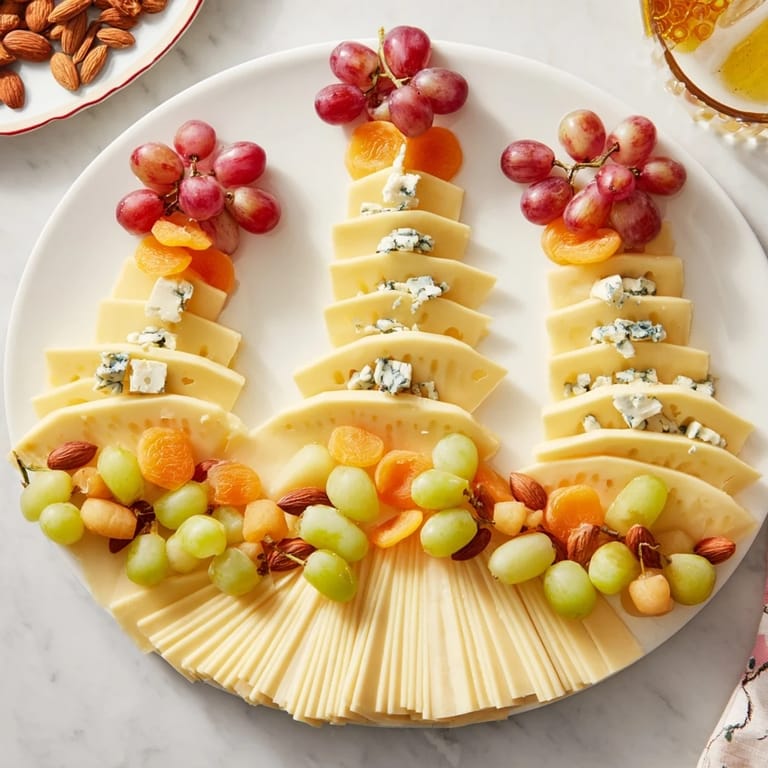
- Start at one end of your board and overlap aged cheddar slices in a gentle curve, each one sitting slightly on top of the last like roof shingles. Step back and adjust—symmetry is everything here.
- Build the second and third arches:
- Repeat with Gruyère and then Manchego, spacing them so they feel like three distinct buildings across your skyline. Leave breathing room between them for color accents.
- Anchor each arch with brie:
- Position wedges at the base where each cheese fan starts, creating a soft, creamy foundation that grounds the geometry. The warmth of the room will soften it just enough to eat comfortably.
- Crown with blue cheese:
- Place small triangles at the peak of each arch like pointed spire tips reaching toward the sky. Blue cheese's boldness deserves that spotlight.
- Fill the spaces thoughtfully:
- Tuck grape bunches and sliced fruit between the arches, thinking of them as parks and plazas between buildings. Their colors should pop against the cheese tones.
- Scatter nuts and dried fruit:
- Sprinkle almonds and apricot halves across the board as if you're placing them by hand rather than dumping them all at once. This takes the whole thing from assembled to artistic.
- Add the honey touch:
- Drizzle honeycomb or honey near the brie just before serving so it glistens under the light like amber glass.
- Arrange bread and crackers along the perimeter:
- Stand them upright or lay them at angles around the edges, leaving them accessible so guests can build their own bites without disturbing your carefully arranged cheese.
- Serve or chill:
- This is best eaten within an hour of arranging, but you can cover it loosely and refrigerate for up to an hour if you're timing it with other preparations.
 Save
Save The first time I served this, my mother sat down and just looked at it for a full minute before eating anything. She said it reminded her of the subway tiles she used to stare at as a kid in Manhattan. That's when I realized that good food isn't just about taste—it's about triggering something in someone's memory, architecture and all.
The Art Deco Inspiration
The 1920s loved symmetry, repetition, and the idea that even everyday objects could be beautiful. A cheese platter is a perfect canvas for that philosophy because you're working with real textures and colors, not just paint on a wall. The arches and fans echo the skyscrapers of that era, but they're also practical—they let everyone see and access their favorite cheese without chaos.
Choosing Your Cheeses
The secret is mixing firm sliceable cheeses with at least one soft anchoring cheese and something bold for contrast. I've swapped in Comté for cheddar when I felt fancy, or used aged Gouda for a deeper color story. The specific cheeses matter less than having a range of textures and shades that create visual drama when arranged.
Setting the Scene
This platter sings when you pair it with Champagne or a crisp Riesling, which cuts through the cheese richness and feels intentional. Serve it on a dark board for contrast, or marble if you want to lean into that Art Deco luxury vibe. The presentation is half the experience, so take a moment to step back and look at the whole picture before guests arrive.
- Make sure your platter or board is clean and dry before you start arranging anything.
- If you're nervous about symmetry, you can lightly pencil guidelines on the back of the board as a reference.
- Have small appetizer plates and cheese knives nearby so guests don't feel awkward about how to eat it.
 Save
Save This platter is proof that you don't need a complicated recipe to create something that feels special. Sometimes the best entertaining happens when you arrange simple things with intention and let your guests feel like they're part of something designed just for them.
Your Questions Answered
- → How do I create the tiered cheese fans effectively?
Use a wire slicer to cut thin, even slices and overlap them slightly in fan shapes to build symmetrical arches.
- → Can I substitute the cheeses for other types?
Yes, try Comté, Emmental, or aged Gouda for similar textures and flavors that complement the platter’s design.
- → What is the best way to keep the platter fresh before serving?
Cover and chill the assembled platter for up to one hour to maintain freshness without sogginess.
- → How should I pair this cheese arrangement with drinks?
A crisp Champagne or dry Riesling enhances the classic 1920s vibe and complements the cheese variety.
- → Are there vegan alternatives for this platter?
Use plant-based cheeses and omit honey or replace it with vegan-friendly sweeteners for a vegan-friendly version.