 Save
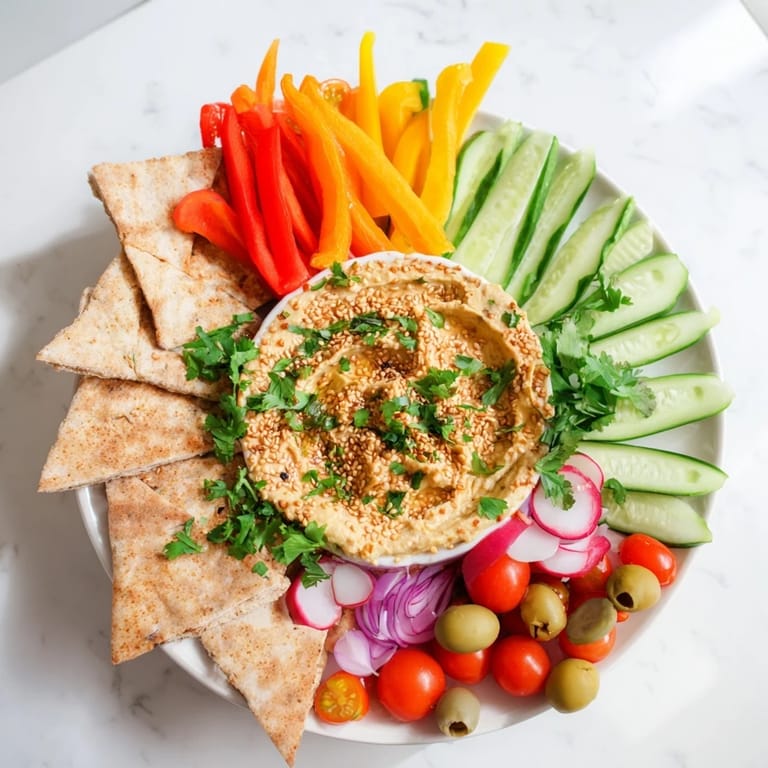
Save The first time I set this up for friends, I wasn't thinking of it as a showstopper—just a way to use up vegetables and some good dips I'd made that week. But something about arranging those triangular slices of pepper and cucumber into that tent shape caught everyone's eye the moment they walked in. One guest asked if I'd spent hours on it, and I realized that sometimes the simplest ideas hit hardest when they're unexpected and colorful.
I made this for a casual evening when my sister was visiting, and she brought her new partner who I'd never met. Instead of scrambling with a complicated dish, I put this tent together while we talked in the kitchen, and somehow the act of everyone standing around it, dipping and chatting, felt more intimate than a formal dinner. That's when I understood the real appeal—it invites people to participate, not just consume.
Ingredients
- Cucumber: Sliced lengthwise so the pieces stay sturdy and don't become flimsy on the platter.
- Red and yellow bell peppers: The color contrast is what makes this feel intentional rather than random; the sweetness keeps the flavor profile light.
- Carrots: Raw sticks give you that satisfying crunch and act as natural props for holding the tent structure visually.
- Cherry tomatoes: Halved so they nestle between other vegetables and don't roll around as you're arranging.
- Red onion: Thin slices add sharpness without overwhelming; the color adds another layer to the visual drama.
- Radishes: A detail I almost skip every time until I remember how their peppery bite and pale pink color tie everything together.
- Pita or msemen: Warming them slightly makes them more pliable for fanning and adds a subtle toasted aroma that signals care.
- Hummus, muhammara, and baba ganoush: The holy trinity that turns this from vegetable platter to an experience; use good quality or make your own if you have time.
- Green and black olives: Scattered throughout, they add salty pockets of flavor and visual texture.
- Fresh cilantro or parsley: The final green that brings everything to life; don't skip this.
- Toasted sesame seeds: A sprinkle on each dip feels intentional and adds a nutty layer.
- Ground cumin and smoked paprika: These warm the dips without overpowering and hint at the Moroccan inspiration.
Tired of Takeout? 🥡
Get 10 meals you can make faster than delivery arrives. Seriously.
One email. No spam. Unsubscribe anytime.
Instructions
- Prep Your Canvas:
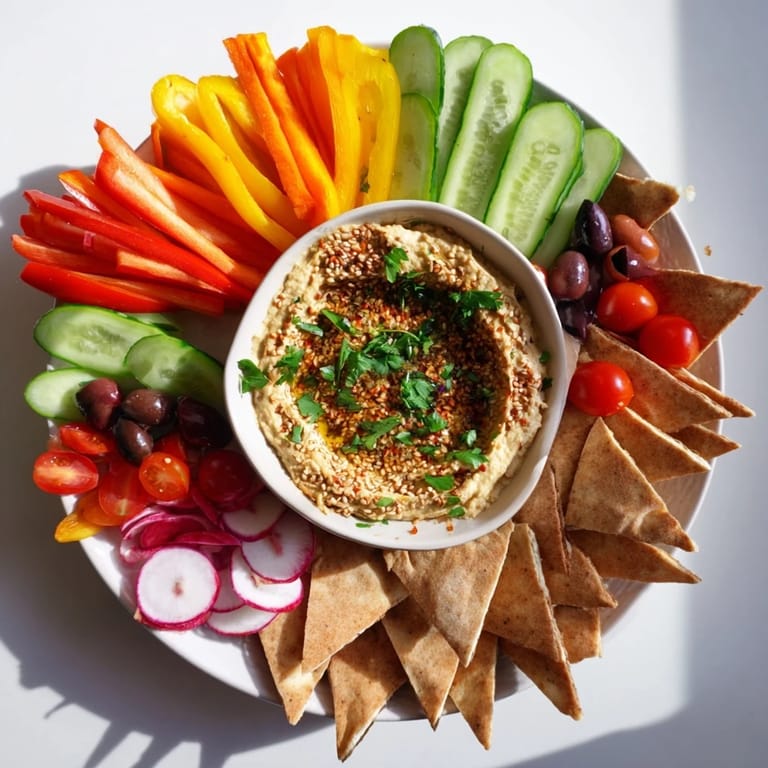
- Slice and cut all your vegetables while your platter sits empty in front of you, imagining the tent shape. Arrange them in pointed triangular sections, starting with the tallest pieces at the peak and working outward—think of it like building a geometric edible sculpture.
- Warm the Bread:
- Toast your pita or msemen in a dry skillet for 2-3 minutes per side until they're just warm enough to bend without cracking. Cut them into triangles and fan them out at the base like they're supporting the tent poles.
- Compose the Dips:
- Spoon each dip into its own small bowl and give each one a light dusting of cumin, paprika, or sesame. This moment of plating the dips is where you add personality—don't just dump them in.
- Add the Final Flourishes:
- Scatter olives throughout the vegetable arrangement so they surprise people as they dip, then add the cilantro or parsley like confetti. The garnish isn't decoration; it's flavor.
- Serve with Intention:
- Bring this to the table while people are watching if you can. There's something satisfying about setting it down and seeing their faces light up at the architecture of it all.
 Save
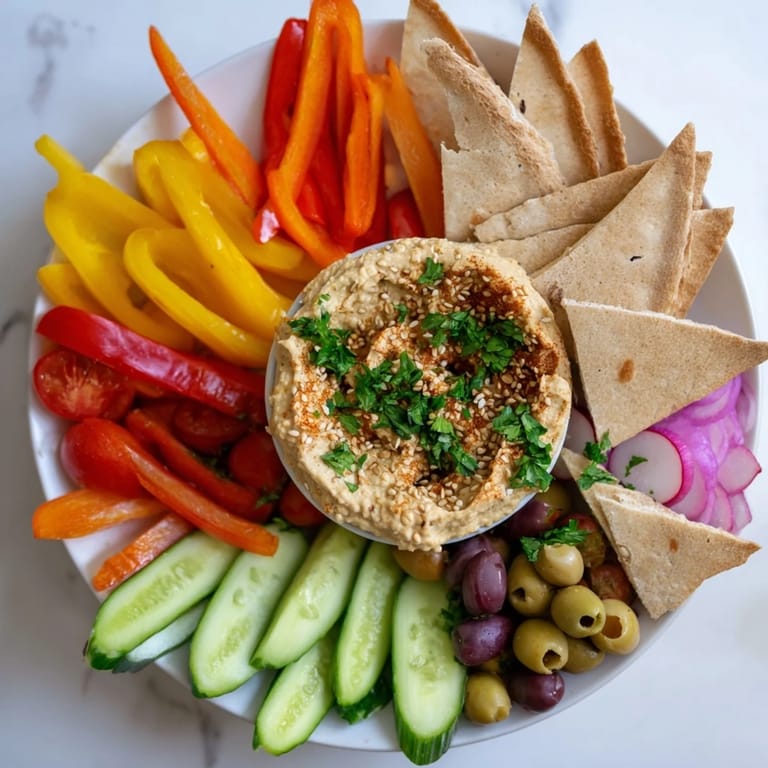
Save A friend came back to the kitchen while everyone was still around the platter, and she said something I didn't expect: she felt like she was eating with her hands at a proper Moroccan souk, not in a living room in the suburbs. That comment made me realize this tent wasn't just about food—it was about creating a moment where everyone felt transported, even for just an appetizer.
The Art of the Arrangement
The tent shape isn't just visual theater; it's functional. By arranging vegetables in a peak and fanning downward, you create natural pathways for guests to navigate without the platter looking picked over after the first few bites. Alternate colors deliberately—the red of tomatoes next to the yellow of peppers, pale radish slices beside dark cucumber. This isn't random; it's the difference between looking like you threw vegetables on a board and looking like you actually thought about it. Stand back after each section and ask yourself if someone would want to photograph this.
Making It Your Own
Once you've made this once, you'll stop following the ingredient list. Snap peas become your tent builder one week because that's what the market had. Blanched green beans replace carrots another time. Roasted chickpeas scattered on top add protein and crunch without changing the spirit of the thing. The dips can stay constant while the vegetables dance around them, or you can swap one dip for whipped feta if you're in that mood. This recipe is a template that wants to be played with, not memorized.
The Warming Bread Question
Some people skip warming the bread entirely and serve it cold, which is perfectly fine if you're in a hurry. Others go the extra mile and toast it lightly in the oven instead of a skillet, which gives it a crispness that pairs beautifully with the soft dips. I usually warm mine just enough that they're pliable but not so much that they dry out and become brittle by the time guests reach for them.
- If using store-bought pita, give it a light toast rather than a full warm—you want it flexible, not crisp.
- Homemade msemen or other flatbreads can handle more heat without falling apart.
- Cold bread works fine too if you're pressed for time; some guests actually prefer the contrast with warm dips.
 Save
Save This platter taught me that sometimes the most memorable food moments aren't about technical skill or obscure ingredients. They're about showing up with thought, color, and a willingness to make eating together feel a little bit special. Make this when you want people to linger.
Your Questions Answered
- → What dips complement the vegetable platter?
Traditional dips like hummus, roasted red pepper muhammara, and baba ganoush bring smoky, creamy, and spiced flavors that pair wonderfully with crisp vegetables and warm breads.
- → Can I use different breads with this spread?
Yes, besides pita or msemen, you can serve with other flatbreads like lavash or naan warmed before serving to maintain a soft texture.
- → How should the vegetables be prepared?
Vegetables are sliced lengthwise or into sticks to create colorful, easily dippable pieces arranged in pointed clusters for an attractive presentation.
- → What herbs and spices enhance the flavors?
Fresh cilantro or parsley adds brightness, while cumin, smoked paprika, and toasted sesame seeds deepen the dips’ aroma and taste.
- → How can I adapt this for dietary preferences?
For vegan options, ensure dips and breads are dairy-free. Add roasted chickpeas or marinated tofu cubes to increase protein and texture variety.