 Save
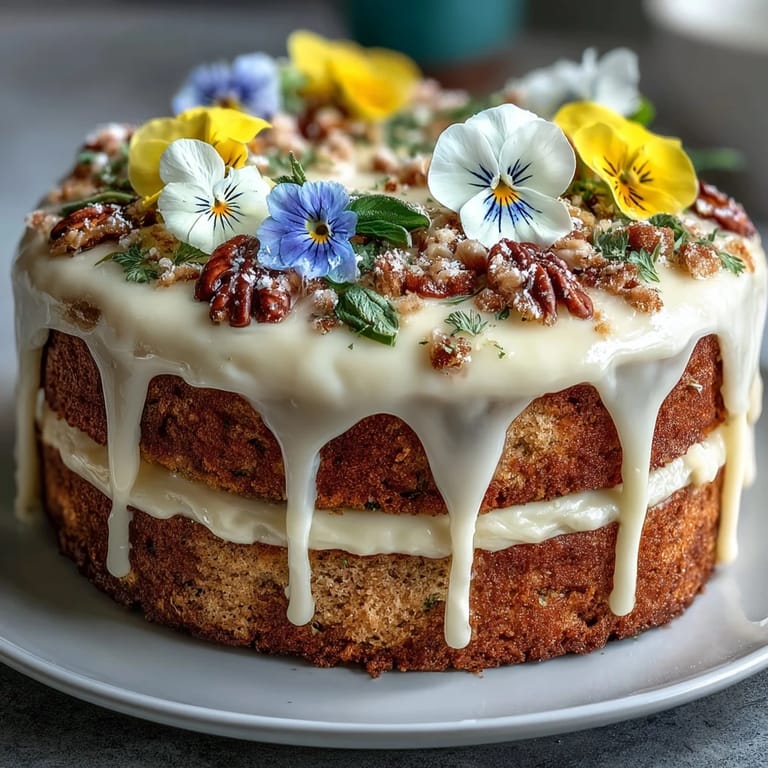
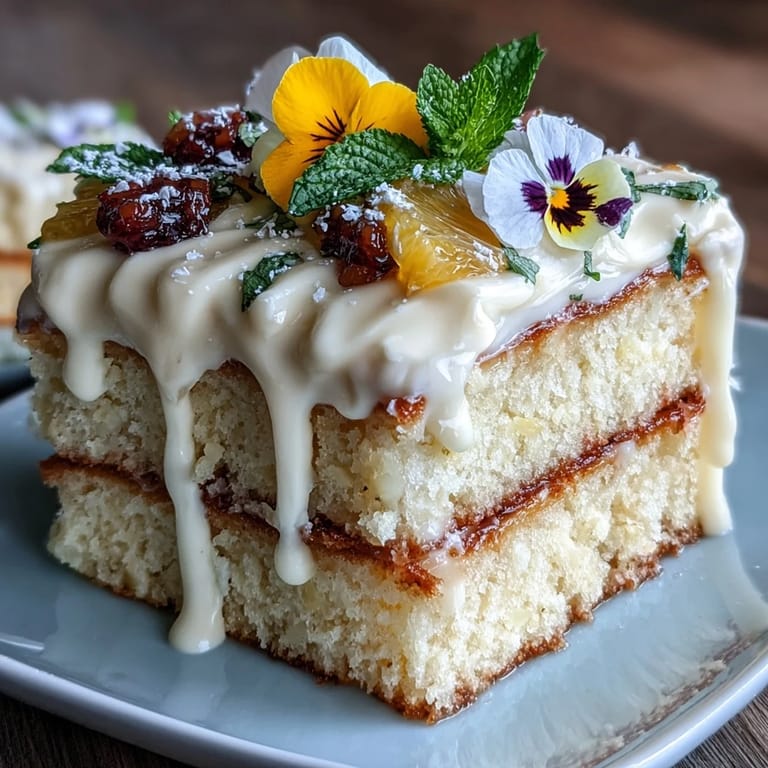
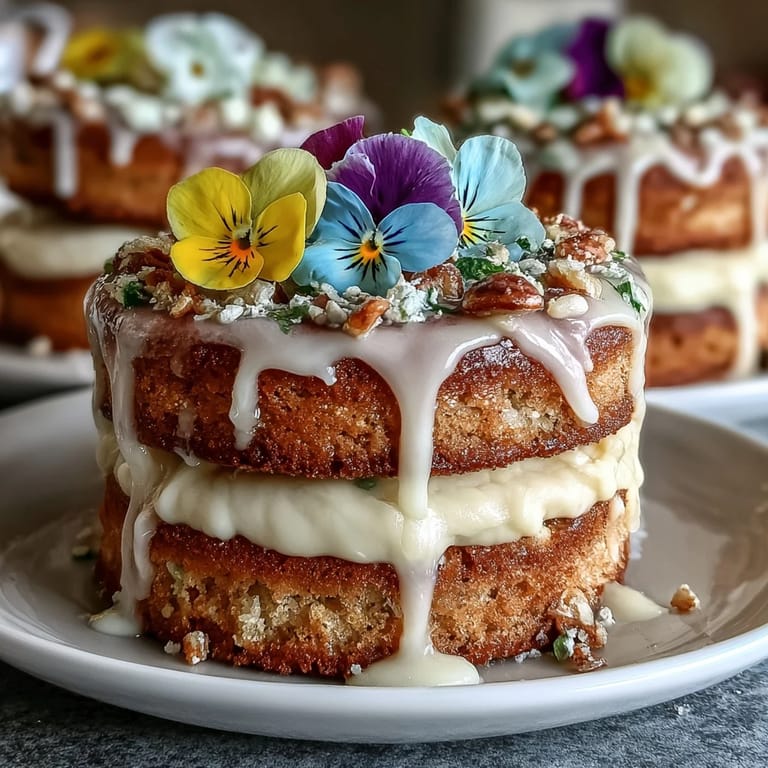
Save My sister texted me a photo of a garden in full bloom the morning of her birthday, and suddenly I knew exactly what to bake. These delicate mini layer cakes emerged from wanting to capture spring itself—that fleeting moment when everything feels new and celebratory. The vanilla-lemon sponge is tender enough to bite through like a whisper, and when you crown each tiny cake with fresh edible flowers, something magical happens. It stopped being just dessert and became an edible garden party.
I'll never forget my neighbor peeking over the fence as I arranged the flowers on top—she stood there for a solid minute just watching, then asked if I could make six more for her book club. That's when I realized these aren't just pretty cakes; they're conversation starters that make people feel genuinely special.
Ingredients
- All-purpose flour (1 1/4 cups): This is your cake's foundation—measure by spooning into the cup rather than scooping, or weigh it if you can, because even a little extra can make things dense.
- Baking powder (1 tsp) and salt (1/4 tsp): Don't skip the salt; it wakes up the vanilla and lemon like a whisper of magic.
- Unsalted butter (1/2 cup for cake, 3/4 cup for buttercream): Room temperature is non-negotiable here—cold butter won't cream properly, and your cake will suffer.
- Granulated sugar (3/4 cup): This sweetens the cake and helps create that light, fluffy crumb texture through creaming.
- Eggs (2 large, room temperature): Cold eggs don't incorporate smoothly, so let them sit out for 20 minutes before you start.
- Pure vanilla extract (1 tsp) and lemon zest (1/2 tsp): The vanilla rounds out the flavor while the lemon zest adds brightness without making the cake sour—just that whisper of citrus.
- Whole milk (1/2 cup, room temperature): This keeps the crumb tender and moist; cold milk can shock the batter.
- Powdered sugar (2 cups, sifted): Sift it before measuring to avoid lumpy buttercream, trust me on this one.
- Edible flowers (1 cup, approx. 30 g): Only buy from suppliers you trust—these are going directly on the cake, so food-safe and pesticide-free is the entire point.
Tired of Takeout? 🥡
Get 10 meals you can make faster than delivery arrives. Seriously.
One email. No spam. Unsubscribe anytime.
Instructions
- Set the stage:
- Preheat your oven to 350°F (175°C) and line a 9x13-inch rimmed baking sheet with parchment paper, then grease it lightly. Getting this done first removes the stress later.
- Whisk the dry team:
- In a medium bowl, whisk together the flour, baking powder, and salt—this aerates the flour and distributes the leavening evenly. Set aside.
- Cream the butter and sugar:
- In a large bowl, beat the softened butter and granulated sugar together for about 3 minutes until the mixture looks pale and fluffy, almost like clouds. This step is where air gets incorporated into the cake, so don't rush it.
- Bring in the eggs:
- Add the eggs one at a time, beating well after each addition so they fully incorporate. Once they're in, mix in the vanilla extract and lemon zest until everything smells like spring.
- Alternate dry and wet:
- Now comes the gentle part—add half the flour mixture and stir gently until just combined, then add the milk, then the remaining flour. Mix minimally after each addition; overmixing develops gluten and creates a tough cake instead of a tender one.
- Bake the base:
- Spread the batter evenly onto your prepared baking sheet and bake for 18–22 minutes until a toothpick inserted in the center comes out clean. The kitchen will smell like vanilla and lemon, and you'll know it's ready when the edges are just starting to pull away from the sides.
- Cool completely:
- Let the cake cool on the baking sheet for a few minutes, then turn it out onto a wire rack to cool completely. This usually takes about 30 minutes, and yes, it matters—warm cake crumbles.
- Cut into circles:
- Using a 2.5–3 inch round cutter, punch out 12 neat circles from the cooled cake. If you have scraps, save them for cake pops or eat them as a baker's tax.
- Make the buttercream:
- Beat the softened butter until it's creamy and pale, then gradually add the sifted powdered sugar a little at a time. Add the vanilla, salt, and 1 tablespoon of milk, then beat until light and fluffy—if it feels stiff, add a splash more milk until it's spreadable but still holds its shape.
- Tint if you'd like:
- Divide the buttercream into small bowls and add a touch of pastel food coloring if you want—soft pinks, pale yellows, and lavender blues all feel spring-like and birthday-worthy.
- Assemble the mini layers:
- On a serving plate, place one cake circle, top it with a thin layer of buttercream, then stack the second circle on top. Add another thin layer of buttercream to the top.
- Crown with flowers:
- Pipe or spread a dollop of buttercream on top of each mini cake, then arrange 2–3 edible flowers artfully on the buttercream. They'll stick a little and look absolutely stunning.
- Chill and serve:
- Pop the assembled cakes into the fridge for 15 minutes so the buttercream sets and everything holds together beautifully when you cut into them.
 Save
Save When my friend blew out the candles on hers, she looked at the tiny cake in front of her and actually got teary—not because of the flowers or the prettiness, but because she said it tasted like someone had really thought about her. That's the moment I understood that these cakes are about more than Instagram; they're about making someone feel seen.
The Flavor Pairing Secret
The vanilla and lemon combination is deliberately balanced—the vanilla keeps the cake from tasting too sharp, while the lemon zest prevents it from feeling heavy or one-note. When you taste them together, it's like spring woke up in your mouth but didn't assault you with citrus. This subtle restraint is what makes people keep eating.
Working with Edible Flowers
The first time I used edible flowers, I grabbed what looked pretty at the market, and my mom immediately asked if they were food-safe—I realized I had no idea. Now I order from a trusted specialty supplier, and it's made all the difference. The flowers stay fresher, taste better, and most importantly, I'm not worried about anyone getting sick.
Timing and Storage Tips
These cakes are best assembled the morning of serving, as the buttercream keeps everything fresh while the cake layers stay tender. You can bake the sponge a day ahead and wrap it tightly, then assemble everything when you're ready to celebrate. They keep beautifully in the fridge for up to two days, though the flowers are prettiest if added within a few hours of serving.
- Brush the cake layers with a light lemon simple syrup before buttercream if you want extra moisture and flavor.
- Leftover cake scraps make incredible cake pops if you mix them with a little buttercream and roll in chocolate.
- If you're making these ahead, keep the edible flowers dry and add them just before guests arrive so they stay crisp and bright.
 Save
Save These mini cakes remind me that the best recipes are the ones that make people feel celebrated, not just fed. Bake them when someone needs to know they matter.
Your Questions Answered
- → What edible flowers work best for decoration?
Violas, pansies, and nasturtiums are excellent options, offering vibrant color and food-safe qualities. Ensure flowers are pesticide-free and sourced from reputable suppliers.
- → How do I achieve a light and fluffy buttercream?
Beat softened butter thoroughly before gradually adding powdered sugar and vanilla, incorporating milk or cream in small amounts to reach a smooth, fluffy texture.
- → Can I prepare the cakes in advance?
Yes, bake and cut the layers ahead of time, storing them wrapped tightly in the refrigerator. Assemble and decorate shortly before serving for optimal freshness.
- → What’s the best way to cut uniform mini layers?
Use a 2.5 to 3 inch round cookie cutter to stamp even circles from the cooled sheet cake, re-rolling scraps to maximize yield.
- → How can I add extra flavor to these cakes?
Brushing the cake layers lightly with citrus syrup enhances moisture and brightness, complementing the vanilla and lemon essence.