 Save
Save Catching the scent of blood oranges as I peel them always makes me pause: there's something almost floral that promises winter isn't quite so dreary. The first time I tackled this cake, I hadn't planned on making dessert at all—just found myself hypnotized by an overflowing market bin of crimson-stained fruit. A drizzle of juice stained my thumb, and I realized right there that the only sensible thing to do was bake them into something unforgettable. Sometimes the best kitchen decisions are made on a whim, surrounded by chaos and shopping bags.
I remember one rainy afternoon when my neighbor popped in, lured by the citrusy aroma curling out the kitchen window. We sampled the cake warm from the rack, laughing as glaze dripped down our fingers and discussing other fruits we could try next time. There's nothing quite like swapping stories over slices still warm from the oven.
Ingredients
- Unsalted butter: Keep it at room temperature for the fluffiest creaming, and don't be shy about greasing the tin generously.
- Caster sugar: I've found the fine crystals dissolve quickly, giving the cake a tender crumb.
- Large eggs: Crack them in one at a time—if you rush, the batter might split, but it comes together with a little patience.
- Zest of 2 blood oranges: Use a zester to catch just the colorful outer layer for maximum fragrant punch.
- Fine polenta (cornmeal): This is the secret to the sunny, nubbly texture—don't swap it for regular flour.
- Ground almonds: They lend richness; almond meal is fine here but avoid any lumps by sifting if needed.
- Gluten-free baking powder: Even a tiny scoop too much can cause the cake to rise and fall, so measure carefully.
- Pinch of salt: Just enough to nudge the sweetness into balance.
- Blood orange juice: Squeeze it fresh if you can—the vivid color is worth the effort.
- Vanilla extract: Adds warmth, tying all the citrusy notes together.
- Powdered sugar: Sift to avoid lumpy glaze and achieve the perfect glossy finish.
- Blood orange juice (for glaze): Strain to keep the glaze silky and luminous.
- Slices of blood orange (optional): Thin slices look like little stained glass windows on top of the cake.
- Edible flowers (optional): A scatter on top turns a humble cake into a celebration.
Tired of Takeout? 🥡
Get 10 meals you can make faster than delivery arrives. Seriously.
One email. No spam. Unsubscribe anytime.
Instructions
- Get your gear and prep:
- Fire up the oven to 170°C and let it warm while you butter and line the cake tin. It feels ceremonial, setting the stage for good things to rise.
- Cream the butter and sugar:
- Beat butter and sugar together until they're light and beautiful—listen for the quiet thump as your mixer whirls, then sneak a taste if you want.
- Add eggs with care:
- Crack in the eggs one by one, letting each meld into the batter. It'll look silky by the time you're done, promise.
- Fragrance, meet flavor:
- Fold in the blood orange zest and vanilla; the air will fill with the scent of orange groves.
- Mix up the dry team:
- Combine polenta, ground almonds, baking powder, and salt—the polenta shines a sunny yellow, always a good sign.
- Bring it all together:
- Gently fold the dry mixture into the wet, scraping down the bowl so nothing gets left behind, then add the blood orange juice just until it's a smooth, cheerful batter.
- Into the oven:
- Pour the batter into your tin, smoothing the top—it's thick, so coax it into the corners—then bake until golden and the kitchen fills with a citrusy haze.
- Let it cool (just a bit):
- Resist the urge to cut right in; ten minutes cooling in the tin makes unmolding a breeze, and a rack helps it finish cooling all the way through.
- Dreamy glaze time:
- Sift the powdered sugar, then slowly stir in blood orange juice until the glaze is rosy and falls in thick ribbons off your spoon.
- Decorate and celebrate:
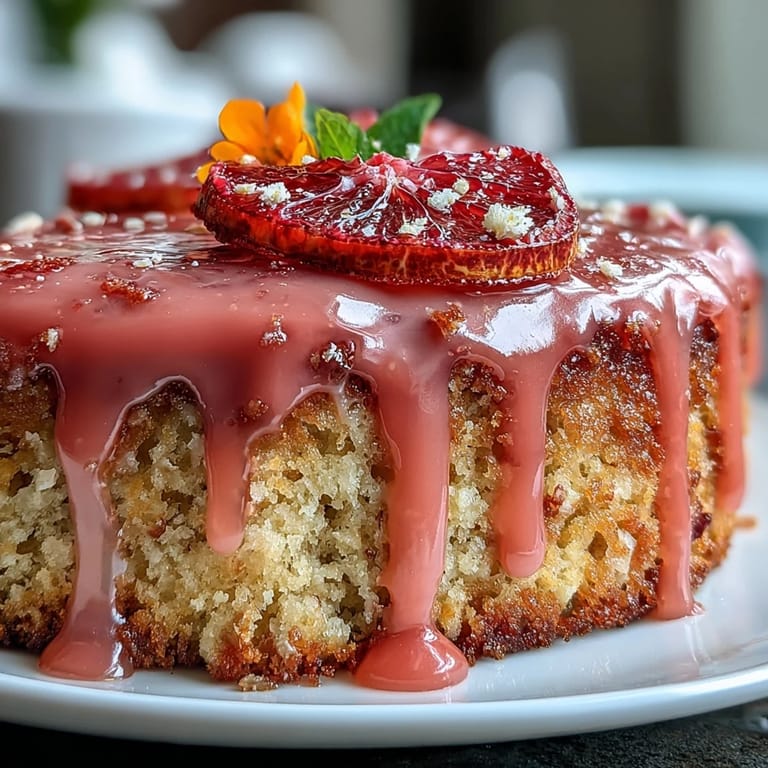
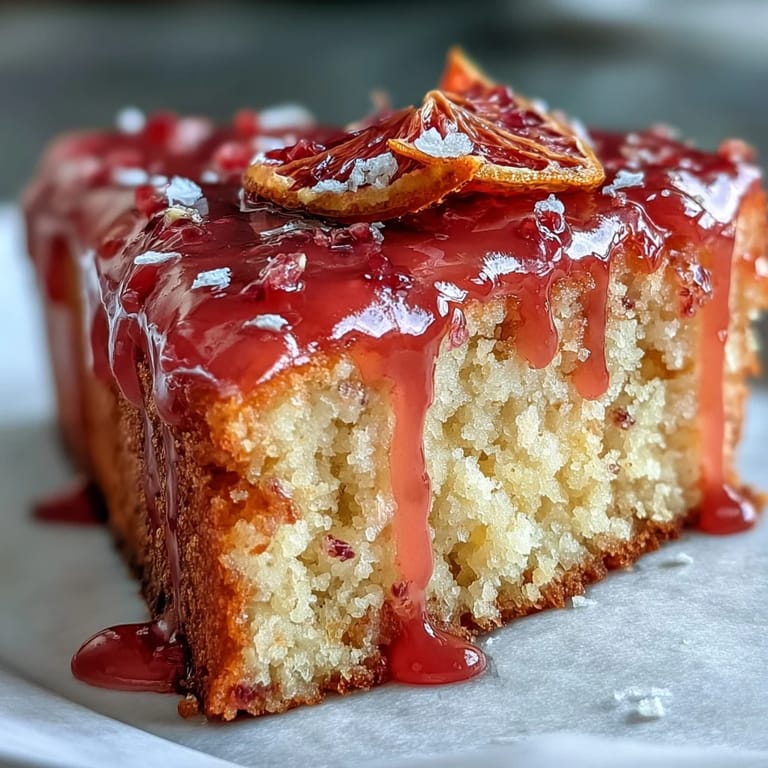
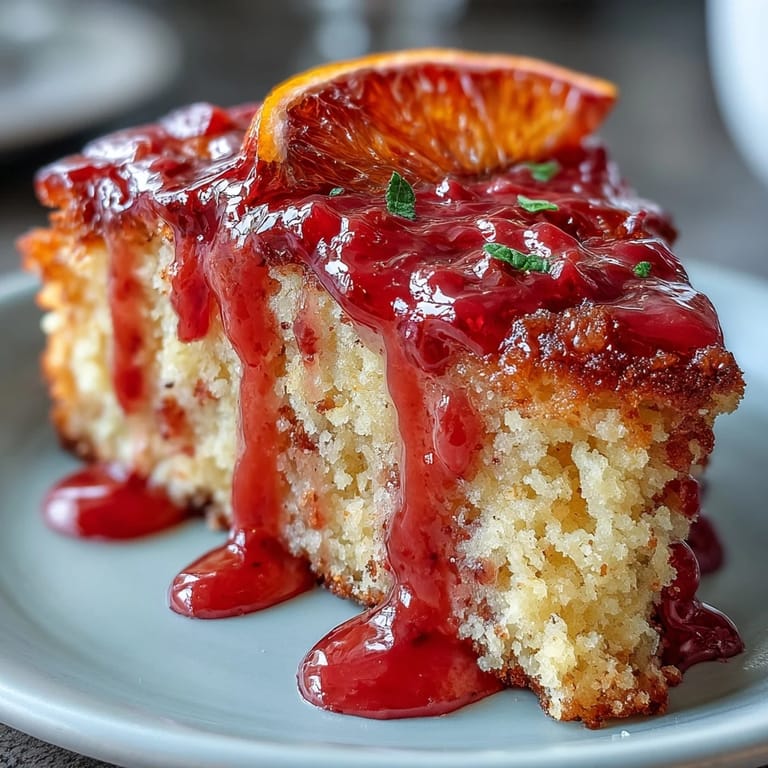
- Once cool, drizzle on the glaze and watch pink rivulets race down the sides, then decorate with orange slices and flowers for an edible crown.
 Save
Save  Save
Save The first time this cake made it to a party table, it earned a circle of wide eyes followed by the quietest table I've ever heard—everyone was too busy savoring to speak. It's the kind of dessert that makes you look around for someone to share the moment with.
Blood Oranges: The Winter Gem
I've tried making this cake with regular oranges in a pinch, but nothing compares to the jewel-like color and tangy fragrance of blood oranges. Their peak season always feels too short, so I grab a bag whenever I see them, dreaming up excuses to bake. They lend not just flavor but a natural pageantry to whatever you stir them into.
Gluten-Free Without Compromise
Polenta and ground almonds do all the heavy lifting—no one ever guesses this cake is gluten-free until I mention it. It's taught me that smart ingredient swaps can open up desserts to everyone at the table, with no need to sacrifice texture or taste.
Little Touches for a Showstopper Finish
Scattering edible flowers or orange slices over that glossy glaze turns a straightforward loaf into a centerpiece. Even low-effort decorations make this cake feel special, perfect for a small celebration or just treating yourself on a Tuesday night.
- If the glaze feels too thick, add juice drop by drop until just pourable.
- Use parchment paper for an easier, less stressful cake release.
- Don’t skip the zest—it truly makes the citrus flavor sing.
 Save
Save 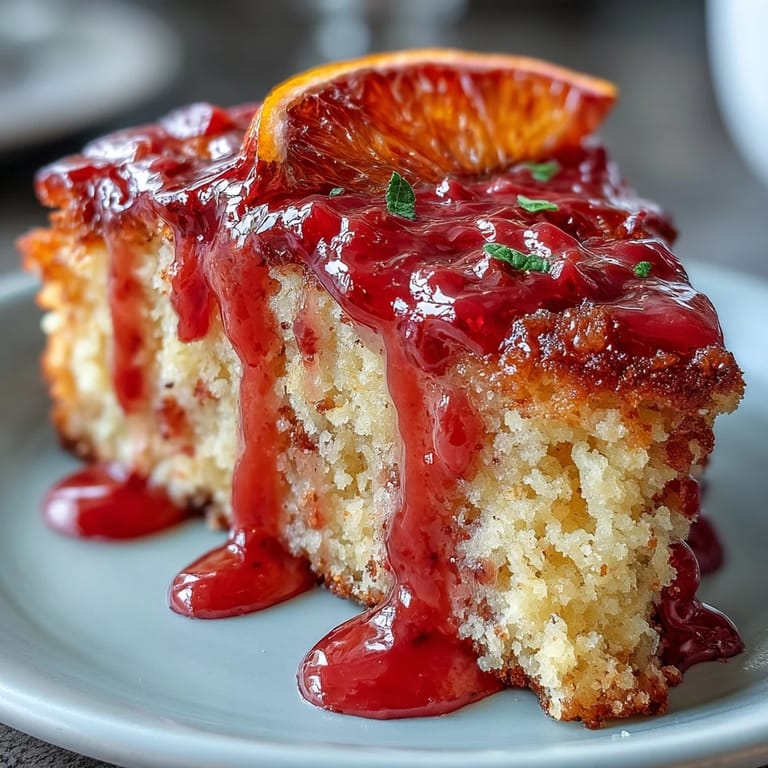 Save
Save This cake brings sunshine in the dead of winter and looks as good on the brunch table as it tastes. Whip it up next time you're craving color and bright flavor—no celebration required.
Your Questions Answered
- → What can I use if blood oranges aren't available?
Use regular oranges for the same bright citrus flavor; the glaze will be orange rather than pink. Consider adding a little extra zest for a more intense aroma.
- → How does polenta affect the cake's texture?
Fine polenta gives a tender crumb with a gentle, pleasant graininess. Using very fine polenta keeps the texture delicate while contributing subtle corn sweetness.
- → Can I make the cake without almonds?
Substitute ground almonds with extra fine polenta or a gluten-free flour blend; expect a slightly different crumb and less almond aroma. Adjust moisture if needed.
- → How do I know when it's done baking?
Bake 40–45 minutes at 170°C. The cake is ready when the top is golden and a skewer inserted in the center comes out clean or with a few moist crumbs.
- → Any tips for keeping the cake moist?
Brush the warm cake with reserved blood orange juice before glazing, or soak briefly with a light syrup. Storing in an airtight container also preserves moisture.
- → Can I prepare this in advance or freeze it?
Yes—freeze the cooled, unglazed cake wrapped tightly. Thaw fully, then glaze before serving. Alternatively, glaze on the day for the freshest finish.