 Save
Save The first time I made wild rice pilaf, I was trying to impress some new friends who had come over for dinner. I'd always associated wild rice with fancy restaurant sides, something I'd never attempted at home. Standing at my stove, watching those tiny dark grains dancing in the simmering broth, I realized I'd been missing out on one of the most satisfying grains to cook. The way the rice kernels burst open to reveal their tender interior became a little moment of kitchen magic I still look forward to every time I make this dish.
Last autumn, my neighbor stopped by while I had a batch simmering on the stove. She ended up staying for dinner and admitted she'd never liked wild rice until that night. We sat at my kitchen table, eating straight from the serving dish while the rain tapped against the windows. Sometimes the simplest meals create the warmest memories.
Ingredients
- Wild rice: Rinsing it thoroughly removes any debris and helps the grains cook more evenly, giving you that perfect tender-chewy texture
- Vegetable broth: Low-sodium lets you control the salt level while still building a flavorful base for the rice to absorb
- Olive oil: Creates the foundation for sautéing the vegetables and helps develop those lovely golden edges on the mushrooms
- Yellow onion: Finely chopped so it melts into the dish, providing a sweet aromatic backbone
- Garlic: Minced fresh releases more flavor than dried, adding that essential savory depth
- Mushrooms: Cremini or button mushrooms work beautifully here, becoming meaty and concentrated as they cook
- Celery and carrot: The classic aromatic duo that adds subtle sweetness and texture variation
- Fresh thyme: Earthy and fragrant, thyme pairs naturally with both wild rice and mushrooms
- Bay leaf: A humble herb that infuses the rice with a subtle floral note as it simmers
- Fresh parsley: Brightens the finished dish with a fresh herbal contrast to the earthy flavors
Tired of Takeout? 🥡
Get 10 meals you can make faster than delivery arrives. Seriously.
One email. No spam. Unsubscribe anytime.
Instructions
- Get the rice going:
- Combine the rinsed wild rice, vegetable broth, and water in a medium saucepan. Bring it to a boil, then reduce heat to low, cover, and let it simmer gently. You'll know it's done when the grains are tender and most of the liquid has been absorbed, about 40 to 45 minutes.
- Sauté the aromatics:
- While the rice simmers, warm the olive oil in a large skillet over medium heat. Add the chopped onion, celery, and carrot, cooking them until they're soft and fragrant, about 5 to 6 minutes. Your kitchen should start smelling amazing right about now.
- Add the mushrooms:
- Toss in the garlic and sliced mushrooms. Let them cook undisturbed for a minute or two before stirring, allowing them to develop a golden brown color. Continue cooking for 6 to 8 minutes until the mushrooms have released their moisture and become nicely browned.
- Season the mixture:
- Stir in the fresh thyme leaves and bay leaf, seasoning with salt and pepper to taste. Let everything cook together for just another minute so the flavors can mingle, then remember to fish out and discard the bay leaf.
- Combine everything:
- Gently fold the cooked wild rice into the skillet with the mushroom mixture. Take a moment to taste and adjust the seasoning if needed. The rice should be tender but still have a pleasant chew to it.
- Finish and serve:
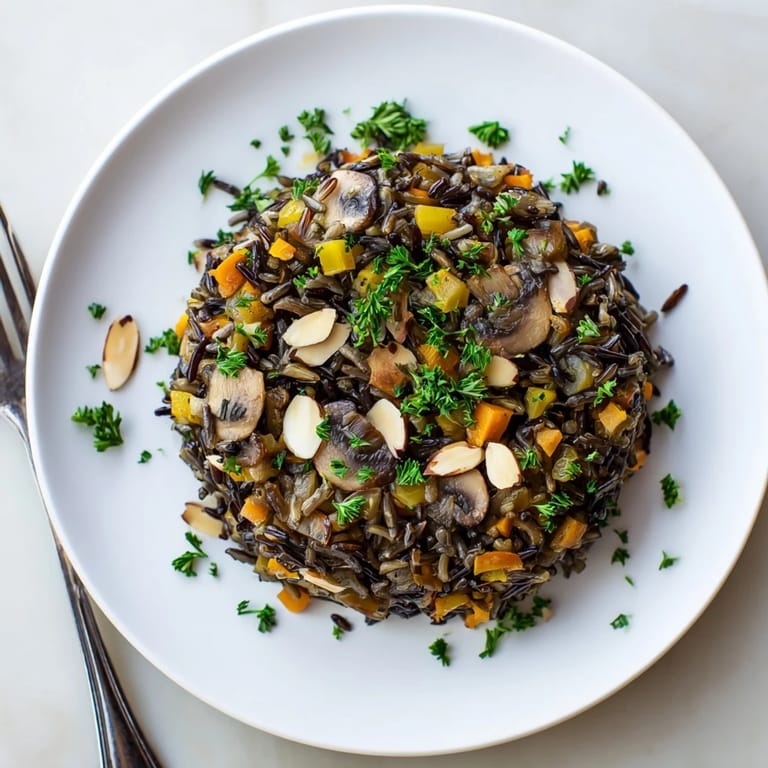
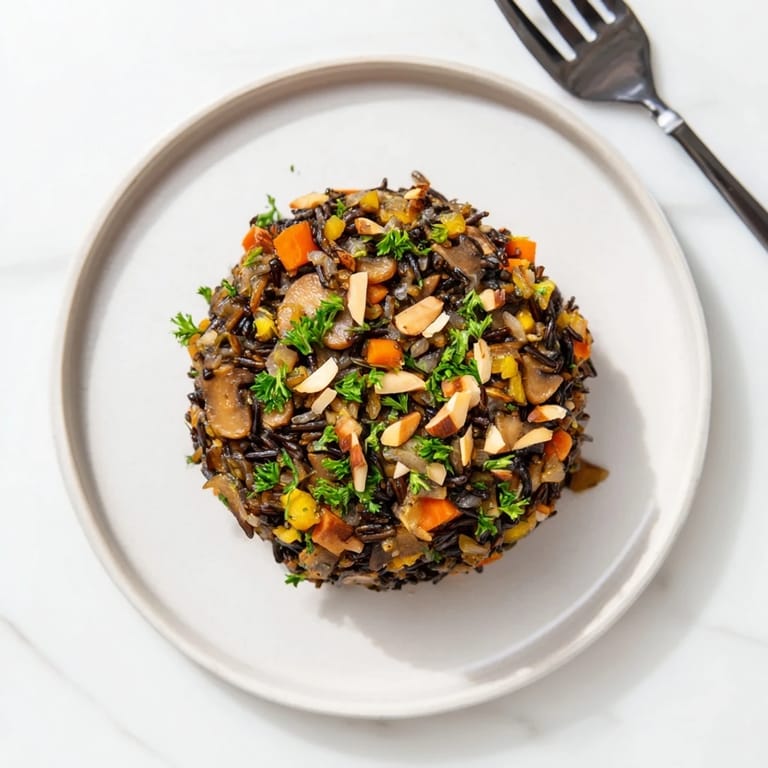
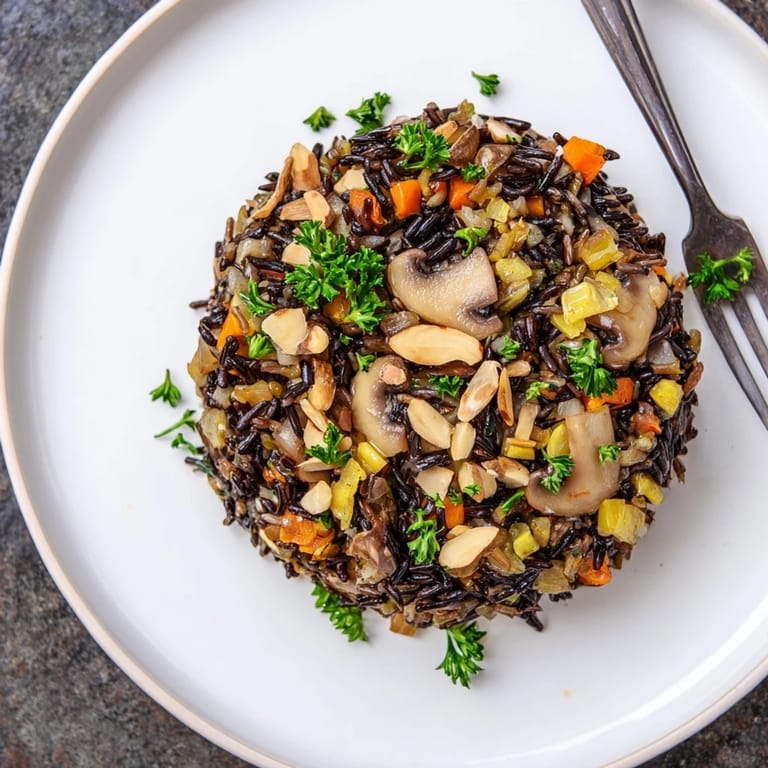
- Transfer the pilaf to your serving dish and scatter the fresh parsley on top. If you're using toasted almonds, sprinkle them over now for a lovely crunch. Serve it while it's still warm and fragrant.
 Save
Save This recipe has become my go-to for bringing to gatherings, because it travels well and seems to please everyone at the table. There's something deeply satisfying about a dish that feels substantial yet leaves everyone feeling light and comfortable afterward.
Make Ahead Magic
I've discovered that this pilaf actually improves after a night in the refrigerator. The flavors have time to really meld together, and the texture becomes even more interesting. Just reheat it gently with a splash of water or broth to refresh it, and it tastes just as good as fresh.
Serving Suggestions
While this pilaf stands beautifully on its own as a vegetarian main, it's also incredibly versatile alongside roasted chicken, baked salmon, or even as part of a holiday spread. I've served it with everything from weeknight sheet pan dinners to special occasion roasts, and it never fails to feel appropriate.
Flavor Variations
Sometimes I like to add a handful of dried cranberries or currants during the last few minutes of cooking for little bursts of sweetness. A splash of dry white wine when sautéing the mushrooms adds another layer of sophistication. During cooler months, a pinch of dried sage or rosemary works wonderfully alongside the thyme.
- Toasted pecans or walnuts can replace the almonds for a different nutty flavor
- A handful of baby spinach stirred in at the end adds color and nutrition
- A tablespoon of butter folded in right before serving creates an extra velvety finish
 Save
Save There's something grounding about standing at the stove, watching this humble dish come together. Every batch reminds me that the most nourishing meals often come from the simplest ingredients.
Your Questions Answered
- → Is wild rice pilaf gluten-free?
Yes, wild rice is naturally gluten-free. Just ensure your vegetable broth is certified gluten-free to keep this dish safe for those with gluten sensitivities.
- → Can I make this pilaf ahead of time?
Absolutely! You can cook the rice and sauté the vegetables up to 2 days in advance. Store them separately in the refrigerator and gently reheat before folding together and serving.
- → What type of mushrooms work best?
Cremini or button mushrooms are ideal for their earthy flavor and meaty texture. You can also use shiitake for a deeper umami taste or mix different varieties for more complexity.
- → How do I know when wild rice is done cooking?
Wild rice is properly cooked when the grains are tender but still retain a slight chew, and some of the grains have split open revealing their white interior. This typically takes 40–45 minutes.
- → Can I add protein to make this a complete meal?
Yes! You can stir in cooked chickpeas, diced tofu, or shredded chicken during the final step. Toasted walnuts or pecans also add protein and extra crunch.
- → What can I substitute for wild rice?
Brown rice makes a good substitute, though it has a softer texture. For a similar nutty profile, try a blend of wild and brown rice, or use farro for a chewier alternative.