 Save
Save There's something about standing at the stove on a grey afternoon, watching ginger-infused steam rise into the kitchen, that makes you feel like you're doing something restorative just by showing up. This soup came to life on one of those days when I needed something warming but not heavy, something that felt like it was actually good for me without tasting like medicine. The combination of umami-rich miso, bright ginger, and tender vegetables became my go-to remedy for those moments when the weather turns cold and the body asks for comfort.
I made this for a friend who'd been under the weather, and watching her face as she tasted it—that moment when you see someone genuinely relax into a spoonful of food—made me understand why soup has always been the universal language of care. She asked for the recipe before she'd even finished the bowl, and I realized I was holding something worth sharing.
Ingredients
- Low-sodium vegetable broth (6 cups): This is your foundation, so choosing a good one matters; the cleaner the broth, the more your ginger and miso can shine through without competing flavors.
- Fresh ginger (2-inch piece): Don't skip the peeling step—it only takes twenty seconds and removes the fibrous outer layer that can feel grainy in the finished soup.
- Garlic (2 cloves): Sliced rather than minced keeps the cloves whole enough to fish out if you prefer, giving you control over intensity.
- White or yellow miso paste (2 tablespoons): This is where the probiotic magic happens, but remember it's heat-sensitive, so you'll add it at the end to keep those beneficial cultures alive.
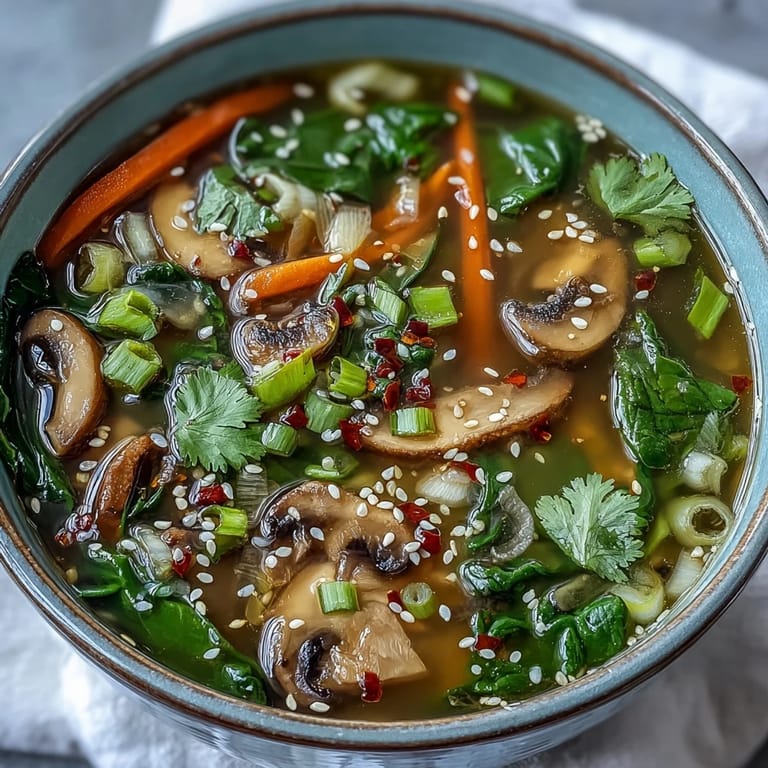
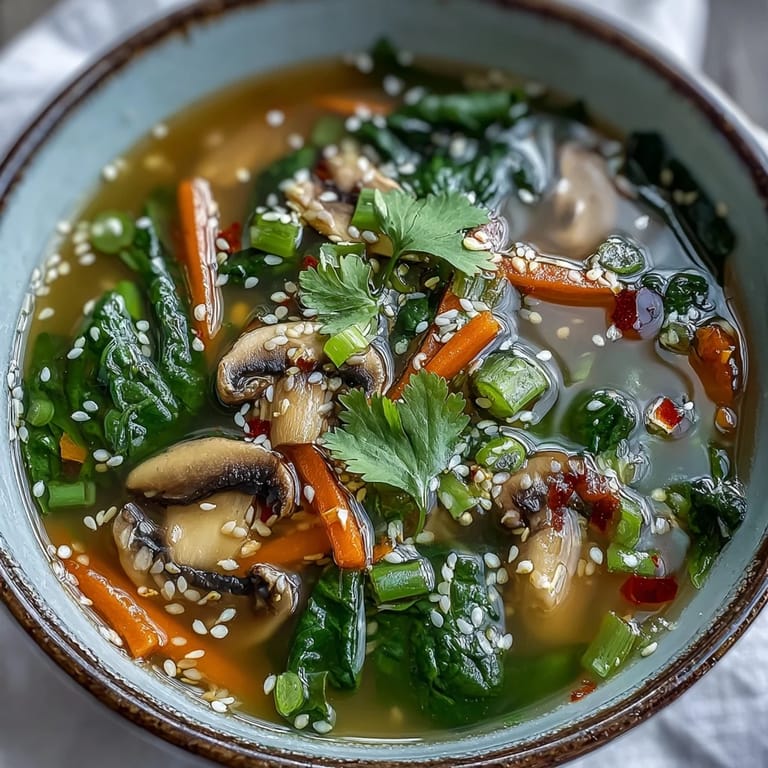
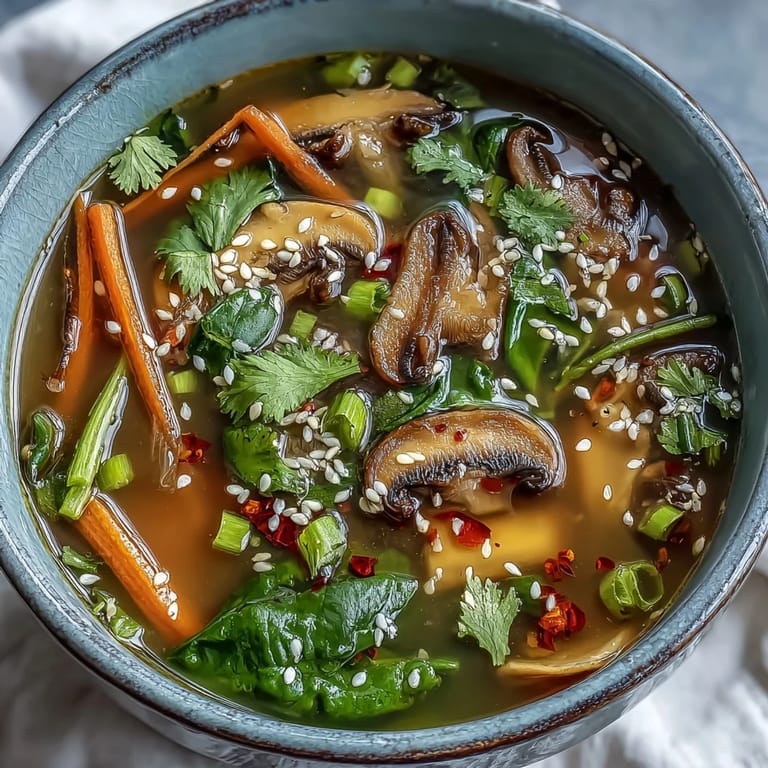
- Shiitake mushrooms (1 cup): Their earthy umami is what makes this soup feel substantial even though it's light; slice them thin so they cook through in minutes.
- Baby spinach or bok choy (1 cup): Either works beautifully, though bok choy holds its texture slightly better if your soup sits for a few minutes before serving.
- Carrot (1 medium): Julienned means it cooks in the same five minutes as the mushrooms, keeping everything tender at the same moment.
- Green onions (2): Save these for the end so they stay fresh and bright; their slight bite offsets the warming spices perfectly.
- Toasted sesame seeds for garnish: The toasting is non-negotiable—raw sesame seeds taste like nothing, but toasted ones add nutty depth and textural contrast.
- Fresh cilantro and chili oil (optional): These are your personalization tools; add them based on your mood and how much heat you want today.
Tired of Takeout? 🥡
Get 10 meals you can make faster than delivery arrives. Seriously.
One email. No spam. Unsubscribe anytime.
Instructions
- Start your infusion:
- Pour your vegetable broth into a large saucepan and bring it to that gentle, barely-there simmer where tiny bubbles kiss the surface. This is not a rolling boil—you're coaxing flavors out, not aggressively extracting them.
- Build the flavor base:
- Add your sliced ginger and garlic, then let them hang out in the warmth for ten minutes. You'll notice the broth turning slightly golden and smelling almost sweet—that's the ginger doing its work, releasing its warming compounds into every drop.
- Add the vegetables:
- Toss in your mushroom slices and carrot ribbons and give everything a gentle stir. Five minutes is all they need; you're looking for tender but still with a whisper of resistance when you bite down.
- Prepare the miso bridge:
- This step is crucial: use a ladle to scoop out one cup of that beautiful hot broth into a small bowl, then whisk your miso paste into it until there are no lumps. This prevents the miso from clumping when it hits the larger pot.
- Lower the heat and incorporate miso:
- Turn your burner down to low, then slowly pour that miso mixture back into the pot while stirring gently. Keep the temperature right there at low—once miso boils, the probiotics get damaged and you lose part of what makes this soup worth eating.
- Finish with fresh greens:
- Add your spinach or bok choy along with the sliced green onions and stir until everything softens and wilts, about one minute. The greens will look like they've surrendered to the warmth, and that's exactly right.
- Taste and adjust:
- Take a sip and notice what's missing—maybe it needs another half-tablespoon of miso for depth, or a splash of soy sauce for saltiness. Trust your palate here; this is your soup to make your way.
- Serve with intention:
- Ladle into bowls and scatter your toasted sesame seeds across the top, maybe add a pinch of cilantro if you have it, and a drizzle of chili oil if you want a gentle warmth. The bowl is your canvas for this final moment.
 Save
Save There was a quiet evening when I served this soup to someone I'd just met, and we ended up talking for hours about food and memory and why certain flavors feel like coming home. That's when I knew this recipe had become something more than instructions—it was a small gift I could give.
When Substitutions Actually Improve Things
I've discovered that red miso creates a richer, more complex broth with deeper color and slightly earthier notes compared to white miso's lighter touch. If you have silken tofu on hand, cut it into small cubes and add it in the very last minute—it will warm through without getting rubbery and adds a creamy texture that makes the soup feel more substantial. For a heartier version that feels like a meal instead of a starter, add cooked soba or udon noodles right before serving so they don't get waterlogged.
Building Your Flavor Layers
The real secret to this soup is understanding that you're not just dumping ingredients into water; you're building a layered experience where each element gets introduced at exactly the right moment. Ginger and garlic get ten minutes alone to establish their warmth as the foundation, then the vegetables arrive to add earthiness and substance, and finally the miso comes in at the end like a conductor bringing the whole orchestra together. Once you understand this timing, you can rearrange the vegetables based on what's in your kitchen—kale instead of spinach, daikon instead of carrot—and the structure remains strong.
The Small Rituals That Matter
Making this soup has taught me that some steps feel small but carry disproportionate importance—toasting sesame seeds for three minutes transforms them from flavorless to nutty and essential, and whisking miso in a separate bowl before stirring it back in might feel fussy until you taste the difference. The cilantro and chili oil might seem optional, but they're actually your permission slips to make the soup different every time you cook it, to respond to your mood and the season.
- Toast your sesame seeds in a dry pan over medium heat for just two to three minutes, stirring constantly, and watch how quickly they shift from pale to golden.
- Keep the ginger slices thick enough to fish out easily if you prefer a gentler ginger flavor or thinner if you want it to fully dissolve into the broth.
- Make this soup when you have fresh ginger at home; it's worth planning around because the difference between fresh and ground ginger is the difference between brightness and mustiness.
 Save
Save This soup reminds me that sometimes the most nourishing thing we can do is slow down for thirty minutes and let warmth and intention do their work. It's become my winter anchor, the recipe I return to when I want to feel like I'm taking care of myself and the people around me.
Your Questions Answered
- → Can I make this soup ahead of time?
Yes, you can prepare the broth and vegetables in advance. Store them separately in the refrigerator for up to 2 days. Add the miso paste and fresh greens just before serving to preserve the probiotics and prevent wilting.
- → What type of miso works best?
White or yellow miso paste provides a milder, slightly sweet flavor that complements the vegetables. Red miso offers a stronger, more intense taste if you prefer deeper umami notes in your broth.
- → Is this soup gluten-free?
The soup is naturally gluten-free if you use certified gluten-free vegetable broth and miso paste. Some traditional miso brands contain barley, so always check labels carefully if avoiding gluten.
- → Can I add protein to make it more filling?
Absolutely. Cubed silken tofu works beautifully and absorbs the miso flavor. You can also add cooked edamame, shredded chicken, or serve alongside a bowl of brown rice for a complete meal.
- → Why shouldn't I boil the miso?
Boiling miso paste destroys the beneficial probiotics and can make the texture grainy. Always whisk miso into a small amount of warm broth first, then stir it into the soup after removing from direct heat.
- → How do I store leftovers?
Keep cooled soup in an airtight container in the refrigerator for up to 3 days. Reheat gently over low heat, avoiding boiling to maintain the delicate miso flavor and probiotic benefits.