 Save
Save I discovered these stuffed peppers on a random Wednesday when my roommate came home with a bag of gorgeous bell peppers from the farmers market and challenged me to do something exciting with them. The colors were so vibrant—reds, yellows, oranges—that throwing them in a stir-fry felt like a waste. That same week, I'd been experimenting with cashew cream after learning it could replace dairy in almost anything, and suddenly the idea clicked: why not fill these beauties with something creamy and green? The result was this hearty, satisfying dish that somehow feels both elegant and completely unpretentious.
I made these for my sister's dinner party when she went vegan and I wanted to prove that plant-based cooking could be exciting, not sacrificial. Watching her face when she took that first bite—the way her eyes widened at the creaminess—made me realize this dish had become something I genuinely loved making, not just something I tolerated for dietary reasons. Now she asks for the recipe whenever we talk, and I always remind her that the secret is not rushing the cashew soak or skipping the lemon juice.
Ingredients
- Bell peppers (4 large, any color): Choose ones that stand upright on their own—this matters more than you'd think, and different colors add visual drama without changing the flavor.
- Fresh spinach (2 cups, chopped): Don't buy the pre-chopped stuff if you can help it; fresh leaves wilt down beautifully and taste brighter.
- Canned artichoke hearts (1 cup, drained and chopped): The acidity and earthiness of artichokes is what makes this filling special, not just nutritious.
- Onion and garlic (1 small onion, finely chopped; 2 cloves garlic, minced): These are your flavor foundation—don't skimp or use powder here.
- Cooked quinoa (1 cup): Brown rice works too, but quinoa has a nuttiness that feels right with the creamy cashew base.
- Raw cashews (1/2 cup, soaked 2 hours and drained): The soak is non-negotiable; it's what makes the cream silky instead of grainy.
- Unsweetened plant-based milk (1/2 cup): Almond, soy, or oat all work, but oat milk creates the creamiest texture.
- Nutritional yeast (2 tablespoons): This adds a subtle savory depth that feels umami-rich without being overpowering.
- Lemon juice (1 tablespoon): The acid brightens everything and keeps the cashew cream from tasting one-note.
- Dijon mustard (1 teaspoon): A small amount adds a sophisticated tang that rounds out the flavors beautifully.
- Salt and black pepper (1/2 teaspoon salt, 1/4 teaspoon pepper): Taste as you go; you might want slightly more depending on your other ingredients.
- Breadcrumbs (1/4 cup) and olive oil (1 tablespoon for topping): The topping gets golden and crispy, adding textural contrast that makes these peppers memorable.
Tired of Takeout? 🥡
Get 10 meals you can make faster than delivery arrives. Seriously.
One email. No spam. Unsubscribe anytime.
Instructions
- Get your oven ready and prep the peppers:
- Preheat your oven to 375°F and lightly oil a baking dish with just enough to prevent sticking. Slice the tops off your bell peppers, scoop out the seeds and white membranes carefully so you don't puncture the sides, then stand them upright in the dish—they should fit snugly enough that they won't tip during baking.
- Build the filling base with aromatics:
- Heat a skillet over medium and sauté your chopped onion in a splash of olive oil until it turns translucent and smells sweet, about three minutes. Add the minced garlic and cook for another minute until fragrant, then toss in the spinach and chopped artichokes, stirring occasionally until the spinach collapses into tender leaves and everything melds together, around two minutes.
- Make the creamy sauce:
- Combine your drained soaked cashews, plant-based milk, nutritional yeast, lemon juice, Dijon mustard, salt, and pepper in a blender and run it until the mixture is completely smooth and pourable—this should take about a minute or two, and the transformation from chunks to silky cream is genuinely satisfying to watch. If it's too thick, add a splash more milk; too thin, let it sit a minute as it thickens slightly.
- Combine everything together:
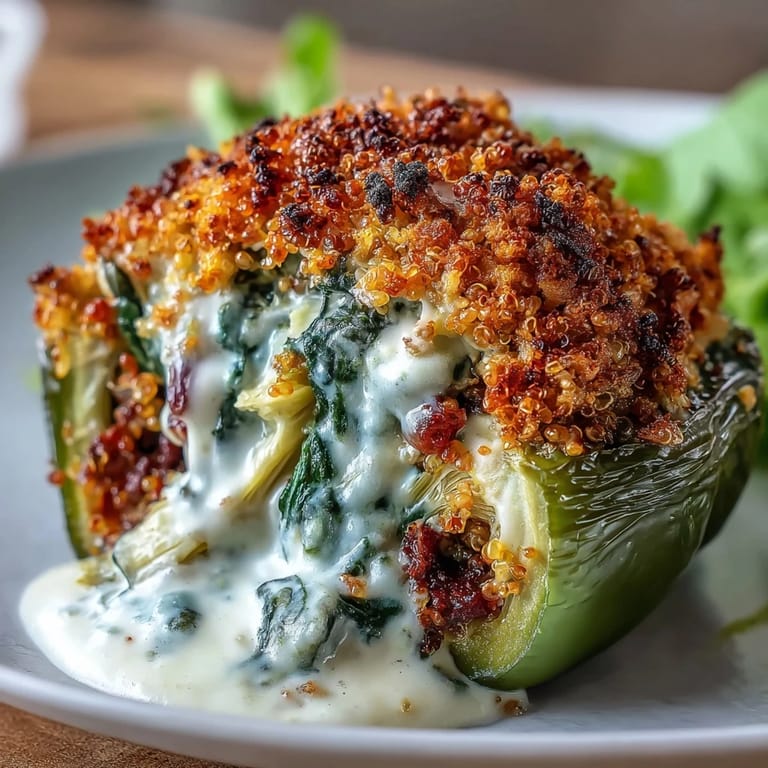
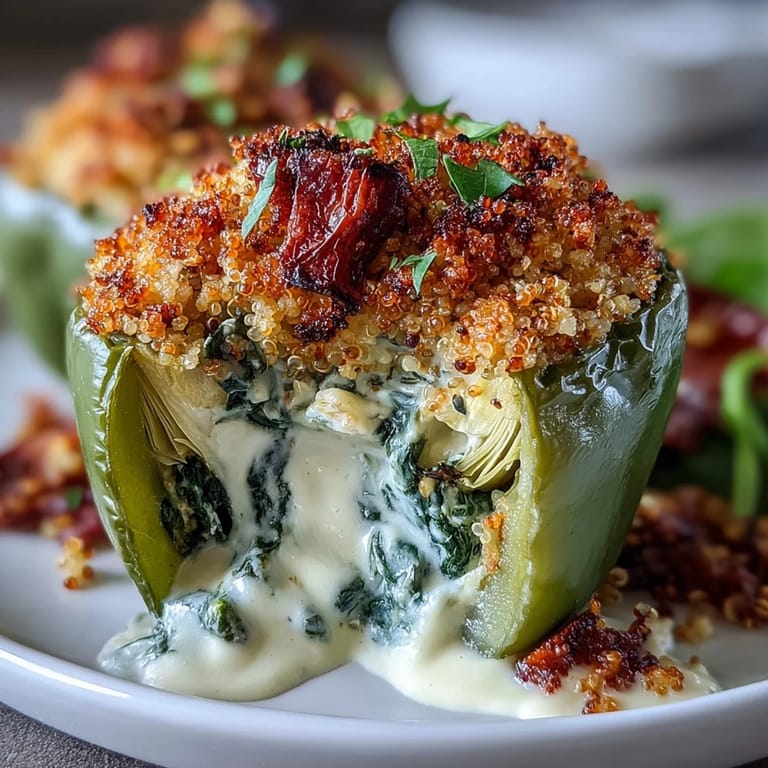
- In a large mixing bowl, fold together your sautéed vegetables, cooked quinoa, and the cashew cream until evenly distributed without breaking up the quinoa grains. The mixture should feel substantial and creamy, with visible flecks of spinach and artichoke throughout.
- Fill and top the peppers:
- Spoon the filling evenly into each bell pepper, pressing down gently so everything settles in without compacting it into a dense block. In a small bowl, mix your breadcrumbs with one tablespoon of olive oil until the crumbs are moistened and resembles damp sand, then sprinkle this mixture generously over the top of each pepper.
- Bake covered and uncovered:
- Cover your baking dish loosely with foil and bake for 25 minutes so the peppers soften and steam gently without drying out. Remove the foil and bake another 10 minutes until the breadcrumb tops turn golden brown and the peppers are tender enough to pierce easily with a fork.
- Rest before serving:
- Let the peppers cool for five minutes—this isn't just for eating comfort, it also lets the filling set slightly so it doesn't run all over the plate. Serve warm while everything is still steaming.
 Save
Save There's something about serving food in a pepper—it feels inherently generous and celebratory, like you've put effort into something beautiful just for the people at your table. I realized this dish stopped being just dinner the night my picky-eating cousin asked for seconds and admitted these were better than the meat-filled version her mom makes at family gatherings.
Why the Cashew Cream Changes Everything
Before I discovered cashew-based cream, I thought vegan cooking meant accepting that nothing would ever feel truly indulgent or luxurious. The day I blended those soaked cashews with a splash of plant milk and watched it transform into something that poured like heavy cream was honestly a kitchen revelation. It tastes rich without being heavy, it picks up flavors beautifully, and it's completely forgiving—once you get the soaking part down, you'll start using this technique for everything from pasta sauces to desserts.
Customizing Your Filling
The beauty of this recipe is that it's a framework, not a rigid set of rules. I've made these peppers in summer with fresh herbs mixed into the filling, in winter with roasted red peppers stirred through, and once with sun-dried tomatoes because I had them on hand and wanted to use them up. The spinach and artichokes are the foundation that keeps everything grounded and green, but what you layer on top of that is completely up to you and whatever looks good at your market that day.
Serving and Storage Tips
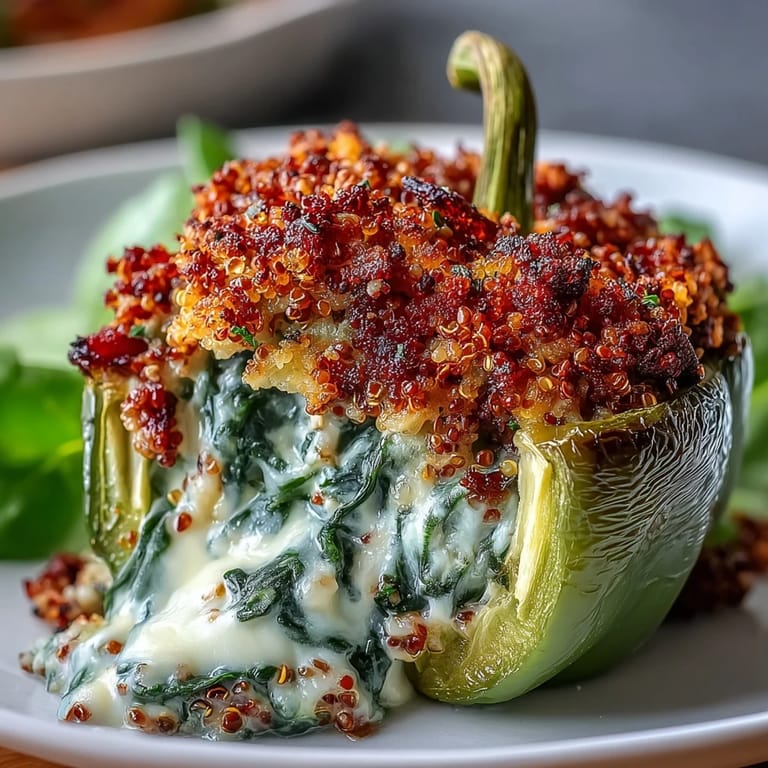
These peppers taste great fresh from the oven when everything is hot and the breadcrumb topping is still crispy, but they're honestly just as good the next day reheated gently in the oven at 350°F for about 10 minutes. I've found that storing them in an airtight container in the fridge keeps them fresh for up to three days, and they also freeze beautifully if you want to make them in advance for busy weeknights.
- Pair these with a crisp green salad or roasted vegetables if you want to stretch the meal further or add more color to the plate.
- A chilled Sauvignon Blanc or sparkling water with lemon complements the earthiness of the artichokes perfectly.
- Leftovers can be chopped up and stirred into grain bowls or tucked into wraps for next-day lunches.
 Save
Save These stuffed peppers became my go-to recipe not because they're complicated or require special ingredients, but because they consistently make people happy—both plant-based eaters and skeptics alike. Honestly, that's all a recipe really needs to be.