 Save
Save There's something almost magical about watching egg whites transform into clouds of meringue—I discovered this while stress-baking on a rainy Sunday afternoon, determined to impress someone who claimed they didn't like desserts. The pavlova emerged from the oven crackling and pale, and when I topped it with cream and strawberries, their skepticism melted faster than the berries would have in summer heat. That moment taught me that sometimes the most impressive dishes come from the simplest ingredients and a willingness to take a calculated risk.
My sister requested this for her birthday dinner last spring, and I remember the kitchen filling with that distinct sweet smell of baking meringue while guests arrived early, drawn by curiosity. When I finally plated it, someone actually gasped—not because it was difficult, but because it looked like edible art. That's when I realized pavlova isn't just dessert; it's a conversation starter that happens to taste incredible.
Ingredients
- Egg whites (4 large, room temperature): Room temperature eggs whip more efficiently and incorporate air better, creating that essential volume and stability.
- Superfine sugar (1 cup/200 g): This dissolves completely into the meringue, giving you that signature glossy finish rather than grainy texture.
- Cornstarch (1 tsp): This prevents the meringue from weeping and adds a subtle chewiness to the center that contrasts beautifully with the crispy edges.
- White vinegar (1 tsp): Stabilizes the meringue and creates that desirable marshmallowy center underneath the crisp shell.
- Vanilla extract (1 tsp): Adds warmth and depth without overpowering the delicate egg white base.
- Heavy cream (1 cup/240 ml, chilled): Cold cream whips faster and holds peaks longer, creating that billowy topping.
- Powdered sugar (2 tbsp): Dissolves instantly into whipped cream, preventing grittiness that granulated sugar would leave.
- Fresh strawberries (2 cups/300 g, hulled and sliced): Choose berries that are ripe but still firm; they'll release their juices without collapsing into mush.
- Granulated sugar for macerating (1 tbsp, optional): Drawing out the strawberries' natural juices creates a light sauce that pools under the fruit.
- Fresh mint leaves (optional): A whisper of mint brightens the sweetness and adds visual elegance.
Tired of Takeout? 🥡
Get 10 meals you can make faster than delivery arrives. Seriously.
One email. No spam. Unsubscribe anytime.
Instructions
- Prepare your workspace:
- Preheat the oven to 275°F (135°C) and line your baking sheet with parchment paper, then draw a 9-inch circle as your guide. Having everything ready means you won't lose momentum once you start whisking egg whites.
- Begin whipping the egg whites:
- In a completely clean, dry bowl, beat the egg whites on medium speed until soft peaks form—you're looking for billowy clouds that just barely hold their shape. This usually takes about 3-4 minutes, and the sound of the mixer will change from splashy to whispery once you're there.
- Add sugar gradually for glossy peaks:
- Sprinkle in the superfine sugar one tablespoon at a time while beating on high speed, a process that takes 7-10 minutes total. You'll watch the meringue transform from foamy to shiny and voluminous, reaching that perfect stiff peak stage where peaks stand straight up when you lift the beaters.
- Fold in stabilizers and flavor:
- Gently fold the cornstarch, vinegar, and vanilla into the meringue using a spatula with broad, sweeping motions. This gentle approach preserves the airy structure you've just created.
- Shape the meringue nest:
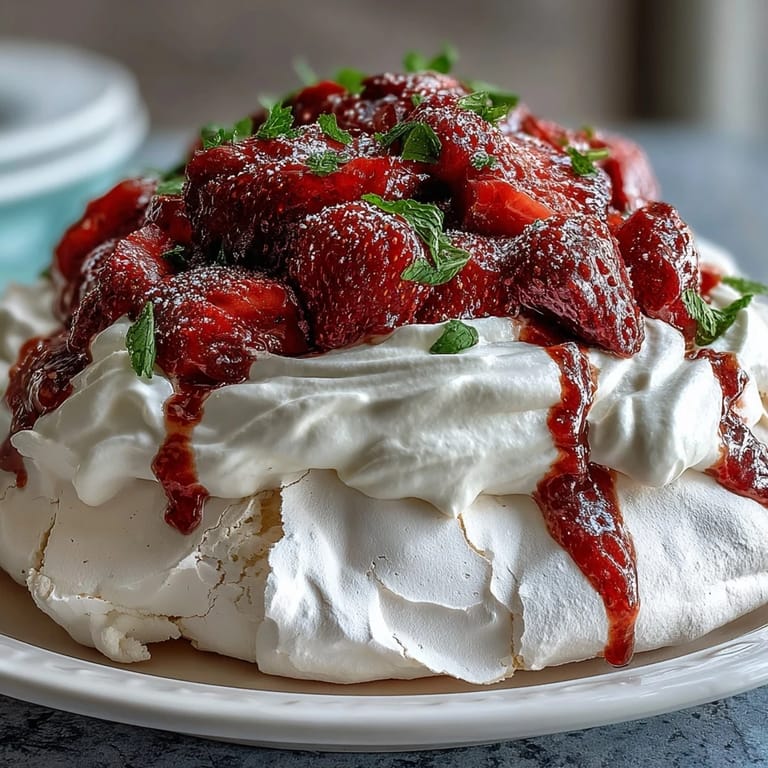
- Spoon the mixture onto your parchment circle and use the back of a spoon to create a disc with slightly raised edges, like a shallow bowl. This design catches the cream and berries beautifully while the raised edges create extra crispy bits.
- Low and slow baking:
- Bake for 1 hour 15 minutes at the low temperature—this gentle heat creates a crispy exterior while keeping the center soft and chewy. Turn off the oven and prop the door slightly ajar, letting the meringue cool completely inside to prevent cracking.
- Whip the cream:
- While the meringue cools, chill your mixing bowl and whip the heavy cream with powdered sugar and vanilla until soft peaks form. Stop as soon as the cream holds gentle peaks; over-whipping turns it grainy and separates the butterfat.
- Macerate the strawberries:
- Toss your sliced strawberries with the optional granulated sugar and let them sit for about 10 minutes. This coaxes out their juices and creates a light syrup that pools around the fruit when serving.
- Assemble with care:
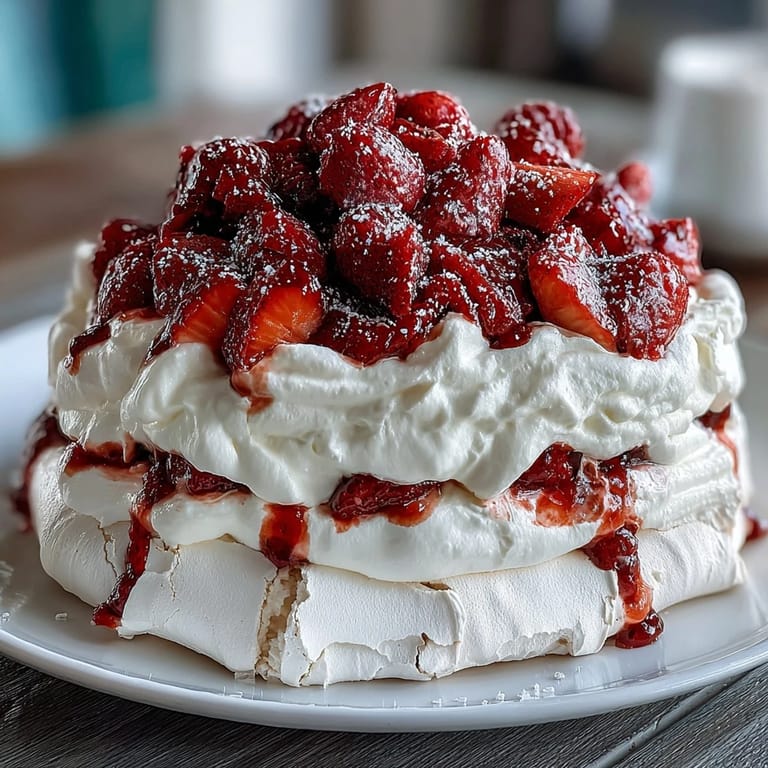
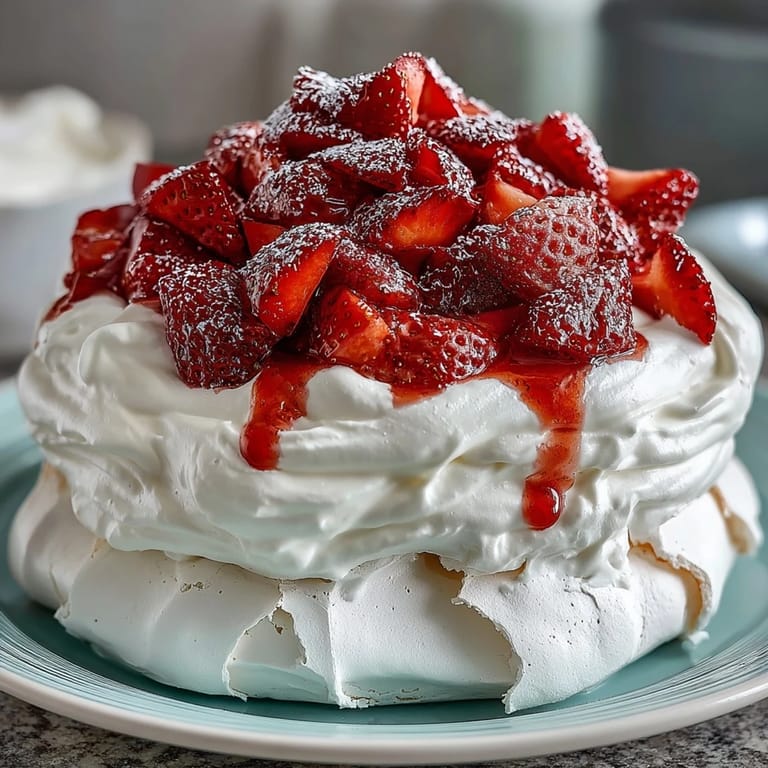
- Transfer the cooled meringue to your serving plate, spread the whipped cream evenly over the center, then top with the strawberries and their juice. Garnish with mint if you'd like, and serve immediately while the meringue is still crispy.
 Save
Save I once made this for a dinner party only to have a guest ask if I'd bought it from a bakery, and I've never felt more proud over something I didn't actually buy. That moment shifted how I thought about entertaining—fancy doesn't always mean complicated, it just means intentional.
The Science Behind the Crisp
The magic of meringue lies in trapping thousands of tiny air bubbles in egg white protein, then setting them with heat at a low temperature. The cornstarch and vinegar do double duty by stabilizing the foam and creating that signature texture—crispy outside, marshmallow within. I learned this the hard way after over-baking at high heat and ending up with a dense, brown disaster that tasted like sweetened rubber.
Timing and Temperature Matter
The 275°F oven temperature is crucial because it allows the meringue to dry out without browning or cooking the interior too quickly. Rushing the process with higher heat creates a crust while leaving the inside raw and sticky, whereas the low-and-slow method yields that prized texture. I've experimented with temperature variations, and this sweet spot consistently produces the best results.
Variations and Serving Ideas
While strawberries and cream are the classic pairing, this pavlova welcomes creativity—I've topped it with raspberries, blackberries, even sliced peaches depending on the season and what looked fresh at the market. You can also add a drizzle of chocolate or a spoonful of jam between the cream and fruit for extra depth. The meringue base is your blank canvas, so trust your instincts with toppings.
- Make it hours ahead if you'd like; just assemble the final components shortly before serving to keep the meringue crispy.
- Leftover meringue softens in humidity, but you can store the plain baked base in an airtight container for up to two days.
- If your strawberries aren't particularly sweet, a small drizzle of honey or balsamic vinegar adds complexity without overwhelming the dish.
 Save
Save This dessert has become my go-to for impressing people without spending all day in the kitchen, proving that elegance and simplicity often go hand in hand. Every time I make it, I'm reminded that the best meals are the ones made with intention and shared with people who appreciate the effort.
Your Questions Answered
- → How do I achieve stiff peaks for the meringue?
Ensure the egg whites are at room temperature and beat them with an electric mixer until they form soft peaks. Gradually add superfine sugar while continuing to beat until stiff, glossy peaks develop.
- → Why is vinegar added to the meringue?
Vinegar stabilizes the egg whites, helping the meringue maintain its structure during baking and preventing weeping.
- → Can I prepare the whipped cream in advance?
Yes, whip the cream to soft peaks and refrigerate briefly before serving to keep it fresh and airy.
- → What is the purpose of letting the meringue cool in the oven?
Cooling with the oven door slightly open prevents cracks by allowing gradual cooling and moisture release.
- → How should strawberries be prepared for the topping?
Hull and slice fresh strawberries, optionally macerate with a little sugar to draw out the juices and enhance sweetness before topping.