 Save
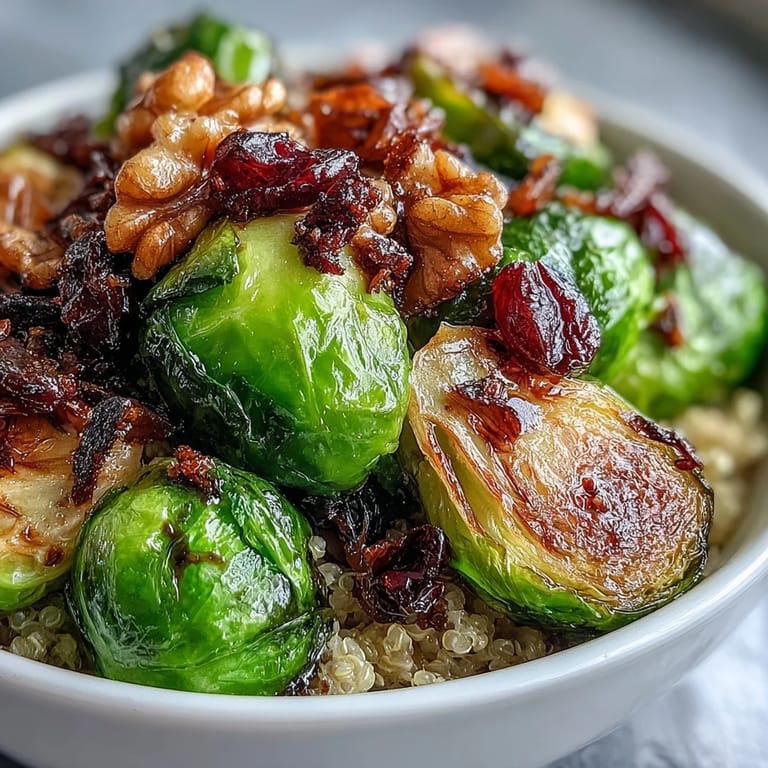
Save There was a Tuesday afternoon when my roommate came home complaining about eating the same sad desk lunch for weeks, and I realized I had a bag of Brussels sprouts that were about to turn soft. Rather than roasting them plain, I tossed them with red onion, drizzled everything with a quick balsamic glaze, and threw them over some quinoa I'd cooked earlier. She took one bite and asked for the recipe before she'd even finished the bowl. That's when I knew this simple combination was something worth making again and again.
I made this for a potluck dinner where someone had insisted on bringing store-bought salad, and watching people go back for seconds of my bowl while ignoring the plastic container in the corner felt oddly validating. One guest asked if the Brussels sprouts were actually Brussels sprouts because she'd never had them taste like this before. The secret was just patience and heat, but it felt like magic in that moment.
Ingredients
- Brussels sprouts: Look for ones that feel firm and dense, roughly the same size so they roast evenly; trimming the stem and halving them exposes more surface area for that coveted caramelization.
- Red onion: It mellows beautifully when roasted, losing its sharp bite and becoming almost sweet, which balances the earthiness of the sprouts.
- Olive oil: Use regular olive oil for roasting since high heat can compromise the flavor of extra-virgin; save the fancy stuff for the dressing.
- Quinoa or brown rice: Both work equally well here; quinoa cooks slightly faster and has a fluffier texture, while rice feels more grounding and filling.
- Balsamic vinegar: The acidity cuts through the richness of the roasted vegetables and ties the whole bowl together with bright, tangy notes.
- Maple syrup or honey: Just a touch of sweetness rounds out the dressing and helps it emulsify, though either works depending on what you have on hand.
- Dijon mustard: This isn't about mustard flavor; it's an emulsifier that helps the oil and vinegar stay together instead of separating on your greens.
- Toasted nuts and seeds: Walnuts add a earthy crunch while pumpkin seeds bring a subtle mineral note; these aren't strictly necessary but they change the texture game entirely.
Tired of Takeout? 🥡
Get 10 meals you can make faster than delivery arrives. Seriously.
One email. No spam. Unsubscribe anytime.
Instructions
- Get your oven ready and prep the vegetables:
- Preheat to 425°F and line a baking sheet with parchment paper so cleanup is easier later. Halve your Brussels sprouts lengthwise so they have a flat surface to sit on; this is what creates those golden caramelized edges instead of unevenly roasted pieces.
- Toss and spread:
- In a large bowl, coat the Brussels sprouts and onion slices with olive oil, salt, and pepper until every piece glistens slightly. Spread them in a single layer on the baking sheet with the flat sides down so they make contact with the hot pan.
- Roast until golden:
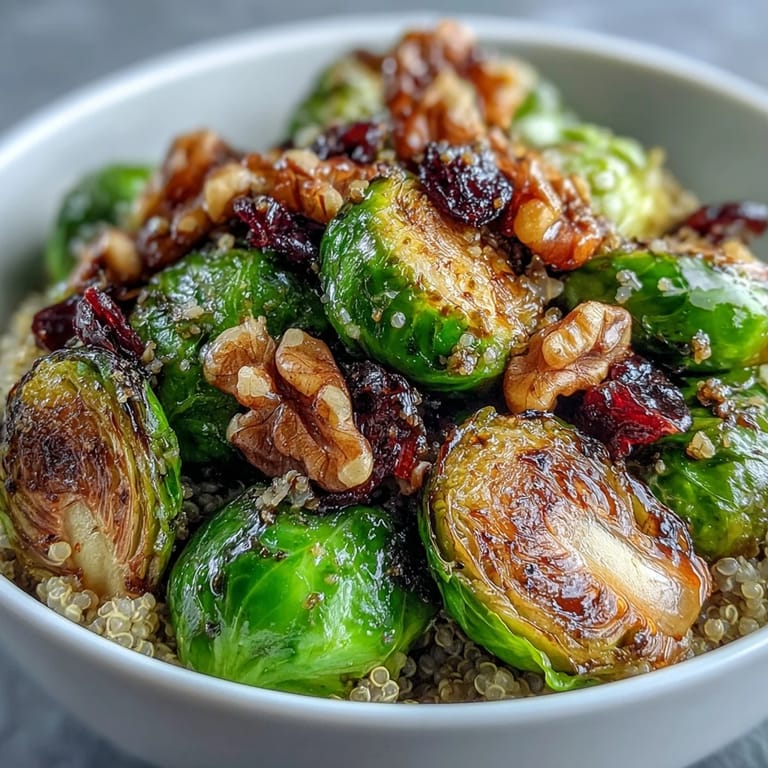
- Slide the pan into the oven for 25 to 30 minutes, stirring everything once halfway through so nothing sticks or burns. You'll know they're done when the cut sides are deep golden brown and the outer leaves are crispy and slightly darkened.
- Cook your grains while the oven works:
- Rinse your quinoa or rice under cold water, then combine with water or vegetable broth in a saucepan. Bring to a boil, then drop the heat low, cover, and let it simmer gently for 15 to 20 minutes until the liquid is absorbed and the grains are tender; fluff with a fork when done.
- Whisk together the dressing:
- While everything else is cooking, combine balsamic vinegar, extra-virgin olive oil, maple syrup, Dijon mustard, salt, and pepper in a small bowl and whisk until the mixture looks smooth and unified. Taste it straight from the whisk and adjust the vinegar or sweetness if needed.
- Assemble your bowls:
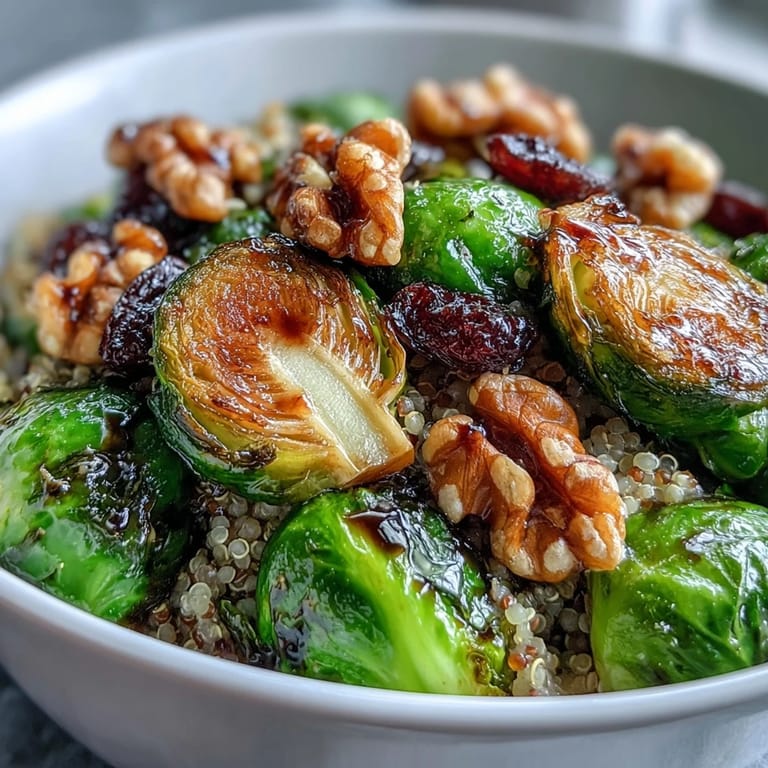
- Divide the warm grains among four bowls, then pile the roasted Brussels sprouts and onions on top of each one. Drizzle generously with the balsamic dressing so it pools a little at the bottom.
- Finish with toppings:
- Scatter toasted nuts, dried cranberries, and pumpkin seeds over the top if you're using them. These aren't just garnish; they add layers of texture and flavor that make the bowl feel complete.
 Save
Save There's something grounding about eating a bowl that contains actual vegetables you watched transform in the oven. It doesn't feel like deprivation or dieting; it feels like taking care of yourself in a way that actually tastes good. That shift in perspective is what keeps me coming back to this recipe when I need to eat well without sacrificing enjoyment.
Why Grain Choices Matter
Quinoa and brown rice have totally different personalities in this bowl. Quinoa is light and slightly nutty, so it lets the balsamic dressing shine, while brown rice is denser and earthier, which makes the whole thing feel more substantial. I rotate between them depending on my mood and what I'm feeding to people; quinoa impresses the health-conscious crowd, but brown rice is what keeps people satisfied until dinner time. Both absorb the dressing beautifully without falling apart, which is the main thing that matters here.
The Dressing Makes Everything
I learned the hard way that the dressing can't be an afterthought. Early versions where I just drizzled store-bought balsamic over everything tasted flat and one-dimensional, but making even a simple vinaigrette by hand transforms the whole experience. The mustard keeps it from separating, the maple syrup rounds out the sharp edges, and the quality of olive oil matters more here than anywhere else in the recipe because it's not being heated. This is worth the two extra minutes of whisking.
Customization Without Losing the Plot
The beauty of this bowl is that you can swap almost anything and it still works beautifully. Sweet potato chunks work in place of half the Brussels sprouts, chickpeas add protein without changing the flavor profile, and feta cheese or tofu both complement the balsamic without competing with it. The constant is the roasted vegetables, the grain base, and that tangy dressing; everything else is your canvas.
- Try adding a handful of arugula or spinach under the warm grains so it wilts slightly from the heat of everything else.
- Roast the vegetables in batches at the beginning of the week and store them in the fridge so you can assemble bowls on busy days.
- The dressing keeps for a full week in a sealed jar, so make double and drizzle it over salads, roasted vegetables, or even grain bowls with different toppings.
 Save
Save This bowl became a staple because it proved that eating well doesn't require complicated techniques or hard-to-find ingredients. It's just vegetables and grains treated with respect, brought together with something bright and acidic that makes it all sing together.
Your Questions Answered
- → Can I make this ahead of time?
Yes, you can roast the vegetables and cook the grains up to 3 days in advance. Store them separately in airtight containers and assemble when ready to serve.
- → What other grains work well?
Farro, bulgur, couscous, or even wild rice make excellent substitutes for quinoa. Adjust cooking time accordingly.
- → How do I get the Brussels sprouts properly caramelized?
Spread them in a single layer on the baking sheet without overcrowding. This allows the edges to brown and develop that sweet, nutty flavor.
- → Can I add protein to make it more filling?
Absolutely. Chickpeas, grilled tofu, tempeh, or even crumbled feta cheese work wonderfully. Add them during the last 10 minutes of roasting or serve on top.
- → Is the dressing necessary?
The balsamic dressing ties all the flavors together, but you could substitute with a lemon-tahini drizzle or simple vinaigrette if preferred.
- → Can I use frozen Brussels sprouts?
Fresh sprouts caramelize better, but thawed frozen ones will work in a pinch. Pat them dry thoroughly before roasting for best results.