 Save
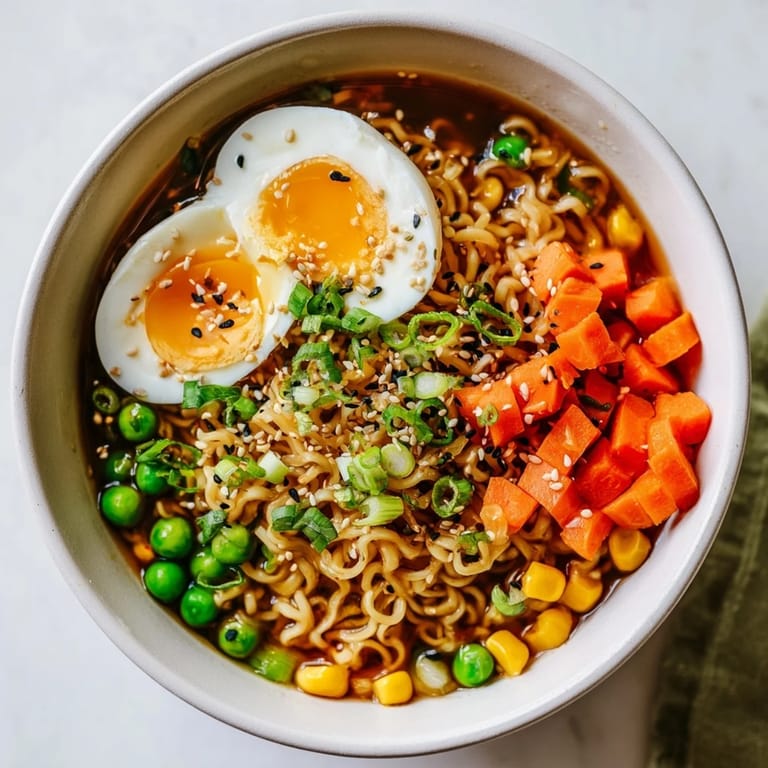
Save There's a peculiar magic in the fifteen minutes between hunger and a steaming bowl of ramen, especially when you're working with what's already in your freezer. I discovered this recipe during a lazy Tuesday when I had two packs of instant ramen, some forgotten frozen peas at the back of the freezer, and zero energy to plan anything elaborate. The results surprised me—suddenly this humble weeknight staple transformed into something that felt intentional, colorful, and genuinely nourishing.
I'll never forget serving this to a friend who showed up hungry and skeptical about instant ramen. Watching her expression shift from polite tolerance to genuine surprise when she tasted the broth—rich from the sesame oil, alive with garlic—reminded me that sometimes the best meals aren't the ones that take hours, but the ones that feel deliberately made, even if they're quick.
Ingredients
- 2 packs instant ramen noodles: Use whatever you have on hand, seasoning packets optional—we're building better flavor anyway.
- 1 cup frozen peas: Don't thaw them; they'll cook perfectly in the hot broth and keep their bright green color and gentle sweetness.
- 1 cup frozen mixed vegetables: Carrots, corn, and green beans add texture and color without requiring fresh prep, and honestly they taste better straight from frozen in ramen.
- 2 green onions, sliced: Split the batch—some go into the pot, some finish the bowls raw for that sharp, fresh bite that makes the whole thing sing.
- 2 cloves garlic, minced: Sauté this first so it releases its essential oils into the sesame oil; this one small step changes everything.
- 4 cups low-sodium vegetable broth: Better than water because it carries flavor, but low-sodium lets you control the saltiness with soy sauce.
- 2 tablespoons soy sauce: This is where umami lives; taste as you go because brands vary in intensity.
- 1 teaspoon sesame oil: Just a teaspoon is enough to make the whole pot smell like you know what you're doing.
- 2 large eggs, soft-boiled or poached: Optional but honestly transformative—the runny yolk becomes a sauce for the whole bowl.
- 1 tablespoon toasted sesame seeds: Buy them already toasted; they finish the bowl with a nutty crunch that feels fancy.
- Chili flakes or sriracha: Bring the heat if you want it, leave it out if you don't—this is your bowl.
Tired of Takeout? 🥡
Get 10 meals you can make faster than delivery arrives. Seriously.
One email. No spam. Unsubscribe anytime.
Instructions
- Start with the sesame oil and garlic:
- Warm a medium saucepan over medium heat and add the sesame oil. When it's shimmering, add your minced garlic and let it sizzle for about 30 seconds—you'll know it's ready when your kitchen smells incredible.
- Build your broth base:
- Pour in the vegetable broth and soy sauce, then bring everything to a gentle boil. This is the moment where plain water transforms into something intentional.
- Cook the frozen vegetables:
- Add the peas and mixed vegetables directly to the boiling broth without thawing them. Simmer for 2–3 minutes until they're heated through and still have a bit of brightness to them.
- Add the noodles:
- Nestle in your ramen noodles and cook according to the package instructions, usually 2–3 minutes. If you're using the seasoning packet, you can skip it entirely or use half—your broth is already flavorful enough.
- Finish with green onions:
- Stir in half of your sliced green onions and taste. If it needs more salt or soy flavor, this is when to adjust it.
- Serve and top:
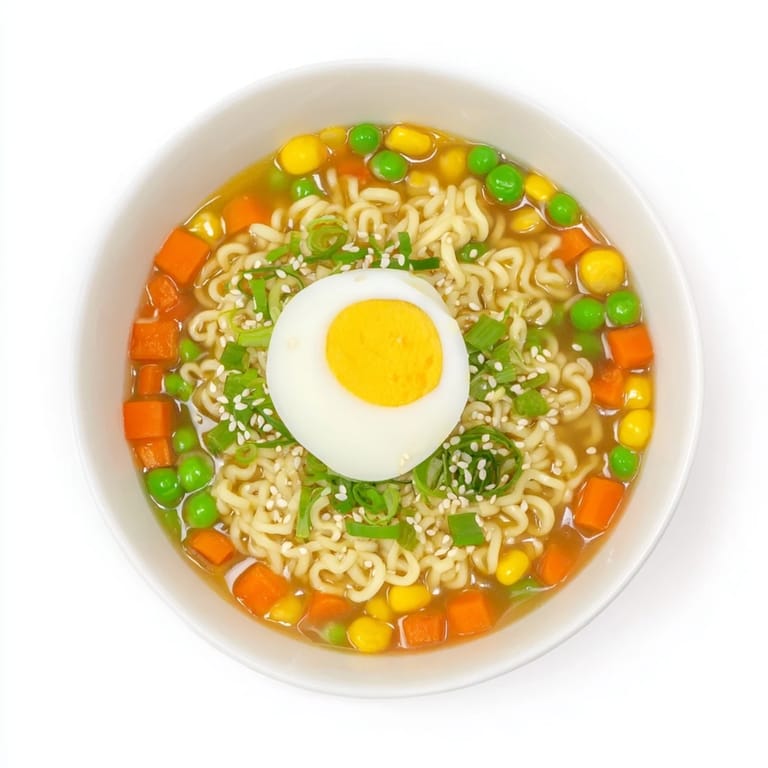
- Divide everything between two bowls, then crown each with a soft-boiled egg if you're using one, the remaining green onions, sesame seeds, and a pinch of chili flakes or a drizzle of sriracha.
 Save
Save There was an evening when I made this for my partner while they were stressed about a work presentation, and halfway through the bowl they suddenly stopped talking about spreadsheets. That's when I realized this isn't really a ramen recipe—it's permission to feed yourself something thoughtful in fifteen minutes, no apologies needed.
When Instant Ramen Gets Respect
There's an unfair stigma attached to instant ramen, as if making it means you've given up on cooking. The truth is that a bowl made with intention—with sesame oil that perfumes the broth, with vegetables that add nutrition and color, with toppings that make it feel intentional—is just as valid as anything that takes three hours. The speed is a feature, not a limitation.
Building Flavor With Frozen
Frozen vegetables get a bad reputation that they don't deserve. They're picked at peak ripeness and frozen immediately, which means they're fresher than most of the fresh vegetables sitting in grocery store bins. In ramen specifically, they cook faster, keep their color and texture better than thawed vegetables would, and you don't have to worry about them going soft in the broth. Plus, there's something deeply satisfying about reaching into your freezer and building a complete meal from things that have been waiting there patiently.
The Soft-Boiled Egg Question
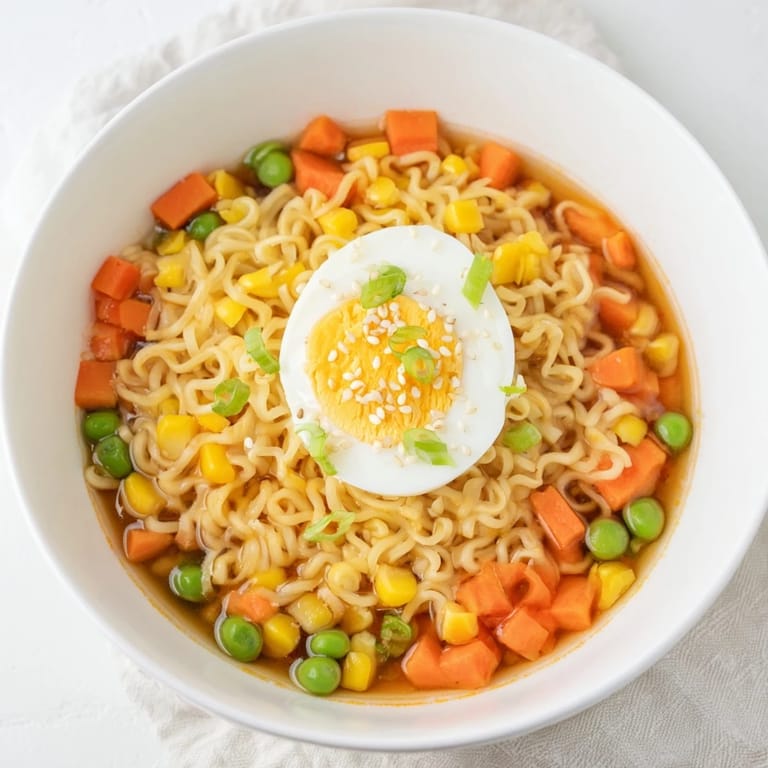
A soft-boiled egg is optional, but it transforms the entire experience. The runny yolk becomes a sauce that coats the noodles, adding richness and creaminess without any cream. If you're not sure how to soft-boil an egg perfectly, start with a rolling boil of water, gently lower room-temperature eggs into it with a spoon, set a timer for six and a half minutes, then transfer them immediately to ice water. The timing matters because even thirty seconds can be the difference between runny and cooked through. I've also poached eggs right in the broth in the final minute, which works beautifully and feels a bit more integrated.
- If soft-boiled eggs intimidate you, poached eggs cook directly in the broth in the last minute and feel less fussy.
- Halve a hard-boiled egg and lay it on top if you prefer something less messy to eat.
- Leave the egg out entirely and know that the ramen is still completely satisfying.
 Save
Save This recipe lives in that beautiful space where cooking feels effortless but tastes intentional. Every time I make it, I'm reminded that nourishing yourself well doesn't require complicated ingredients or hours at the stove.
Your Questions Answered
- → Can I use fresh vegetables instead of frozen?
Yes, fresh vegetables can be used but adjust cooking time to ensure they soften properly without overcooking the noodles.
- → How to make this dish vegan?
Omit the egg toppings and confirm the noodles and broth are vegan-friendly to maintain plant-based integrity.
- → Is it possible to prepare gluten-free?
Use gluten-free noodles and tamari instead of soy sauce to accommodate gluten sensitivities.
- → What protein additions work well here?
Tofu or shredded cooked chicken can be added for extra protein and heartiness.
- → How can I add more flavor without extra salt?
Incorporate fresh garlic, sesame oil, and chili flakes to enhance depth without increasing sodium.