 Save
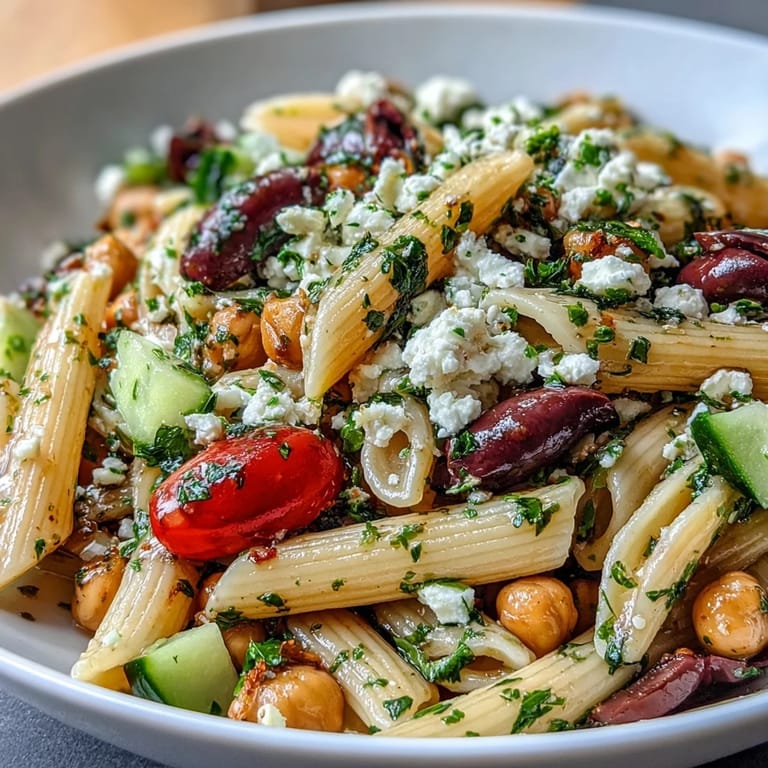
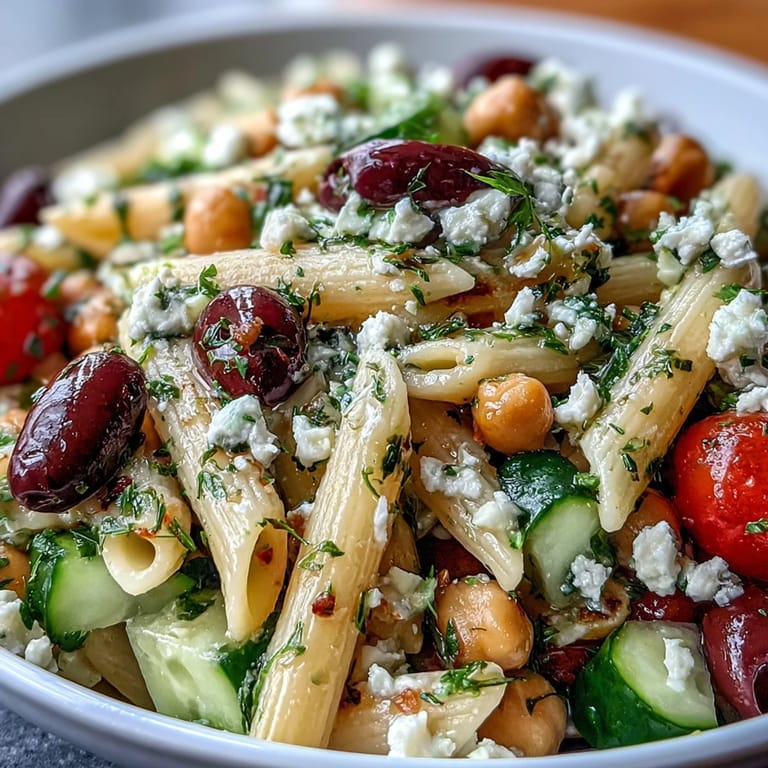
Save There's something about assembling a pasta salad on a warm afternoon that feels less like cooking and more like building edible jewelry. I discovered this Mediterranean version while standing in my kitchen on a day when the thought of turning on the oven felt criminal, and I had a can of chickpeas staring at me from the pantry. The brightness of lemon hitting those briny olives, the way the feta crumbles create little pockets of tang—it became the dish I make whenever someone asks what to bring to a gathering.
I made this for a potluck during one of those chaotic summers when everyone was juggling different diets, and watching a table full of people all reaching for the same bowl without negotiating felt like a small victory. My friend who avoids dairy asked if there was cheese, looked relieved when I pointed out how the olives and lemon handle the savory work just fine, and somehow her partner came back for thirds.
Ingredients
- Short pasta (250 g / 8 oz): Penne, fusilli, or farfalle work best because they catch the dressing in their ridges and curls—flat pasta just lets it slide right off.
- Chickpeas (1 can, 400 g / 14 oz, drained and rinsed): Rinsing away that starchy liquid keeps the salad from turning gluey and gives you that clean, nutty bean flavor.
- Cucumber (1 medium, diced): The watery crispness is your counterpoint to all the richness, so don't skip it or use it a day ahead or it softens.
- Cherry tomatoes (200 g / 1 cup, halved): They bring sweetness and just enough juice to brighten everything without making the salad soggy if you don't overdress.
- Red onion (1 small, finely chopped): The sharpness mellows slightly as it sits, but those paper-thin pieces make a difference in texture and punch.
- Kalamata olives (80 g / 1/2 cup, pitted and halved): Their brininess is irreplaceable—don't reach for the mild ones or you lose the whole Mediterranean argument.
- Feta cheese (60 g / 1/3 cup, crumbled): Crumble it just before serving if you can, or it dries out a bit, though honestly, a little edge on the feta is not the worst thing.
- Fresh parsley (2 tbsp, chopped): This is the green note that keeps everything from tasting one-dimensional—chop it right before tossing so it stays bright.
- Extra-virgin olive oil (3 tbsp): Use something you actually like drinking because you'll taste every drop; the quality shows.
- Lemon juice (about 2 tbsp from 1 lemon): Fresh lemon only—bottled stuff tastes tired and won't lift the way you need it to.
- Dried oregano (1 tsp): It rehydrates in the acidity and becomes almost floral, so don't skip it thinking fresh herbs are always better.
- Garlic (1 small clove, minced): One clove is enough; more and you're making garlic salad instead of Mediterranean pasta salad.
- Salt and black pepper (1/2 tsp and 1/4 tsp): Taste as you go because the olives and feta bring their own salt, and you'll want to balance it.
Tired of Takeout? 🥡
Get 10 meals you can make faster than delivery arrives. Seriously.
One email. No spam. Unsubscribe anytime.
Instructions
- Cook the pasta until it's just barely tender:
- Get a big pot of salted water boiling—think seawater, not just a pinch—and let the pasta go until you can bite through it but feel a tiny resistance in the center. Drain it, rinse it under cold water, and this step is crucial: let it sit for a minute so excess moisture drips away.
- Build your vegetable and legume base:
- Toss the chickpeas, cucumber, tomatoes, red onion, olives, feta, and parsley into a large bowl and stir gently so nothing breaks apart. You're not trying to mix it perfectly yet; just getting everything distributed.
- Whisk the dressing into something silky:
- In a small bowl or jar, combine the olive oil, lemon juice, oregano, minced garlic, salt, and pepper, then whisk or shake it hard for about thirty seconds until it emulsifies and looks a little cloudy and creamy. Taste it straight—it should be bright and sharp enough to make your mouth water a little.
- Bring it all together:
- Pour the cooled pasta into the vegetable bowl, then drizzle the dressing over everything and toss gently but thoroughly, making sure the dressing coats each bite without crushing the vegetables or crumbling the feta too aggressively.
- Rest and adjust:
- Taste it now and adjust salt or lemon if needed, then let it sit at room temperature for ten minutes, or chill it for up to thirty minutes if you're not eating right away—the flavors deepen as they sit together.
 Save
Save There's a moment when someone who claimed they don't really like chickpeas takes a bite and gets confused about why they're enjoying it so much, and that's when you know the seasoning is doing its job. This salad has a way of making people feel like they're eating something special without you having to fuss in a kitchen for hours.
Make It Your Own
I've added roasted red peppers from a jar when I had them, stirred in artichoke hearts when I was feeling fancy, and once threw in some crispy chickpeas I'd roasted separately for texture—each version was good, but the base is honest enough that it doesn't need rescuing. The beauty of this salad is that it's a frame you can dress up or keep simple depending on what's in your kitchen or what you're in the mood for.
Swaps and Dietary Tweaks
If dairy isn't your thing, the feta is lovely but not essential—the olives and lemon vinaigrette carry the savory weight without it, and honestly, it's a lighter salad that way. Whole wheat or gluten-free pasta works beautifully here, though whole wheat will drink a little more dressing, so you might add another tablespoon of olive oil if it seems thirsty. Some people have mentioned using farro instead of pasta, which gives it a nuttier, almost grainy heartiness that's genuinely delicious.
Serving and Storage Thoughts
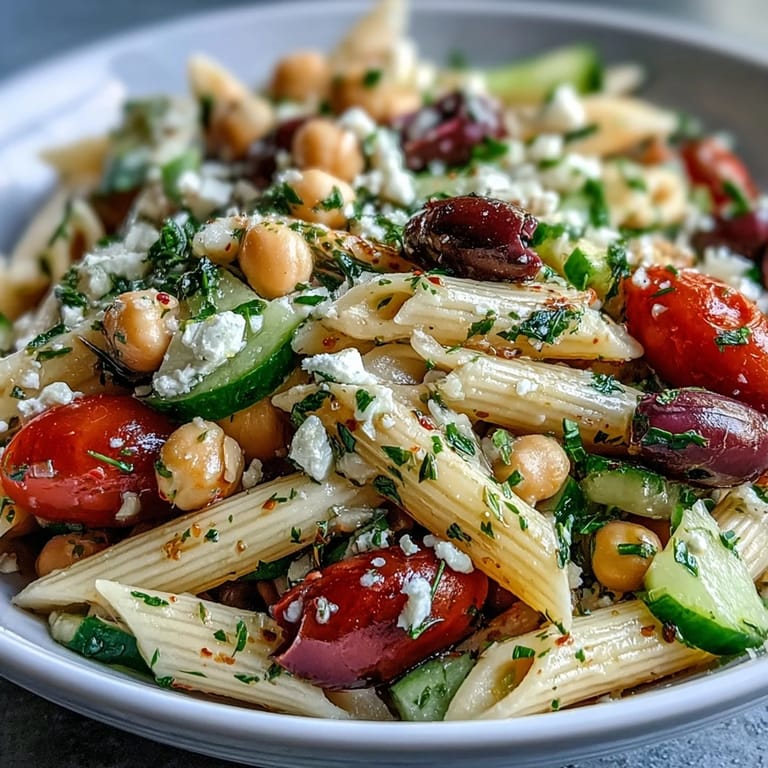
This salad is happiest served within a few hours of assembly when everything is still distinct and snappy, though it keeps well in the fridge for two days and tastes great cold or at room temperature. The pasta will soften and the flavors will meld further as it sits, which some people prefer, so taste it before serving and add a squeeze of fresh lemon or a drizzle of olive oil if it needs brightening back up.
- Pair it with a crisp white wine like Sauvignon Blanc or a light rosé if you're building a meal around it.
- Pack it in containers for lunches and let it come to room temperature for twenty minutes before eating so the flavors wake back up.
- If it looks dry the next day, don't add more dressing cold—instead, let it sit out and loosen it with fresh lemon juice and a little good olive oil.
 Save
Save This is the salad I reach for when I want something that tastes like summer and doesn't feel like a chore. It's honest food that lets good ingredients speak for themselves.
Your Questions Answered
- → Can I use gluten-free pasta for this dish?
Yes, gluten-free pasta works well as a substitute, maintaining the texture and flavor balance.
- → How long should this salad be chilled for best flavor?
Chilling for 20–30 minutes allows the dressing to meld with the ingredients, enhancing the overall taste.
- → What variations can I try to alter the flavor profile?
Adding roasted red peppers, artichoke hearts, or swapping feta for a vegan alternative can add new dimensions.
- → Is it possible to prepare this dish ahead of time?
Yes, it can be prepared a few hours in advance and stored chilled to improve flavor integration.
- → What herbs complement the lemon-herb dressing best?
Fresh parsley and dried oregano are ideal, providing classic Mediterranean herb notes that brighten the salad.
- → Can this dish be served warm or is it only suitable chilled?
It is best served chilled or at room temperature to preserve the crispness of the vegetables and fresh flavors.