 Save
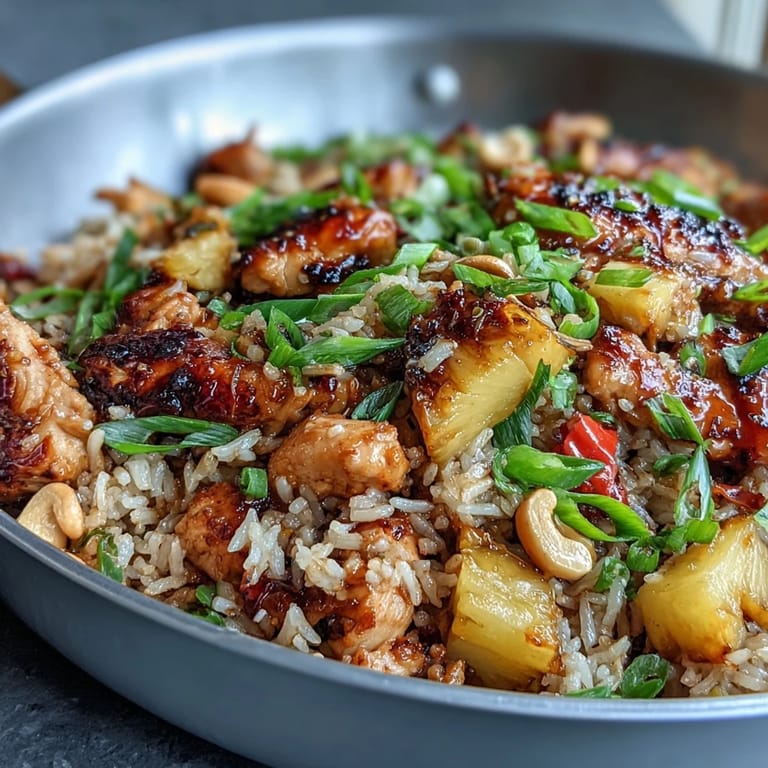
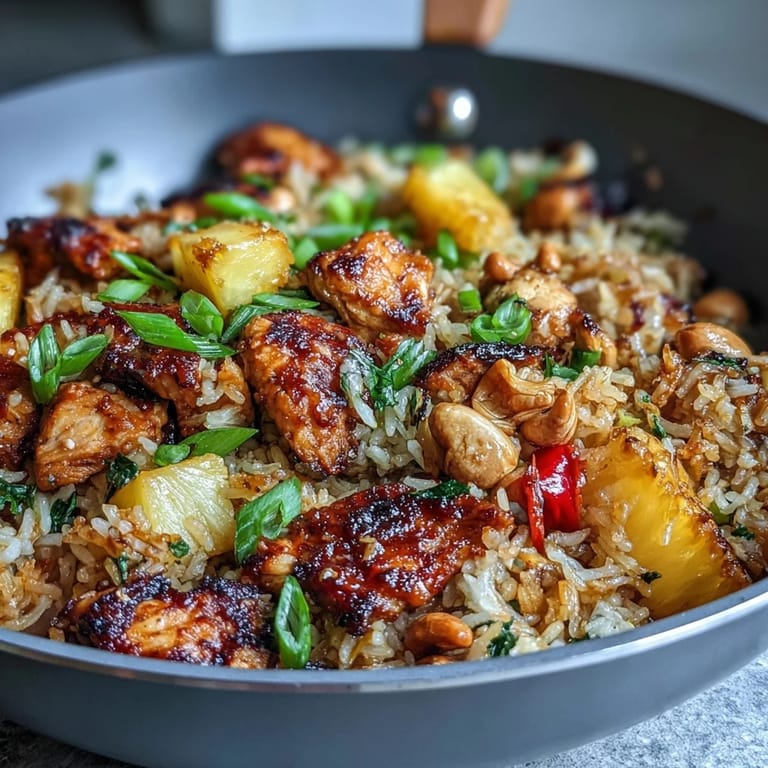
Save My kitchen smelled like a tropical vacation the first time I threw together this Hawaiian pineapple chicken fried rice, except I was standing in front of my stove on a random Tuesday instead of lounging on a beach. A friend had just returned from Honolulu with stories about this exact dish, and I became obsessed with recreating it using whatever I had on hand. The magic happened when that first bite hit my tongue—sweet pineapple meeting savory soy, with little pops of cashew texture that made the whole thing feel almost luxurious. I realized then that you don't need plane tickets to bring island vibes into your dinner rotation. This became my go-to when I wanted something that felt special but took barely longer than ordering takeout.
I made this for my neighbor last summer when she mentioned craving takeout but was trying to eat better, and watching her face light up at that first forkful made me feel like a kitchen wizard. She asked for the recipe immediately, and now I run into her occasionally holding a grocery bag full of pineapple and cashews. That moment taught me that food doesn't have to be complicated to make people feel genuinely cared for.
Ingredients
- Boneless, skinless chicken breasts (300 g), diced: They cook quickly and soak up all those tropical flavors, plus dicing them small means they integrate into every bite rather than sitting as separate chunks.
- Large eggs, beaten: These add richness and create little pockets of creaminess throughout the rice without needing any cream whatsoever.
- Fresh pineapple, diced (1 cup): The acidity cuts through the richness beautifully, and the juice caramelizes slightly when it hits the hot pan, creating these tiny moments of concentrated sweetness.
- Red bell pepper, diced: It stays slightly crisp even after cooking, giving you little bursts of sweetness and color that make the whole dish feel more vibrant.
- Frozen peas and carrots, thawed (1 cup): Frozen vegetables are your secret weapon here—they're picked at peak ripeness and won't turn to mush like fresh carrots sometimes do.
- Green onions, sliced (3, plus extra for garnish): The raw garnish version tastes completely different from the cooked version mixed into the rice, so use both.
- Garlic, minced (2 cloves): This is where the savory foundation starts, and mincing it small means it distributes evenly rather than creating hot spots of intense garlic.
- Cooked jasmine rice, chilled (3 cups): Day-old rice is absolutely essential—fresh rice will clump up and turn mushy, while cold rice separates into individual grains and creates that restaurant-quality texture.
- Soy sauce (3 tbsp): Use gluten-free if you need to, but don't skip this umami bomb that makes everything taste more like itself.
- Oyster sauce (1 tbsp): It adds a subtle depth that you won't be able to name but will definitely notice is missing if you leave it out.
- Sesame oil (1 tbsp): This is the aromatic finale—add it at the end so the fragrance doesn't cook away and the oil retains that toasted richness.
- Ground black pepper (1/2 tsp): Fresh cracked is always better than pre-ground if you have it.
- Salt (1/2 tsp): Taste as you go because soy and oyster sauces already bring salinity to the party.
- Chili flakes (1/2 tsp, optional): These add a gentle heat that sneaks up on you rather than punching you in the face.
- Vegetable oil (2 tbsp): Use something neutral that can handle high heat without smoking.
- Roasted cashews or macadamia nuts, optional (2 tbsp): These aren't just decoration—they add texture and a buttery richness that ties the whole dish together.
Tired of Takeout? 🥡
Get 10 meals you can make faster than delivery arrives. Seriously.
One email. No spam. Unsubscribe anytime.
Instructions
- Heat your pan and sear the chicken:
- Get your wok or large skillet smoking hot over medium-high heat, then add a tablespoon of oil and let it shimmer for a few seconds before the chicken hits the pan. You'll hear that immediate sizzle, and in about 5 to 7 minutes you'll have golden, cooked-through pieces that you push to the side and set aside.
- Scramble the eggs:
- Add the second tablespoon of oil, pour in your beaten eggs, and let them set for just a moment before scrambling them into bite-sized pieces that you push toward the edges of the pan. They should still have a tiny bit of moisture when you pull them away because they'll continue cooking slightly in the residual heat.
- Build the fragrant base:
- Toss in your minced garlic, diced red pepper, and sliced green onions, stirring constantly for about 2 minutes until the whole pan smells like something incredible is happening. You're looking for the garlic to become golden and the peppers to soften just enough to lose their raw edge.
- Add the rest of the vegetables and fruit:
- Now the frozen peas and carrots join the party, along with your diced pineapple, and you stir-fry for another 2 to 3 minutes. The pineapple will start to caramelize at the edges and release little bursts of juice that coat everything it touches.
- Integrate the rice:
- Add your chilled rice and break up any clumps with your spatula or wooden spoon, making sure the cold rice gets distributed throughout the hot pan so it warms evenly. Return your cooked chicken to the pan at this point and everything starts coming together.
- Season and finish:
- Pour in the soy sauce, oyster sauce, sesame oil, salt, pepper, and chili flakes if you're using them, then stir everything together for 3 to 4 minutes until it's all hot and well combined. You'll notice the color deepening and the aroma shifting to something savory and nutty.
- Taste and adjust:
- Pull the pan off the heat and take a bite, adjusting salt or soy sauce if needed because every stove and every batch of rice behaves differently. Trust your palate.
- Garnish and serve:
- Scatter the roasted nuts over the top, add a handful of fresh green onions for that bright, crisp contrast, and serve immediately while everything is still hot.
 Save
Save There's something about feeding people something warm and beautiful that comes together in less than forty minutes that makes you feel capable of anything in that moment. My sister now requests this dish instead of takeout, and I've never told her how cheap it is to make, because some magic is better when nobody knows the price tag.
Texture is Everything
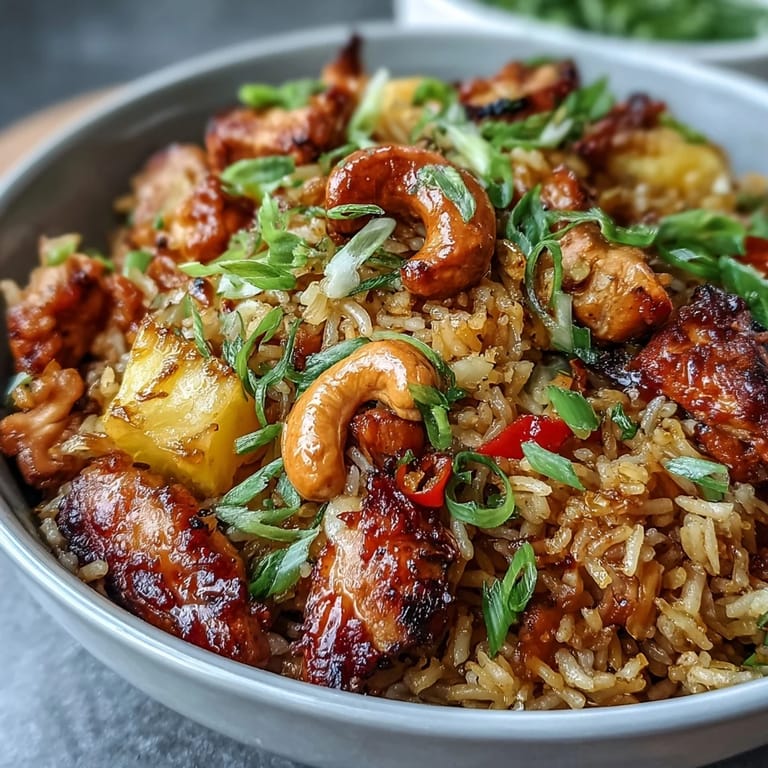
The reason this dish works so well is that every element contributes a different texture—creamy egg, crisp vegetables, chewy pineapple, fluffy rice, and crunchy nuts all in one bite. This is what separates good fried rice from the kind that all tastes the same by the third forkful. When you're chopping your ingredients, think about keeping them in roughly the same size so everything cooks at the same rate and contributes equally to the experience.
The Cold Rice Secret
Fried rice lives or dies by the rice you use, and understanding why cold rice works magic will change how you approach this dish. Hot, freshly cooked rice releases steam and moisture as it cools, and that moisture is the enemy of individual grain separation—it makes everything stick together and turn mushy. Cold rice from the refrigerator has already lost that moisture and the grains have firmed up, so when they hit your hot pan they stay distinct and get coated in sauce rather than absorbing it and becoming gluey.
Playing with Substitutions and Variations
I've made this dish a dozen different ways depending on what I had or what mood I was in, and it's remarkably forgiving as long as you keep the core balance of sweet, savory, and umami intact. Shrimp cooks even faster than chicken if you're in a hurry, and tofu absorbs the sauce beautifully if you're feeding vegetarians. Canned pineapple works just fine when fresh isn't available or is too expensive, though you'll lose some of that subtle tartness that fresh fruit brings to the party.
- Try lime juice squeezed over the finished dish if you want to brighten the flavors and add complexity.
- Swap the cashews for peanuts or leave them out entirely if nuts aren't available or welcomed at your table.
- If you like it spicier, add chili paste or sriracha instead of just flakes for a deeper heat that builds throughout the meal.
 Save
Save This dish has become my answer to "I don't have time to cook" because it proves that weeknight dinners can taste like a vacation without requiring any special skills or obscure ingredients. Make it once and you'll understand why it earned a permanent spot in my rotation.
Your Questions Answered
- → What type of rice works best?
Day-old jasmine rice is ideal as it helps maintain a firm texture and prevents mushiness.
- → Can I substitute the chicken?
Yes, shrimp or tofu make excellent alternatives and adapt well to the seasoning.
- → How to achieve a good balance of sweet and savory?
Using fresh pineapple with soy and oyster sauces creates a natural sweet and savory harmony.
- → Is there a recommended cooking oil?
Vegetable oil works well for high-heat stir-frying and maintains the dish’s flavor.
- → How to add extra texture to the dish?
Garnishing with roasted cashews or macadamia nuts adds a pleasant crunch and richness.
- → What spices enhance this dish?
A touch of ground black pepper and optional chili flakes bring subtle heat and depth.