 Save
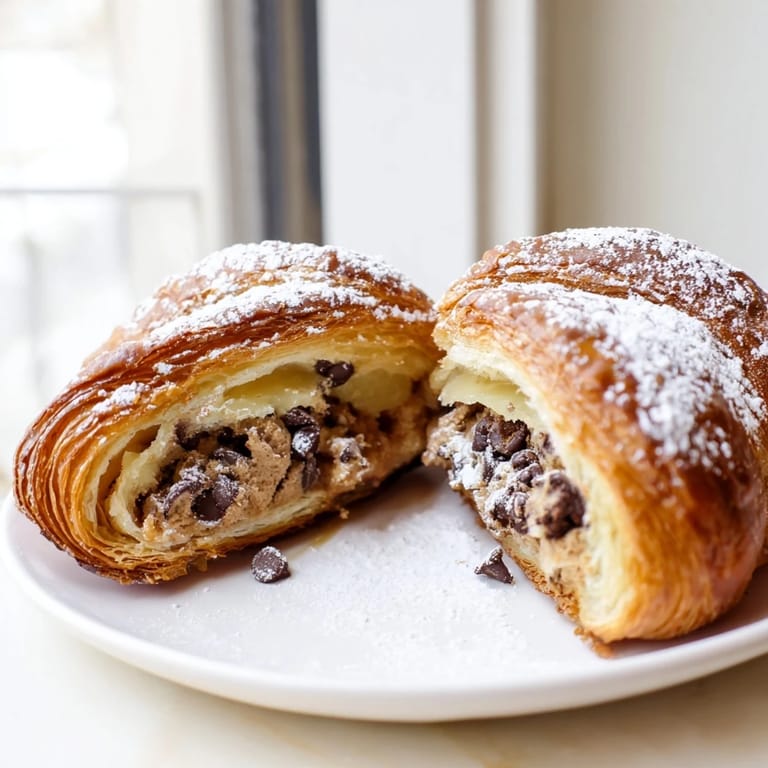
Save There's a specific moment I think of whenever someone mentions chocolate—it's not a grand memory, just me standing in a Parisian patisserie at 7 AM, watching a baker slot warm croissants into a display case. I wondered what would happen if you took that flaky, buttery perfection and stuffed it with cookie dough instead of just chocolate or jam. Years later, I finally tried it, and the first bite changed breakfast forever. That warm, gooey center against the shattering exterior felt like I'd invented something nobody else had thought of, even though I clearly wasn't the first.
I brought a batch of these to a potluck once, and the person who grabbed the last one actually closed their eyes while eating it—just stood there in the kitchen with this peaceful expression. That's when I realized this wasn't just breakfast food; it was the kind of thing that makes people pause and appreciate what they're tasting. They asked for the recipe immediately, which is when I had to admit it was actually pretty simple.
Ingredients
- Croissants, 6 large all-butter: Fresh or day-old both work, though day-old ones hold up better to the filling without splitting. The butter content is what makes them sing when they hit the oven.
- Unsalted butter, 90g softened: Softened means it should feel like cool skin when you touch it—not melted, not cold. This is what makes the cookie dough actually taste like butter instead of just being mixed in.
- Light brown sugar, 100g: The molasses in brown sugar adds a subtle depth that makes people wonder what spice is in there.
- Granulated sugar, 50g: This keeps the texture crisp rather than cakey.
- Egg, 1 large: Room temperature is ideal; cold eggs fight the creaming process.
- Vanilla extract, 1 tsp: Real vanilla matters here more than in recipes that hide it under other flavors.
- All-purpose flour, 150g: Measure by spooning and leveling, not by dipping the cup into the bag—scooping packs flour and throws off your ratios.
- Baking soda, 1/2 tsp: This is what helps the dough spread and set properly inside the warm croissant.
- Fine sea salt, 1/4 tsp: Just a whisper, but it balances the sweetness and enhances the chocolate.
- Semi-sweet chocolate chips, 120g: The size matters less than the quality; cheap chocolate stays waxy instead of melting into something luxurious.
- Egg for egg wash, 1 beaten: Creates that golden, slightly glossy finish.
- Icing sugar for dusting, optional: A light cloud at the very end, just before serving.
Tired of Takeout? 🥡
Get 10 meals you can make faster than delivery arrives. Seriously.
One email. No spam. Unsubscribe anytime.
Instructions
- Heat your oven and prepare:
- Set the oven to 180°C (350°F) and line a baking sheet with parchment paper. This temperature is cool enough that the croissant doesn't brown too fast while the cookie dough inside catches up.
- Cream the butter and sugars:
- Beat them together until the mixture looks pale and fluffy, like the texture of soft frosting. This takes about two or three minutes with a mixer, and it's worth doing properly because it's what makes the dough airy rather than dense.
- Add the egg and vanilla:
- Mix until it disappears completely into the butter mixture. If it looks separated, that's fine; keep going.
- Sift and fold in the dry ingredients:
- Sift the flour, baking soda, and salt together, then fold them in gently until just combined. Don't overmix; the moment you don't see streaks of flour anymore, you're done. This is what keeps the cookie dough tender.
- Fold in the chocolate:
- Stir until the chips are evenly distributed. At this point, the dough smells like something you want to eat immediately, which is normal.
- Prepare the croissants:
- Slice each one horizontally, being careful to leave a hinge on one side so it folds open like a book rather than separating completely. A serrated knife works better than a sharp straight one.
- Fill with care:
- Spoon two to three tablespoons of cookie dough into the center of each croissant, then gently press it so it spreads slightly without compressing the layers. If you press too hard, the croissant becomes dense; too light and it won't hold the shape.
- Seal and brush:
- Close the croissant and brush the top lightly with beaten egg, which will caramelize during baking and give it that café-quality shine.
- Arrange and bake:
- Space them on the baking sheet so there's a little air around each one. Bake for sixteen to eighteen minutes, watching for that exact moment when the croissant turns golden but the dough inside still feels soft when you gently press the side. This is the difference between perfectly gooey and slightly overdone.
- Cool and finish:
- Let them cool for a few minutes—not until they're cold, just until they're cool enough to handle. Then dust lightly with icing sugar if you want, and serve warm.
 Save
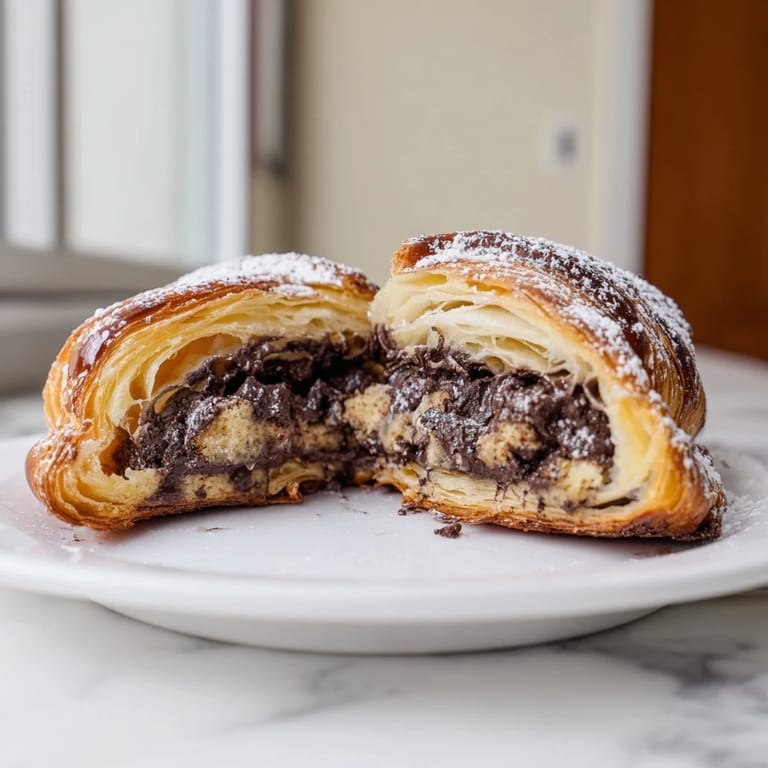
Save There was an afternoon when my nephew asked why croissants have so many layers, and I spent twenty minutes trying to explain lamination while we pulled one apart. He found a soft pocket of chocolate chip cookie dough, tasted it, and suddenly understood that sometimes food is just a conversation waiting to happen. That's what these do.
The Perfect Pairing
These taste best with something that cuts the richness without competing with it—strong black coffee, if you lean toward simplicity, or a cold glass of milk if you're feeling nostalgic. Some people swear by serving them alongside a scoop of vanilla ice cream, which creates this brief window where you get warm flaky pastry against cold, creamy sweetness. The contrast only lasts a minute before everything melds together, which is exactly why you want to eat them warm and not reheat them later.
Customizing Your Version
The beauty of this recipe is that it invites experimentation without breaking. If you want to try dark chocolate instead of semi-sweet, the bitterness plays nicely against the sweetness of the croissant. White chocolate makes the whole thing richer and more indulgent, though some people find it cloying. A handful of chopped toasted nuts—walnuts, hazelnuts, even pecans—adds texture and a slight bitterness that prevents the recipe from feeling one-dimensional.
Storage and Reheating
These are best served the moment they emerge from the oven, when every layer is still in a state of transition between crispy and soft. If you do need to store them, wrap them gently in foil and keep them at room temperature for up to a day; reheating in a 160°C oven for about five minutes will restore some of the croissant's texture, though it won't be quite the same as fresh. Making the cookie dough ahead and refrigerating it for up to three days means you can assemble and bake these on demand, which is honestly the best strategy if you want to impress someone without much warning.
- Wrapped properly, they stay soft rather than drying out into something forgettable.
- Reheating works better than microwaving, which turns everything into a soggy mass.
- Room temperature versions still taste good the next day, just eat them straight from the counter without reheating.
 Save
Save This recipe exists because sometimes the best ideas come from standing in a kitchen wondering what would happen if you combined two things that have no reason to work together, and then discovering they actually complete each other. Serve these to people you want to impress, or make them for yourself on a Sunday morning when you deserve something better than the usual routine.
Your Questions Answered
- → What type of croissants work best?
Fresh or day-old all-butter croissants provide the ideal flaky texture and rich flavor for filling.
- → How to ensure the dough inside cooks properly?
Baking at 180°C for 16–18 minutes helps set the cookie dough inside while keeping it soft and gooey.
- → Can nuts be added to the filling?
Yes, chopped toasted walnuts or hazelnuts can be folded into the dough for added crunch and flavor.
- → What chocolate alternatives can be used?
Semi-sweet chips can be swapped with dark or white chocolate according to preference.
- → Is it best served warm or cold?
Serving warm enhances the gooey texture and buttery aroma of the croissant and filling.
- → Any tips for finishing touches?
Lightly dusting with icing sugar adds a delicate sweetness and attractive presentation.