 Save
Save There's a specific moment every summer when I realize the kitchen has become too hot to turn on the oven, and that's when I reach for a bowl of cold noodles. I discovered this sesame-ginger version on a sweltering afternoon when my fridge felt more like a sanctuary than my pantry. A friend had just dropped off fresh cilantro from her garden, and I had a bunch of vegetables that needed using before they wilted. The simplicity of throwing it all together—no cooking anything beyond boiling water—felt like a small victory on a day when the thermometer had other plans.
I made this for a potluck once where I was genuinely nervous about what to bring—everyone else had mentioned elaborate dishes, and I was showing up with cold noodles. But something shifted when people started going back for seconds and asking for the recipe while they were still eating. It turned out that on a hot day, nobody wanted anything else, and I learned that sometimes the simplest dishes are the ones people actually want to eat.
Ingredients
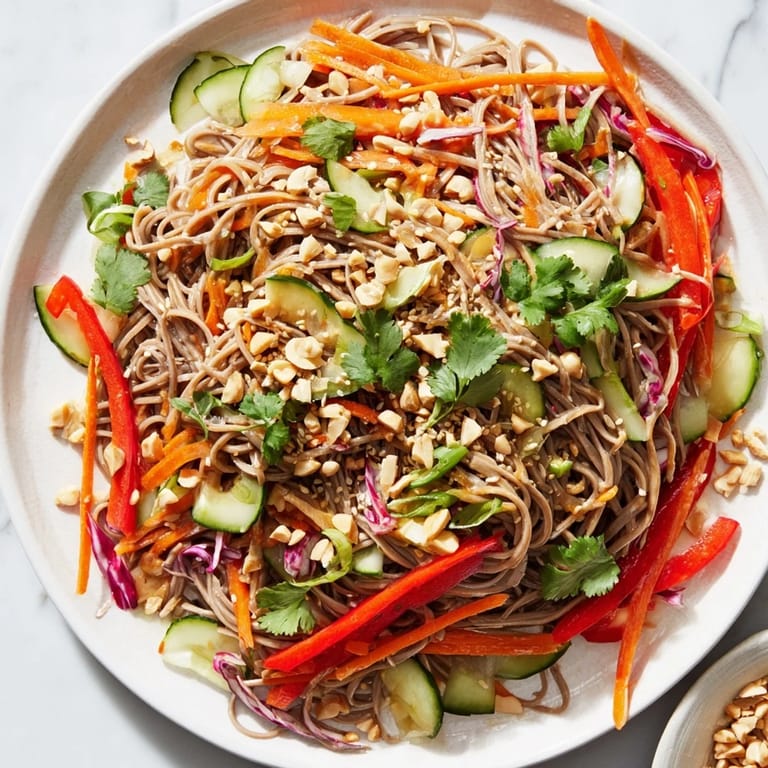
- Soba or rice noodles (250g): Soba has a wonderful nutty flavor that pairs beautifully with sesame, but rice noodles work just as well and are naturally gluten-free if that matters to you.
- Carrot, julienned: The sweetness of raw carrot balances the savory dressing, and cutting them thin means they actually integrate into every bite.
- Red bell pepper, thinly sliced: Choose one that feels heavy for its size—that's when they're crisp and sweet, not watery.
- Cucumber, seeded and julienned: Removing the seeds prevents the salad from getting soggy as it sits, a small step that makes a real difference.
- Spring onions, finely sliced: I use both the white and green parts for a layered onion flavor that builds as you eat.
- Red cabbage, thinly shredded: It holds its crunch longer than green cabbage and adds a visual pop that makes the whole bowl more inviting.
- Fresh cilantro, chopped: If cilantro tastes soapy to you, swap it for mint or basil without hesitation—there's no rule that says it has to be there.
- Soy sauce, rice vinegar, toasted sesame oil: These three form the backbone of the dressing, creating depth without needing anything complicated.
- Fresh ginger, finely grated: Don't skip the microplane here; it releases the ginger's oils and makes the dressing taste brighter.
- Garlic clove, minced: One clove is enough; garlic gets stronger as it sits, and you want to taste the sesame, not just heat.
- Sriracha or chili sauce: This is optional, but it adds a whisper of heat that makes the other flavors stand out.
- Toasted sesame seeds: Buy them already toasted if you can—they're nuttier and you won't have to remember to do it yourself.
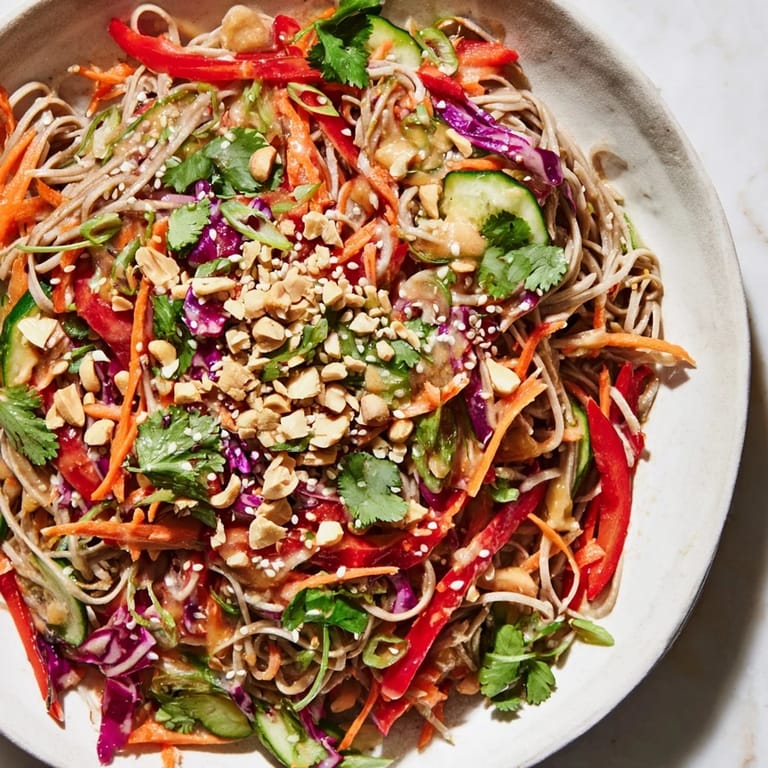
- Roasted peanuts or cashews: The crunch at the end is essential; it keeps every spoonful from feeling the same.
Tired of Takeout? 🥡
Get 10 meals you can make faster than delivery arrives. Seriously.
One email. No spam. Unsubscribe anytime.
Instructions
- Boil and cool the noodles:
- Bring a large pot of water to a rolling boil, add your noodles, and cook according to the package timing—don't guess, because overdone noodles will turn mushy once they're dressed. Drain them immediately, rinse under cold running water until they're completely cool, then spread them on a cutting board or clean kitchen towel to dry slightly.
- Prep everything while the noodles cool:
- Julienne your carrot and cucumber, slice your pepper and spring onions, shred your cabbage, and chop your cilantro. Mise en place matters here because once you're mixing, you want to move quickly.
- Whisk the dressing:
- In a small bowl, combine the soy sauce, rice vinegar, sesame oil, honey, ginger, garlic, and Sriracha if you're using it, then stir in the toasted sesame seeds. Taste it before you add it to the noodles—the dressing should taste boldly seasoned, because it needs to stand up to the vegetables and noodles.
- Combine everything:
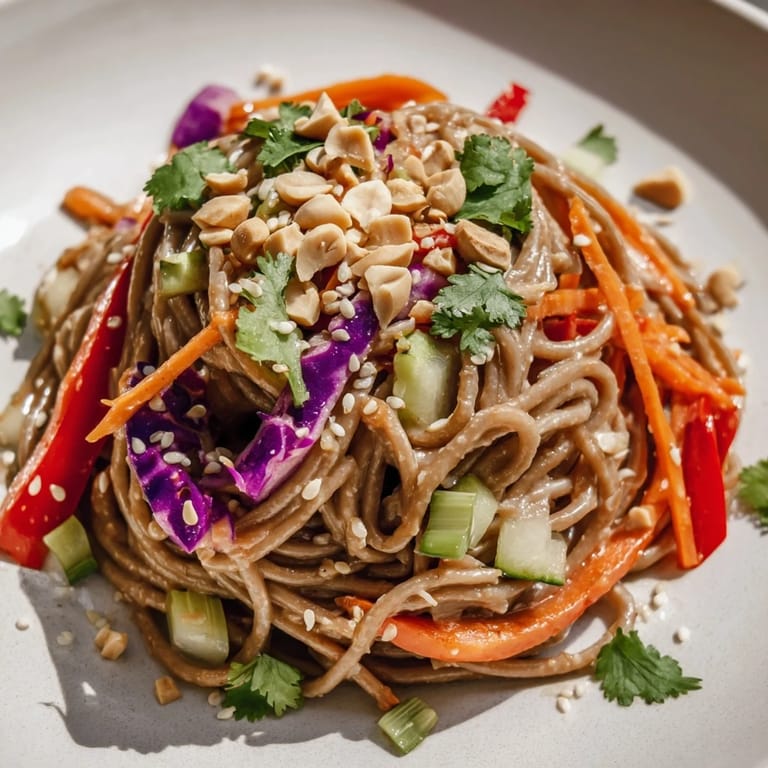
- Place the cooled noodles in a large bowl, add all your vegetables and cilantro, pour the dressing over the top, and toss until every strand of noodle glistens. Don't be shy with the tossing; you want the flavors distributed evenly.
- Plate and top:
- Divide the noodles among your serving bowls and scatter the roasted nuts and extra sesame seeds on top. The crunch should be visible, promising texture in every spoonful.
- Serve or chill:
- You can eat this immediately, but if you have time, chilling it for an hour lets the flavors deepen and settle into the noodles. The dressing will also redistribute itself, which somehow makes the whole thing taste better.
 Save
Save I think the moment I understood why people loved this dish was when my neighbor came over on a day when the air conditioning had broken. She took one bite and suddenly seemed less upset about the whole situation. Sometimes food's real job is to make a difficult moment feel manageable, and that's what cold noodles do.
Building Flavor Without Heat
One of the best discoveries I've made is that this dressing doesn't need cooking—the sesame oil is already toasted, so all you're doing is marrying flavors that are already rich. The ginger and garlic stay raw, which means they have a brightness that cooked versions lose. If you're used to warm noodle dishes, this might feel untraditional at first, but the cold brings a completely different kind of satisfaction, one that doesn't weigh you down.
Variations That Actually Work
I've made this with everything from shredded rotisserie chicken to pan-seared tofu to nothing at all, and each version feels like its own meal. Adding a poached egg on top transforms it into something that feels more breakfast-like, while cashews instead of peanuts make it feel fancier without any extra effort. The formula is flexible enough that you can shape it to whatever you have and whatever you're hungry for.
Storage and Make-Ahead Tips
If you're planning to eat this over a few days, keep the components separate and assemble just before eating—the noodles and vegetables stay best when they're not sitting in dressing overnight. The dressing itself lasts for days in a jar in the fridge, and honestly, it's useful for other salads too. I've learned to always make extra dressing because it finds its way into lunches throughout the week, drizzled over grain bowls or steamed vegetables.
- Store cooked noodles in an airtight container for up to three days, or freeze them in portions for up to a month.
- Prep vegetables the day before and store them in sealed containers so you can assemble everything in minutes when hunger strikes.
- Make the dressing a day ahead so the flavors have time to marry and deepen.
 Save
Save This recipe has become my answer to so many different days—the ones that are too hot, the ones when I need to feed people quickly, the ones when I'm not sure what I'm hungry for but I know I want something that feels fresh. It's a reminder that some of the best meals don't require elaborate technique, just good ingredients and the good sense to let them speak for themselves.
Your Questions Answered
- → What type of noodles work best for this salad?
Soba noodles or rice noodles are ideal as they offer a firm texture that holds up well when chilled.
- → Can I make the sesame-ginger dressing ahead of time?
Yes, the dressing can be prepared in advance and refrigerated for up to two days. Just whisk before using.
- → How can I add protein to this dish?
Adding cooked shrimp, grilled chicken, or tofu works well to boost protein without altering the fresh flavor profile.
- → Is it possible to make this salad gluten-free?
Use tamari sauce instead of soy sauce and substitute soba noodles with rice noodles to keep it gluten-free.
- → What garnishes enhance the texture and flavor?
Roasted peanuts or cashews and toasted sesame seeds add a pleasant crunch and complement the dressing’s nuttiness.