 Save
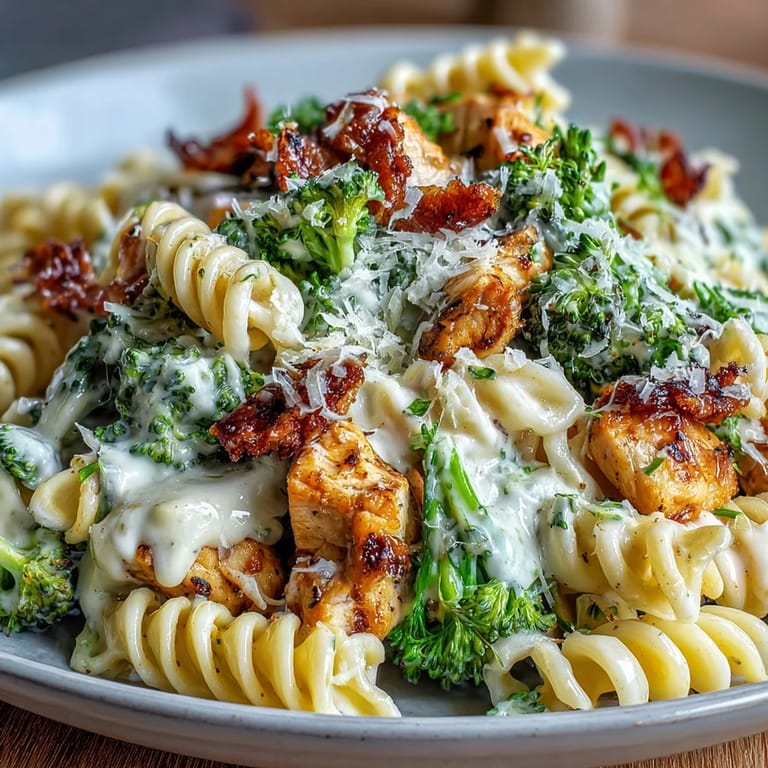
Save There's something about the smell of garlic hitting hot butter that makes you stop whatever you're doing and just breathe it in. I discovered this pasta one random Tuesday when I had chicken, broccoli, and a craving for something creamy but didn't want to spend an hour cooking. Twenty minutes later, I was twirling pasta on a fork, amazed that something this restaurant-quality came from a single skillet in my own kitchen.
I made this for my partner on a weeknight when we were both exhausted, and watching their face light up when they took that first bite felt like the smallest victory. They asked if I'd ordered from somewhere fancy, and I got to be the person who casually said I'd just thrown it together. That moment taught me that simple, thoughtful food sometimes matters more than complicated recipes.
Ingredients
- Boneless, skinless chicken breasts: Dicing them into roughly equal pieces means they cook at the same rate and stay juicy, not dry. Don't skip the searing step or you'll miss that golden crust that adds flavor.
- Broccoli florets: Cut them relatively small so they soften evenly and integrate into the sauce rather than standing apart as a vegetable guest.
- Garlic: Fresh and minced makes all the difference here; jarred garlic won't give you that bright, sharp edge that wakes up the whole dish.
- Yellow onion: Finely chopped lets it disappear into the sauce and sweeten it naturally without overpowering anything.
- Short pasta: Penne, fusilli, or rotini catch the sauce in their ridges and shapes, so avoid long pasta like spaghetti that just slides off.
- Whole milk and heavy cream: Together they create that luxurious texture without being overwhelmingly heavy; using just one or the other leaves it tasting unfinished.
- Parmesan cheese: Freshly grated melts faster and smoother than pre-shredded, which contains anti-caking agents that can make the sauce grainy.
- Butter: Unsalted lets you control the saltiness and adds a richness that olive oil alone can't quite match.
- Chicken broth: Low-sodium keeps you in control of the final seasoning and prevents an overly salty, one-dimensional taste.
- Italian herbs: Dried works beautifully here because the heat and moisture of the sauce releases their flavor gently.
Tired of Takeout? 🥡
Get 10 meals you can make faster than delivery arrives. Seriously.
One email. No spam. Unsubscribe anytime.
Instructions
- Sear the chicken until golden:
- Heat olive oil and butter together over medium heat until the butter foams slightly, then add your diced chicken. Let it sit undisturbed for a minute or two to develop that golden crust, then stir and cook for 5-6 minutes total until there's no pink inside. This step builds flavor and texture that you'd otherwise miss.
- Build the aromatics:
- In the same skillet (don't wash it, all that browned stuff is liquid gold), toss in your chopped onion and let it soften for about 2 minutes until it becomes translucent and slightly sweet. Add minced garlic for just 30 seconds, stirring constantly so it perfumes the oil without burning or turning bitter.
- Cook the pasta in broth:
- Stir in your uncooked pasta, chicken broth, milk, and Italian herbs, then bring everything to a boil. Once it's bubbling, reduce the heat to a gentle simmer, cover the skillet, and stir every couple of minutes for about 8 minutes so the pasta cooks evenly and the broth gets creamy.
- Add broccoli and finish the pasta:
- Scatter your broccoli florets over the top, cover again, and cook for another 5-6 minutes until the pasta is tender enough to bite through but still has a tiny bit of resistance, and the broccoli turns bright green. The steam trapped under the lid does most of the work here.
- Create the creamy sauce:
- Lower your heat to medium-low, then pour in the heavy cream and sprinkle in your Parmesan cheese while stirring gently. Watch as the cheese melts and transforms everything into a silky, luxurious sauce that coats every piece of pasta and vegetable.
- Bring it all together:
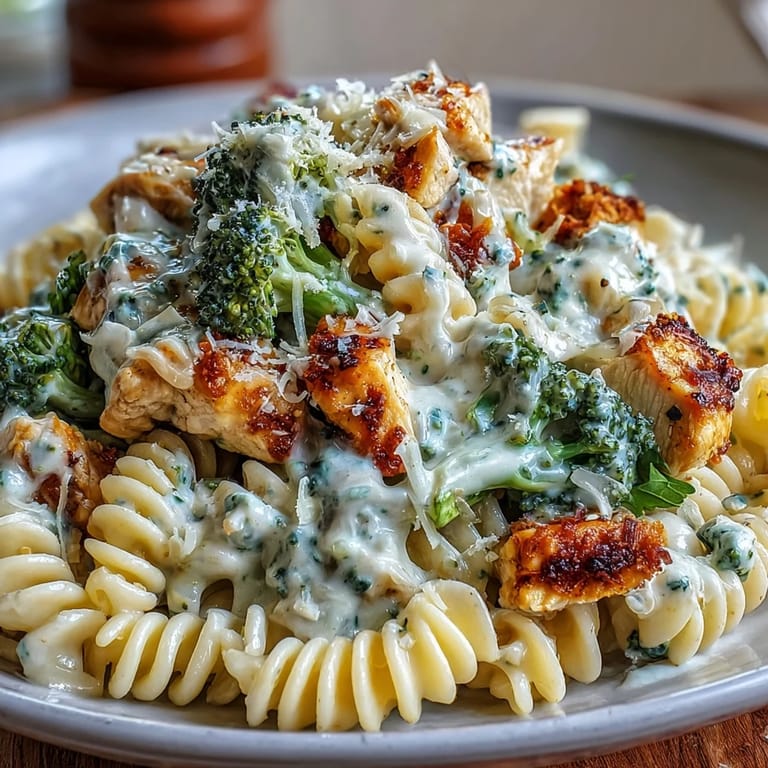
- Return your cooked chicken to the skillet, stir everything for about 2 minutes so the chicken heats through and gets coated in sauce, then taste and adjust with salt and pepper. Finish with a scatter of fresh parsley and maybe a little extra Parmesan if you're feeling generous.
 Save
Save The night my mom tasted this, she asked for the recipe before she was even halfway through her bowl. I realized then that food tastes better when it comes from wanting to share something good, not from following someone else's rules perfectly. That's what this pasta taught me.
Why This Skillet Method Works
Cooking everything in one vessel means the pasta releases starch into the broth, thickening it naturally without any cornstarch or flour. The chicken, broccoli, and pasta all develop flavors together rather than in isolation, so the final dish tastes harmonious and intentional. It also means you spend less time managing multiple pots and more time actually enjoying the process of cooking.
Making It Your Own
This recipe is a solid foundation, but it loves improvisation. I've made it with rotisserie chicken when I was short on time, with baby spinach stirred in at the end for earthiness, and once with frozen peas because that's what I had. The core method stays the same while the flavors shift to match what's in your fridge and what you're craving that particular night.
Timing and Serving Ideas
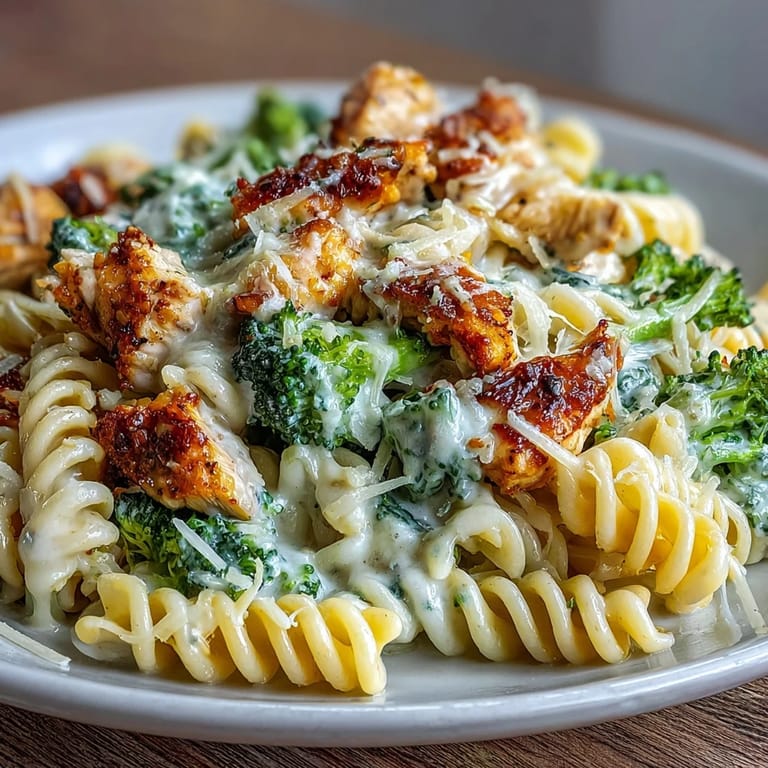
From start to finish, you're looking at about 35 minutes, which means this works beautifully on busy weeknights when you want something that tastes special without the special effort. The pasta is best served immediately while the sauce is creamy and the broccoli still has a tiny bit of bite, though leftovers reheat gently in a low skillet with a splash of milk if you need them later.
- Pair it with a crisp white wine like Pinot Grigio to cut through the richness and brighten the whole experience.
- A simple green salad on the side keeps things balanced without adding much prep work.
- Fresh crusty bread is the secret weapon for soaking up every last bit of that incredible sauce.
 Save
Save This dish has become my go-to when I want to cook something that feels like I've put in serious effort without the kitchen chaos. It's honest, straightforward food that somehow tastes like you've been cooking all day.
Your Questions Answered
- → Can I use pre-cooked chicken?
Absolutely. Rotisserie chicken or leftover cooked chicken works beautifully. Skip the initial chicken sauté step and add it back in during step 5 when you return the meat to the skillet. This shaves about 5-6 minutes off your prep time.
- → What pasta shapes work best?
Short pasta varieties with nooks and crannies excel here. Penne, fusilli, and rotini are ideal because the sauce clings to their textured surfaces. Macaroni or farfalle would also work nicely. Avoid long strands like spaghetti—the sauce won't coat properly.
- → Can I make it dairy-free?
You can adapt this for dairy needs. Substitute whole milk with unsweetened almond or oat milk, replace heavy cream with full-fat canned coconut cream, and use nutritional yeast or vegan Parmesan alternative. The texture will be slightly different but still enjoyable.
- → How do I store and reheat leftovers?
Store cooled portions in airtight containers in the refrigerator for up to 4 days. The pasta will absorb more sauce as it sits, so add a splash of milk or broth when reheating. Warm gently on the stove over medium-low heat, stirring occasionally, until heated through.
- → Can I add other vegetables?
Certainly. Fresh spinach works well—add it during the last 2 minutes of cooking so it wilts but doesn't become mushy. Peas, diced bell peppers, or zucchini pieces can join the broccoli in step 4. Just adjust cooking time accordingly so vegetables stay tender-crisp.