 Save
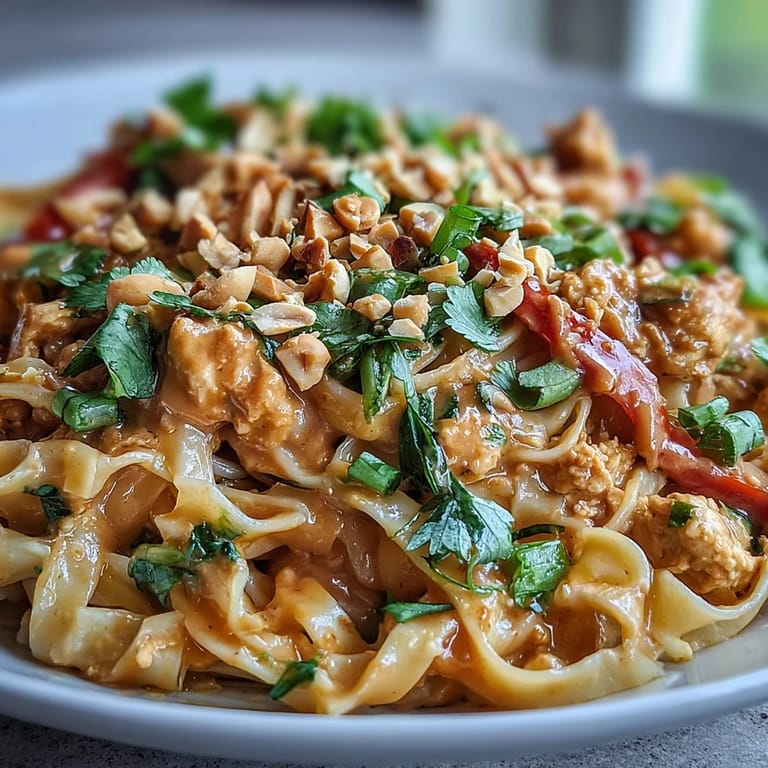
Save There's something about the smell of ginger and garlic hitting hot oil that makes me feel like I'm cooking in Bangkok, even though I'm standing in my tiny kitchen at home. I discovered this one-pan peanut noodle situation by accident—I had rice noodles, some chicken, and a craving for Thai takeout but zero motivation to order. What emerged was this creamy, tangled bowl of comfort that somehow tastes even better than the restaurant version because it's made with ingredients I actually recognize. The best part? It all happens in one skillet, so cleanup is laughably easy.
I made this for my sister when she was going through a phase of "I'll eat anything but I'm always hungry," and watching her go back for seconds without even asking if there was more told me everything I needed to know about this dish. She's picky about texture and heat level, but something about the way the noodles soften into the sauce and the vegetables stay just crisp enough won her over completely.
Ingredients
- Ground chicken: Use 1 lb (450 g) for a protein-forward bowl; if you prefer it less rich, 12 oz works fine and stretches across four servings nicely.
- Dried wide rice noodles: Buy 10 oz (280 g) from the Asian foods aisle—they soften directly in the sauce, which is the whole magic of this technique.
- Red bell pepper: Slice thin (1 pepper, about 200 g) so it softens quickly and distributes color throughout.
- Shredded carrots: Use 1 cup (about 120 g) for natural sweetness that balances the savory sauce.
- Snap peas: Trim and halve 1 cup (100 g) to keep them from dominating the bite.
- Green onions: Slice 4 stalks, keeping whites and greens separate—whites flavor the pan, greens stay fresh on top.
- Garlic and ginger: Mince 2 cloves garlic and grate 1 tbsp fresh ginger; don't skip this step because they anchor the whole flavor profile.
- Creamy peanut butter: Use 1/3 cup (85 g) of the kind without added sugar if you can find it, or regular works too.
- Low-sodium soy sauce: Measure 1/4 cup (60 ml) precisely so the sauce doesn't get too salty.
- Hoisin sauce: Add 2 tbsp (30 ml) for umami depth and a subtle sweetness.
- Rice vinegar: Use 2 tbsp (30 ml) to brighten everything without sharpness.
- Honey or maple syrup: Drizzle 2 tbsp (30 ml) to round out the sauce and balance heat.
- Toasted sesame oil: Pour 1 tbsp (15 ml) right at the end for nutty aroma that ties the whole dish together.
- Sriracha or chili garlic sauce: Start with 1 tsp and taste before adding the second; heat preferences vary wildly.
- Chicken or vegetable broth: Measure 1 1/2 cups (360 ml) and use low-sodium so you control the salt level.
- Lime juice: Squeeze from 1 fresh lime (about 2-3 tbsp) right before serving so it stays bright.
- Roasted peanuts: Chop 1/4 cup (30 g) roughly for texture and to echo the peanut sauce.
- Fresh cilantro: Tear a handful of leaves just before plating so they stay vibrant.
Tired of Takeout? 🥡
Get 10 meals you can make faster than delivery arrives. Seriously.
One email. No spam. Unsubscribe anytime.
Instructions
- Brown your chicken:
- Heat a drizzle of neutral oil in a large nonstick skillet or wok over medium-high heat until shimmering. Add 1 lb ground chicken, breaking it into small pieces with a wooden spoon, and cook for about 5 minutes until it loses its pink and the edges start browning. If there's excess liquid pooling, drain it now and set the chicken aside.
- Build your flavor base:
- Add minced garlic, grated ginger, and the white parts of your sliced green onions to the same pan and let them sizzle for exactly 1 minute—your kitchen will smell incredible. This brief moment melds the aromatics without burning them.
- Quick-cook the vegetables:
- Stir in your sliced red bell pepper, shredded carrots, and snap peas, cooking for 2-3 minutes just until they soften at the edges but still have a gentle bite. You want them alive, not surrendered.
- Scatter in the noodles:
- Spread the dry rice noodles evenly over the vegetables in a single layer, making sure they're not clumped together. They'll look sparse and strange, but trust the process.
- Mix and pour your sauce:
- In a separate bowl, whisk together peanut butter, soy sauce, hoisin, rice vinegar, honey, sesame oil, sriracha, and broth until the peanut butter dissolves completely and the mixture is smooth. Pour this over the noodles and vegetables in one confident motion.
- Simmer and stir:
- Bring the whole pan to a simmer, cover with a lid, and cook for 4-6 minutes, stirring occasionally so the noodles don't stick and cook evenly. The sauce will gradually absorb into the noodles and they'll soften from the steam.
- Finish with chicken and lime:
- Return your cooked chicken to the pan and toss everything together over low heat for 2-3 minutes until the noodles are tender, the sauce is creamy, and the chicken is reheated through. Squeeze in your lime juice and taste—adjust seasonings if needed.
- Plate and garnish:
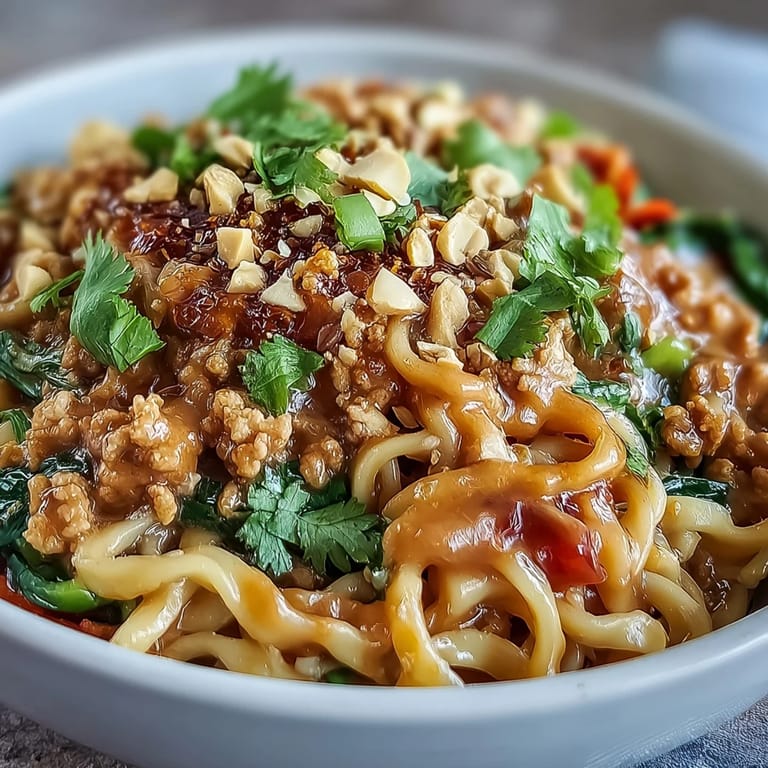
- Divide the noodles among four bowls and top each with chopped roasted peanuts, fresh cilantro leaves, reserved green onion slices, and a lime wedge on the side. Serve immediately while the steam is still rising.
 Save
Save My friend texted me a photo of her leftover bowl the next morning with just a heart emoji, which meant everything. That's when you know a recipe has crossed from "nice dinner" into "something people actually want to come back to."
The Magic of One-Pan Cooking
There's a rhythm that happens when you cook everything in one vessel—the flavors layer and mingle instead of staying separate. The starchy noodle water mixes with the peanut sauce, the charred edges of the chicken pick up the sesame oil, and everything becomes more cohesive than if you'd assembled separate components. It's less about technique and more about letting ingredients talk to each other.
Protein Swaps and Flexibility
Ground turkey works identically to chicken if that's what you have, and honestly tastes just as good with slightly less fat. If you're vegetarian, crumbled extra-firm tofu pressed and pan-fried until golden edges form gives you the same hearty protein presence without changing the cooking time. The beauty of this dish is that it adapts to what's in your kitchen rather than demanding specific ingredients.
Heat and Seasoning Strategy
This bowl lives in the medium-spice zone naturally, but the sriracha dial is entirely yours to turn. I've learned that starting with 1 teaspoon and tasting before adding more prevents the regrettable situation where you've made four bowls too spicy. Remember that the residual heat from the lime juice and ginger builds as you eat, so what feels mild at first might feel spicy by the last few bites.
- Add sriracha in increments rather than all at once—you can always add more heat but you can't remove it.
- Let people garnish with extra sriracha or chili flakes at the table so everyone customizes their own bowl.
- A drizzle of honey or a squeeze of lime is your secret weapon if the heat ever gets ahead of the flavor.
 Save
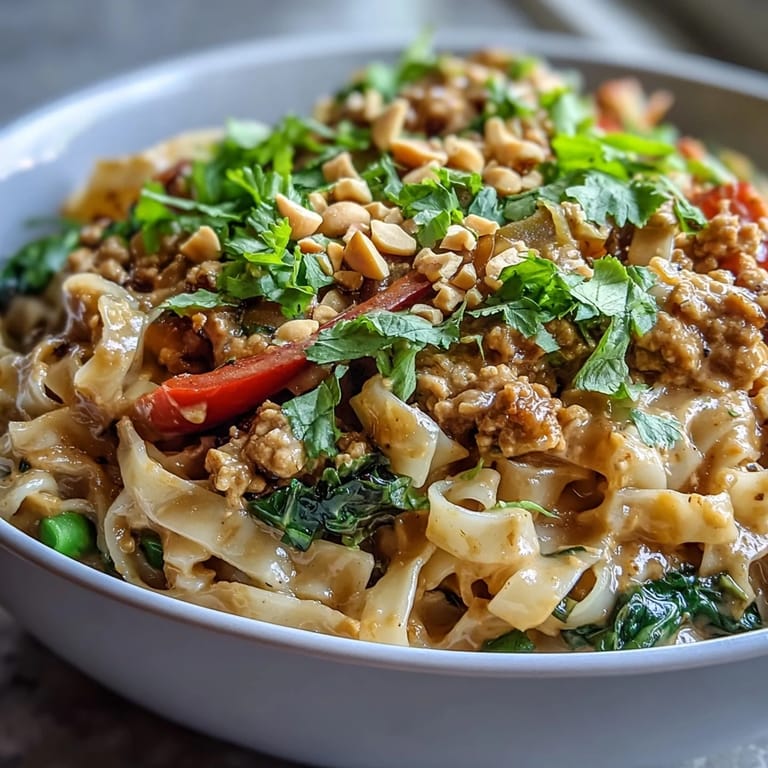
Save Make this when you need dinner fast but don't want to feel like you've rushed it. That 40-minute timeline from raw ingredients to plated bowl feels almost impossible until you're standing there with a finished, steaming dish in front of you.
Your Questions Answered
- → Can I make these peanut noodles gluten-free?
Yes, simply substitute tamari for the soy sauce and verify your hoisin sauce is gluten-free. Most other ingredients are naturally gluten-free, making this an easy adaptation.
- → What protein alternatives work well?
Ground turkey, crumbled tofu, or even shrimp make excellent substitutes for the ground chicken. Adjust cooking time accordingly—shrimp will cook faster, while tofu may need a few extra minutes to absorb flavors.
- → How spicy are these noodles?
The base recipe includes 1-2 teaspoons of sriracha for mild heat. You can easily adjust the spice level by adding more sriracha, chili garlic sauce, or red pepper flakes to suit your preference.
- → Can I prepare this in advance?
While best served fresh, you can prep ingredients ahead. Slice vegetables and whisk the sauce up to a day in advance. Cook just before serving, as rice noodles tend to absorb sauce and become soft when reheated.
- → What type of noodles work best?
Wide rice noodles are traditional for this dish, but you can use linguine, soba noodles, or even rice stick noodles. Adjust cooking time slightly based on noodle thickness and package instructions.
- → How do I store leftovers?
Store in an airtight container in the refrigerator for up to 3 days. Reheat gently with a splash of water or broth to loosen the sauce, as noodles will thicken when chilled. Avoid freezing, as the texture may become mushy.