 Save
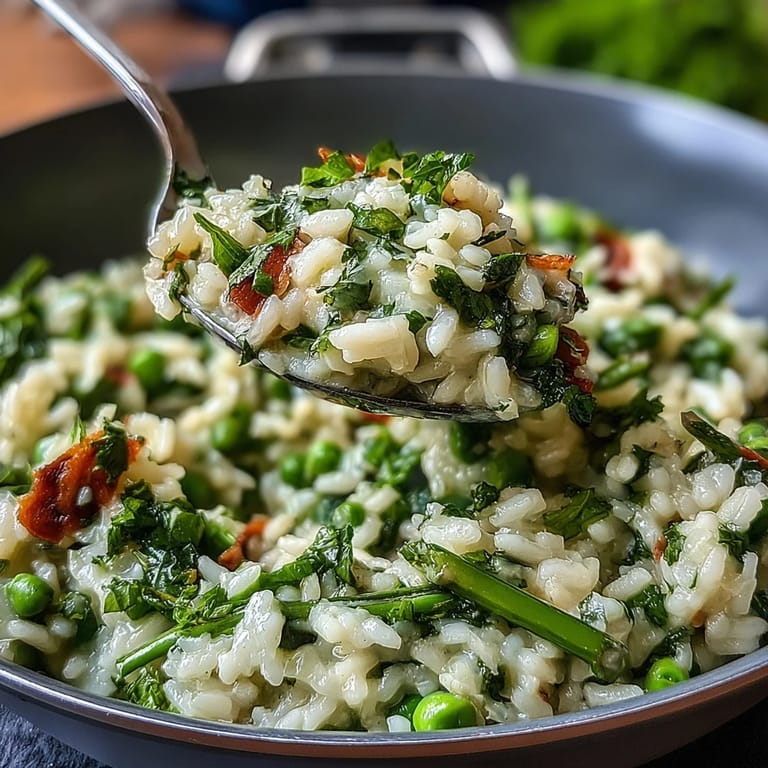
Save A friend once texted me at 4 p.m. asking if I could pull together something elegant for six people arriving at seven. I stood in my kitchen, mentally scanning the pantry, and realized I had everything needed for risotto. What started as mild panic turned into one of those cooking moments where the dish comes together so naturally it feels inevitable. That first spoonful of bright green peas and mint folding into creamy rice convinced me this wasn't just dinner—it was spring on a plate.
I served this at a dinner party on an unexpectedly warm April evening, and people kept lingering at the table long after finishing. Someone asked if the mint was the secret, and honestly, it was partly that—but also the rhythm of stirring, the way the kitchen filled with steam and white wine, the whole experience of watching rice transform into something creamy and alive. That night taught me that risotto isn't about perfection; it's about presence.
Ingredients
- Fresh or frozen green peas (1 cup): Buy fresh when spring arrives; they're sweeter and brighter. Frozen works beautifully too—no thawing needed, just stir them in near the end so they stay tender and vivid.
- Arborio rice (1 1/2 cups): This starchy, short-grain rice releases its starches slowly, creating that signature creamy texture without any cream. Don't substitute with long-grain rice or you'll lose the magic.
- Vegetable stock (4 cups, kept warm): Warm stock matters more than you'd think; cold stock shocks the rice and slows cooking. Keep it simmering gently in a separate pot.
- Dry white wine (1/2 cup): The acidity brightens everything. Sauvignon Blanc or Pinot Grigio work beautifully; drink the rest with dinner.
- Unsalted butter (3 tbsp, divided): Butter is your ally here—it coats the rice and creates creaminess. Divide it so you add some at the start and some at the end for richness.
- Freshly grated Parmesan (1/2 cup plus extra): Grate it yourself minutes before cooking; pre-grated contains anti-caking agents that prevent it from melting smoothly into the rice.
- Fresh mint leaves (1/4 cup): This is the soul of the dish. Chop it just before serving so its fragrance stays alive and the color stays green.
- Lemon zest (from 1 lemon): A single whisper of brightness that brings everything into focus without tasting sour.
Tired of Takeout? 🥡
Get 10 meals you can make faster than delivery arrives. Seriously.
One email. No spam. Unsubscribe anytime.
Instructions
- Toast the base:
- Melt butter in a large saucepan over medium heat, then soften your onion until it turns translucent and almost sweet, about 4 minutes. Add the garlic and let it warm through for just a minute—this foundation flavors everything that follows.
- Coat the rice:
- Pour in the Arborio rice and stir constantly for about 2 minutes, listening for that faint toasting sound and watching for each grain to become opaque and coated in butter. This step matters; it helps the rice hold its shape while cooking and absorbing liquid.
- Add the wine:
- Pour in the white wine, stir, and watch it get absorbed into the rice as the pan fills with a subtle winey aroma, about 2 minutes. The acidity loosens the rice and begins the cooking process.
- Build the creaminess:
- Begin adding warm stock one ladleful at a time, stirring almost constantly, and wait until most of each addition disappears into the rice before adding more. This gradual process—taking 18 to 20 minutes—is what transforms hard grains into something silky and alive.
- Time the peas perfectly:
- About 5 minutes before the rice finishes cooking, stir in the peas so they stay bright green and tender rather than turning a dull gray. You'll know they're done when they're just tender enough to break easily with a spoon.
- Finish with love:
- Remove from heat and stir in the remaining butter, Parmesan, mint, lemon zest, and a generous pinch of salt and pepper. Keep stirring until everything becomes creamy and cohesive, and the mint perfumes the whole dish.
- Serve immediately:
- Taste once more and adjust seasoning, then serve right away on warm plates with extra Parmesan and a small mint leaf on top. Risotto waits for no one.
 Save
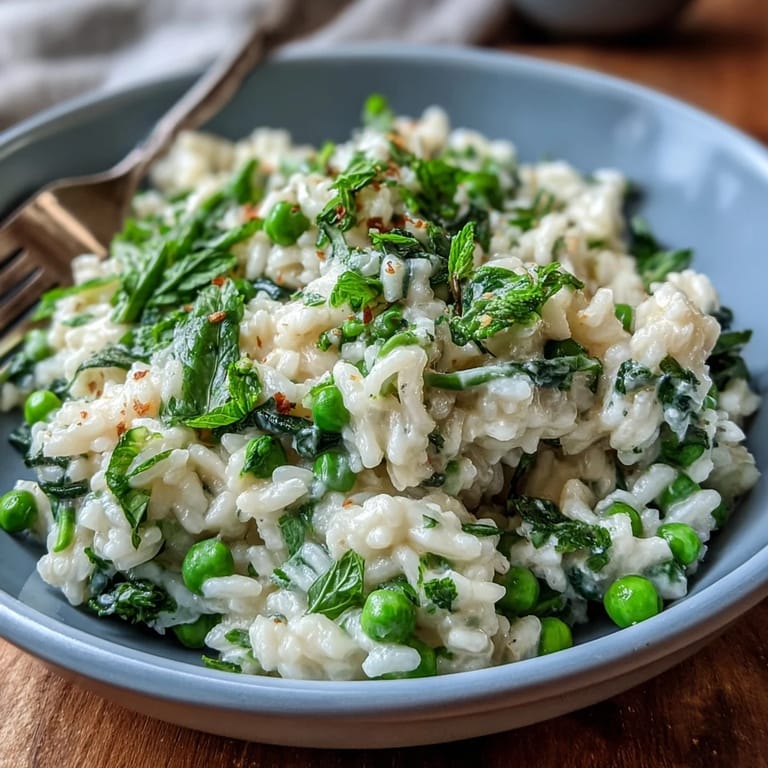
Save There's a moment toward the end of making risotto when you stop worrying and start trusting. Your arm gets tired from stirring, the aroma fills the room, and suddenly you taste a grain and it's perfect. That surrender—that moment of knowing it's going to be delicious—is when risotto stops being a technique and becomes something almost meditative.
Why Stirring Matters More Than You Think
Constant stirring isn't just tradition; it's the mechanism that releases the rice's natural starches and creates the signature creamy texture without cream. Each swirl of the wooden spoon breaks down the rice's exterior just slightly, thickening the liquid into something luxurious. I learned this the hard way by reading ahead in the recipe while cooking, and the minute I stopped stirring for longer than a minute, the rice stuck to the bottom of the pan.
The Temperature Game
Medium heat is your sweet spot—too hot and the liquid boils away before the rice absorbs it properly; too low and everything moves at a crawl. If your stove runs hot, dial it down slightly. The whole process should feel unhurried but not stalled, with steam rising gently and the rice making soft, whispering sounds as it cooks.
Make It Your Own
The beauty of this risotto is its flexibility without losing its soul. Swap the mint for basil if that's what's growing in your garden, or use both. A drizzle of good olive oil before serving adds richness that catches the light. You can even add a handful of soft goat cheese if you want something tangier, stirred in right before the Parmesan.
- Frozen peas work just as well as fresh ones and require no prep—just be kind to them and add them late.
- Make extra stock just in case; it's better to have a ladle left over than to run short mid-stir.
- Serve on warm plates; cold ceramic will steal the heat and texture from your risotto faster than you'd expect.
 Save
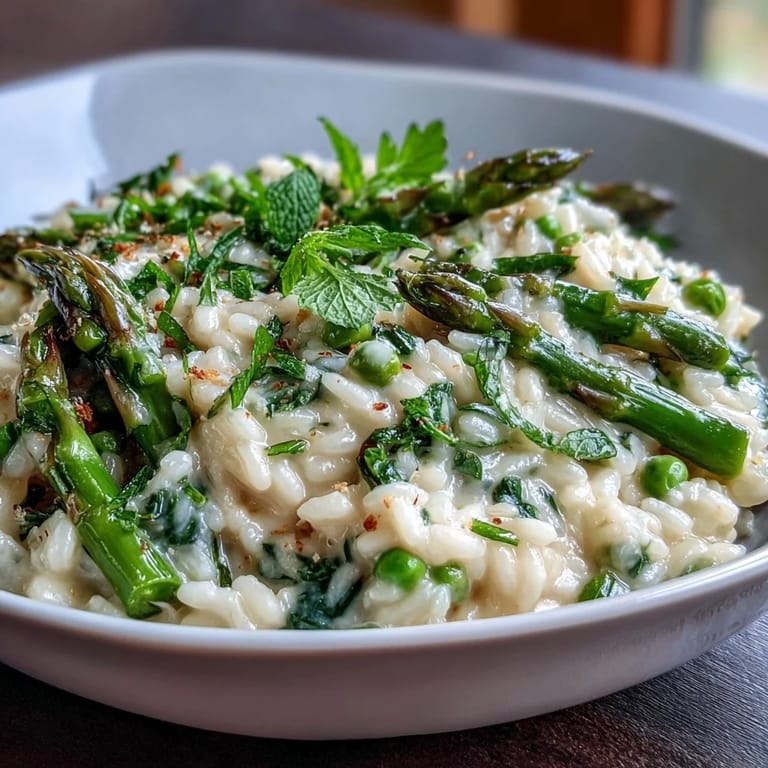
Save Make this when you want to feel like you're doing something special but without the stress. It's the kind of dish that whispers confidence into a dinner party and tastes like spring itself.
Your Questions Answered
- → What type of rice is best for this dish?
Arborio rice is ideal as it absorbs liquids well and creates the creamy texture essential for this risotto.
- → Can I use frozen peas instead of fresh?
Yes, frozen peas work well and can be added during the last minutes of cooking to retain their bright color and sweetness.
- → Is it necessary to use white wine in this preparation?
White wine adds acidity and depth of flavor, but you may substitute with extra vegetable stock if preferred.
- → How can I ensure the risotto is creamy and not too dry?
Stirring constantly while gradually adding warm stock allows the rice to release starches, resulting in a creamy consistency.
- → What herbs enhance the flavors in this dish?
Fresh mint and parsley provide a bright, fragrant contrast to the creamy rice and rich Parmesan.
- → Can this dish be made vegan?
To make it vegan, replace butter and Parmesan with plant-based alternatives, though the flavor profile will differ.