 Save
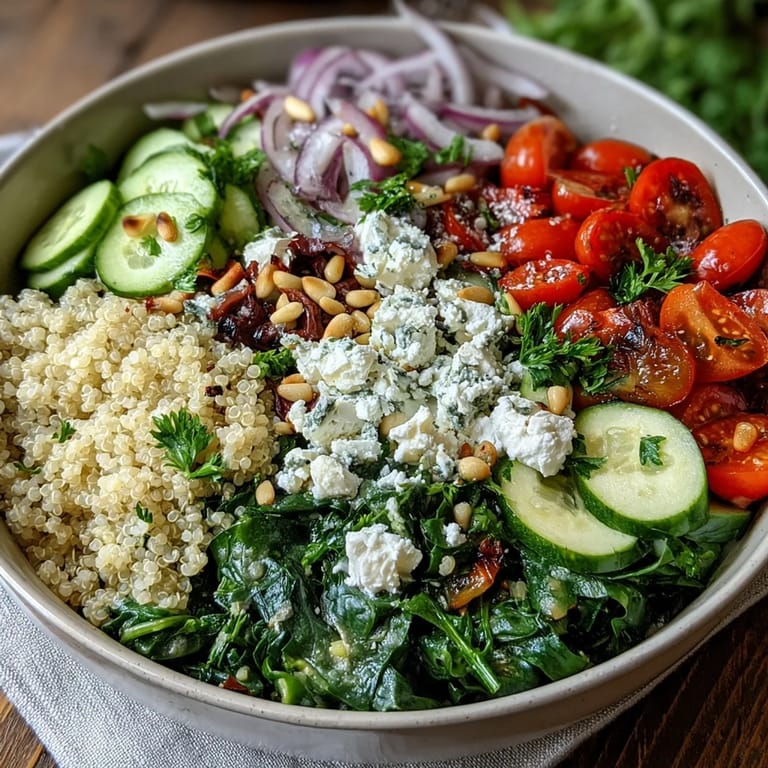
Save There's something about assembling a grain bowl that feels less like cooking and more like painting with vegetables. I discovered this particular combination on a sweltering afternoon when my fridge was overflowing with fresh produce and I needed something that wouldn't heat up the kitchen. The moment the warm quinoa hit the cool cucumber and tangy feta, I realized I'd stumbled onto something that tasted expensive but took barely thirty minutes. My partner came home to find four bowls lined up on the counter, and without even asking, sat down and ate two.
I'll never forget bringing this to a potluck where everyone was expecting heavy pasta salads and mayo-based sides. Instead, people kept coming back for seconds, asking if it was the pine nuts or the dressing that made it taste so bright. One friend asked for the recipe right there, phone in hand, and I realized how often we overcomplicate lunch when something this straightforward wins every time.
Ingredients
- Quinoa or brown rice: Use quinoa if you want nuttier flavor and faster cooking, or brown rice for earthiness and chew; I learned the hard way to measure carefully since the cooking liquid ratio differs between the two.
- Fresh spinach: Buy it pre-washed if you're short on time, and don't worry if it looks like a huge pile—it wilts down to almost nothing.
- Cherry tomatoes: Halve them lengthwise to catch the dressing better, and use the ripest ones you can find for concentrated sweetness.
- Cucumber: English cucumbers are seedless and milder, so you can skip the whole scoop-out-seeds step if you prefer.
- Red bell pepper: The sweetness balances the minerality of the spinach and cuts through the richness of the feta.
- Red onion: Slice it thin enough to see light through it, and it'll be sharp but not harsh.
- Feta cheese: Crumble it yourself from a block rather than using pre-crumbled if you want it to stay chunky instead of turning to dust.
- Extra-virgin olive oil: Don't use your expensive bottle for sautéing the spinach; save it for the dressing where you'll actually taste it.
- Lemon juice: Fresh-squeezed makes a noticeable difference; bottled juice tastes flatter and slightly plastic.
- Honey or maple syrup: Just a teaspoon rounds out the acidity without making the bowl sweet.
- Garlic: Mince it fine so it distributes evenly through the dressing without overwhelming any single bite.
- Pine nuts or sunflower seeds: Toast them for thirty seconds in a dry pan if you haven't already; that little bit of heat wakes up their flavor completely.
Tired of Takeout? 🥡
Get 10 meals you can make faster than delivery arrives. Seriously.
One email. No spam. Unsubscribe anytime.
Instructions
- Get your grains going:
- Bring the broth to a rolling boil—you'll hear it before you see it—then stir in your grain and immediately lower the heat so it simmers gently. This keeps the grains from turning mushy on the outside while staying firm inside. Cover and set a timer; don't peek, even though you'll want to.
- Wilt the spinach down:
- Use a large skillet so the spinach has room to breathe, and watch it transform from massive pile to silky pool in just two or three minutes. The smell that comes off it is pure spring, and you'll know it's done when there's no resistance in the leaves.
- Build your dressing:
- Whisk the oil and lemon juice together first, then add the honey and garlic, which will break up and distribute as you whisk. Taste as you go and adjust the salt—you want it bright enough that you taste the lemon first, with everything else playing supporting roles.
- Layer it all together:
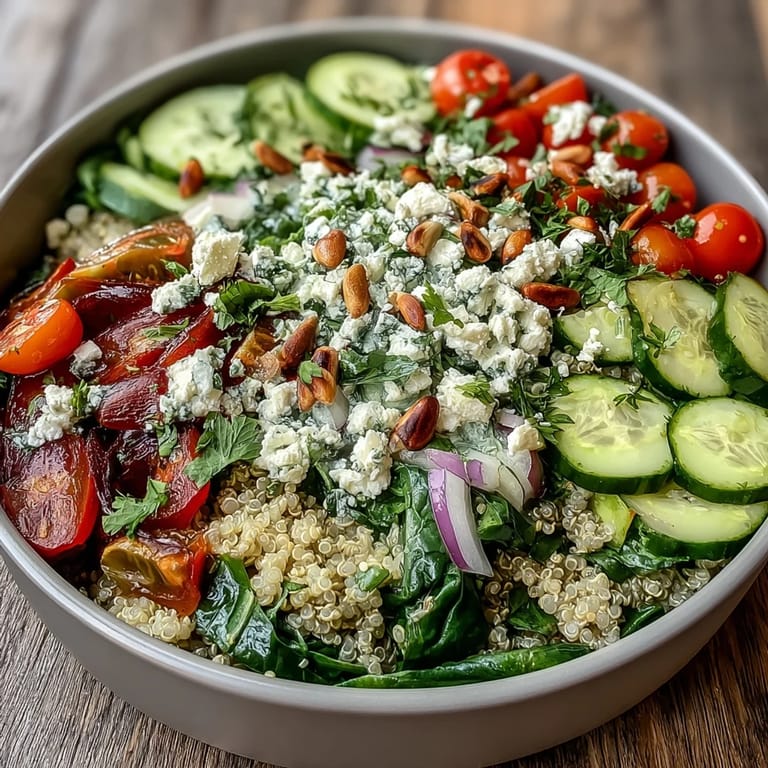
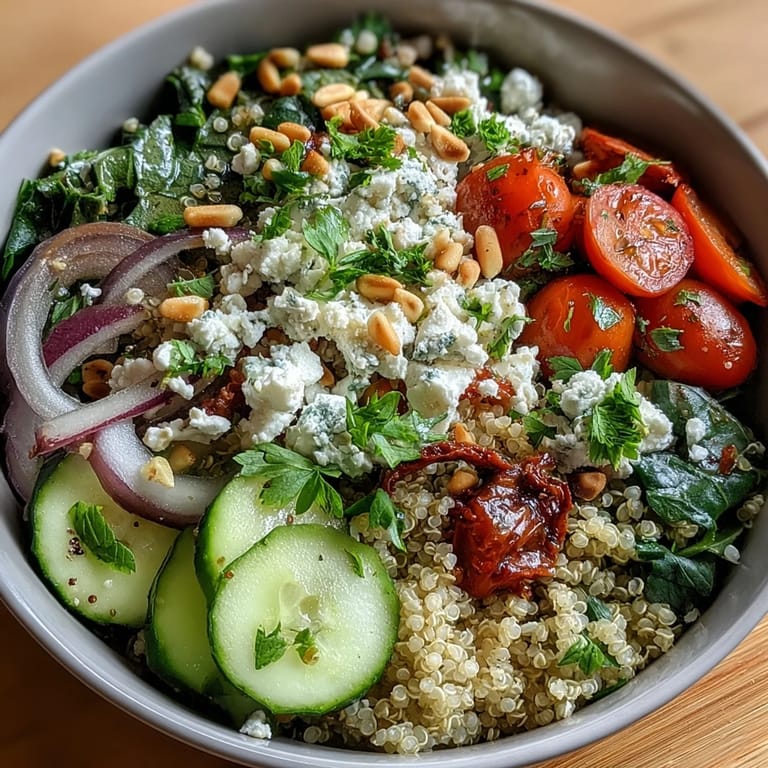
- Start with warm grains as your base, then build upward with the wilted spinach, then your fresh vegetables, so everything is warm enough to soften slightly but cool enough to stay crisp. The contrast is what makes this work.
- Finish with feta and dressing:
- Scatter the crumbled feta generously—don't be shy—then drizzle the dressing in a spiral pattern so it hits every element. Top with toasted nuts and fresh parsley if you have it, though honestly the bowl is already perfect without them.
 Save
Save There was a Tuesday evening when I made this for myself after a particularly brutal day, and instead of eating it quickly at my desk like I usually do, I sat down at the actual table and just ate slowly. Each spoonful had different textures and temperatures happening at once, and somehow that simple act of paying attention made everything feel manageable again. Food doesn't have to be complicated to be nourishing—sometimes it just has to be intentional.
Playing With Flavor
Once you've made this bowl a few times, you'll start seeing it as a template rather than a fixed recipe. I've swapped arugula for spinach when I wanted something peppery, or used kale when I had it and wanted more chew. The dressing works with almost any grain, and I've learned that a splash of pomegranate molasses instead of honey gives it an almost Syrian depth that's completely different but equally good.
Making It a Full Meal
The vegetarian version is honestly my favorite, but I know not everyone eats that way, and the bowl is flexible enough to grow with you. I've added grilled chicken breast that's been rubbed with the same lemon-garlic dressing, and I've stirred in warm chickpeas that pick up the spinach's mineral notes perfectly. Even a simple fried egg on top turns this into something substantial enough for dinner rather than lunch.
Building Your Bowl Strategy
The secret to this not feeling boring after the second time is changing one element each week while keeping the structure the same. Your brain stays interested, your hands remember the assembly process, and you're never stressed about what to make. I've found that the warm-cool-creamy-sharp combination is what actually matters, so as long as you've got those four things happening, you're good to go.
- Prep all your vegetables the night before and store them in separate containers so you can assemble in under five minutes on the actual day.
- Make a double batch of the dressing and keep it in a jar—it lasts all week and you'll find yourself drizzling it on everything.
- Toast your nuts and seeds in bulk and store them in an airtight container so they're always ready to add at the last second.
 Save
Save This bowl has become my go-to when I need to feel like I'm taking care of myself without the performance of it. It's become a friend's favorite lunch to bring to the office, and it's what I make when someone visits and I want them to understand how I actually eat.
Your Questions Answered
- → Can I make this grain bowl ahead of time?
Yes, this bowl meal preps beautifully. Cook the grains and sauté the spinach up to 4 days in advance. Store components separately in airtight containers and assemble when ready to serve. The dressing can be made ahead and kept refrigerated for up to a week.
- → What other grains work well in this bowl?
Farro, bulgur, couscous, or even barley make excellent substitutes for quinoa or brown rice. Cooking times may vary slightly—farro takes about 30 minutes while couscous cooks in just 5 minutes.
- → Is this bowl gluten-free?
When made with certified gluten-free quinoa and ensuring your feta is gluten-free, this bowl is naturally gluten-free. Always check labels on packaged ingredients, especially the feta and any seasonings used.
- → How can I add more protein to this bowl?
For extra protein, add cooked chickpeas, lentils, or a fried egg on top. Grilled chicken or shrimp also work wonderfully if you're not strictly vegetarian. Adding a half-cup of chickpeas boosts protein by about 7 grams per serving.
- → Can I use different greens instead of spinach?
Absolutely. Kale, arugula, or Swiss chard make excellent substitutions. Hardier greens like kale may need an extra minute of cooking time, while delicate greens like arugula only need to be wilted for 30-60 seconds.