 Save
Save There's something about a bowl that just makes you feel like you've got your life together, even when you don't. I was rushing between meetings one Tuesday when a coworker brought in this gorgeous layered salad, and watching her eat it—methodically, peacefully—made me stop and actually think about what I was shoving in my face. That afternoon, I went home and started throwing together whatever vegetables looked promising in my crisper drawer, tossed in some beans I'd forgotten I had, and suddenly I was eating something that felt intentional instead of convenient.
I made this for my sister's book club when I was too tired to cook anything "real," and I still think about how relieved everyone looked when I set it down. No one expects to be fed something this nourishing at a casual gathering, but somehow it became the thing people actually came back for seconds of instead of just picking at.
Ingredients
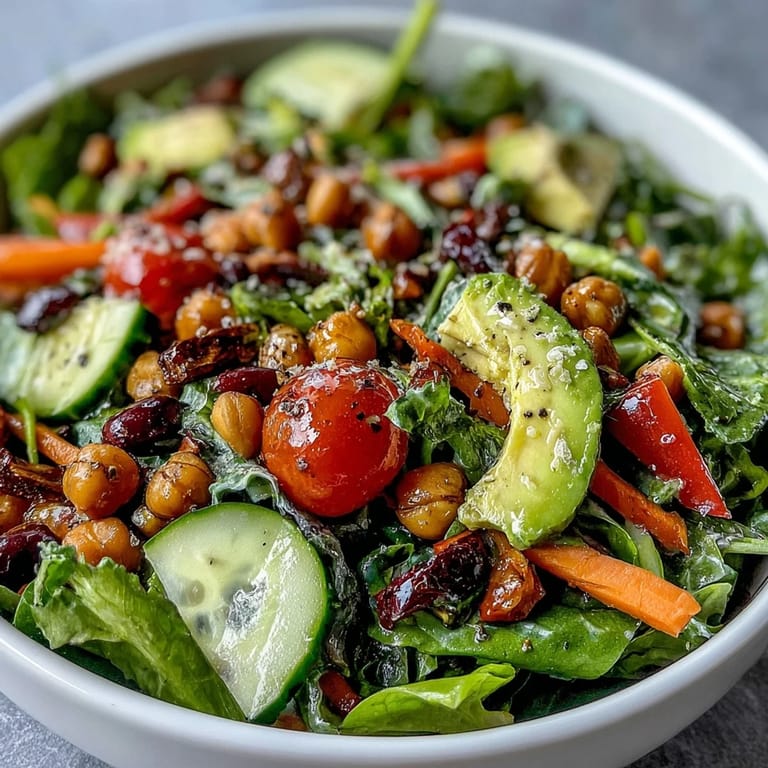
- Mixed salad greens: The foundation matters more than you'd think—a blend of spinach, arugula, kale, and romaine gives you different textures and flavors so no bite feels monotonous.
- Cherry tomatoes: Halve them so they release their sweetness into the dressing and don't roll around the bowl.
- Cucumber: Slice it thin enough to be delicate but thick enough that it doesn't get lost among the other vegetables.
- Red bell pepper: The thinner you slice it, the more it softens and mingles with the greens.
- Carrot: Shred it coarse so it keeps some texture and doesn't turn mushy while sitting.
- Avocado: Add this just before serving or toss gently—it bruises if you're aggressive with it.
- Chickpeas or black beans: Drain and rinse them well to remove excess sodium and that tinny canned taste.
- Toasted walnuts or almonds: Buy them already toasted if you can, or toast them yourself in a dry pan for two minutes until they smell nutty and irresistible.
- Pumpkin seeds: These add a subtle earthiness that makes everything taste more intentional than it probably is.
- Olive oil: Don't overthink this—use what you'd cook with, not your fancy finishing oil.
- Lemon juice: Fresh is absolutely worth the extra step; bottled tastes like regret.
- Apple cider vinegar: Just enough to brighten without making the whole thing taste like a wellness trend.
- Dijon mustard: One teaspoon acts like an emulsifier and keeps the dressing from separating, plus adds a subtle depth.
- Honey or maple syrup: A tiny bit of sweetness balances the acid and vinegar perfectly.
Tired of Takeout? 🥡
Get 10 meals you can make faster than delivery arrives. Seriously.
One email. No spam. Unsubscribe anytime.
Instructions
- Build your base:
- Pile the mixed greens into a large bowl—don't be delicate about it, they'll compress anyway. This is where the salad begins to feel intentional rather than like sad desk lunch.
- Create a rainbow:
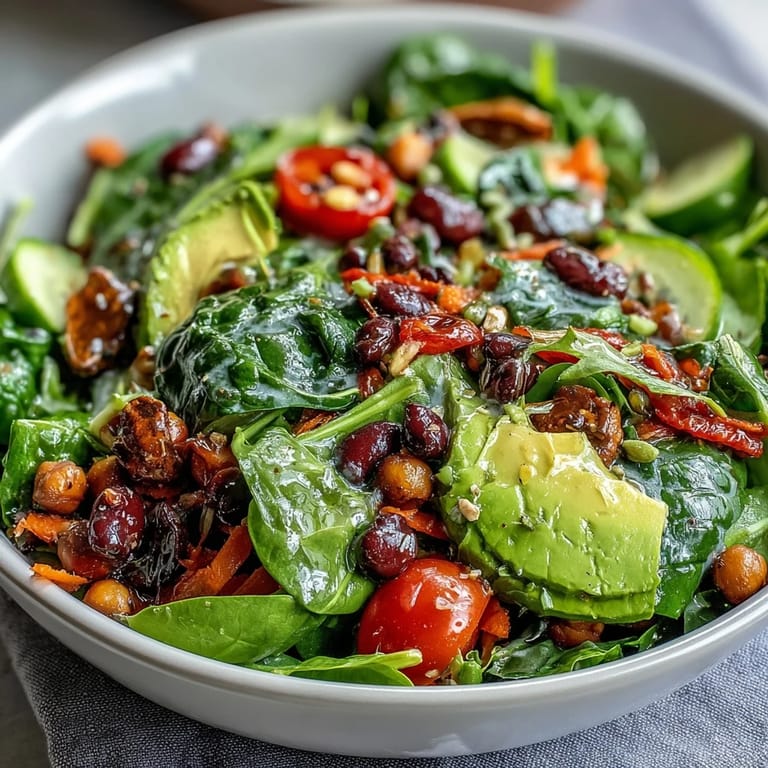
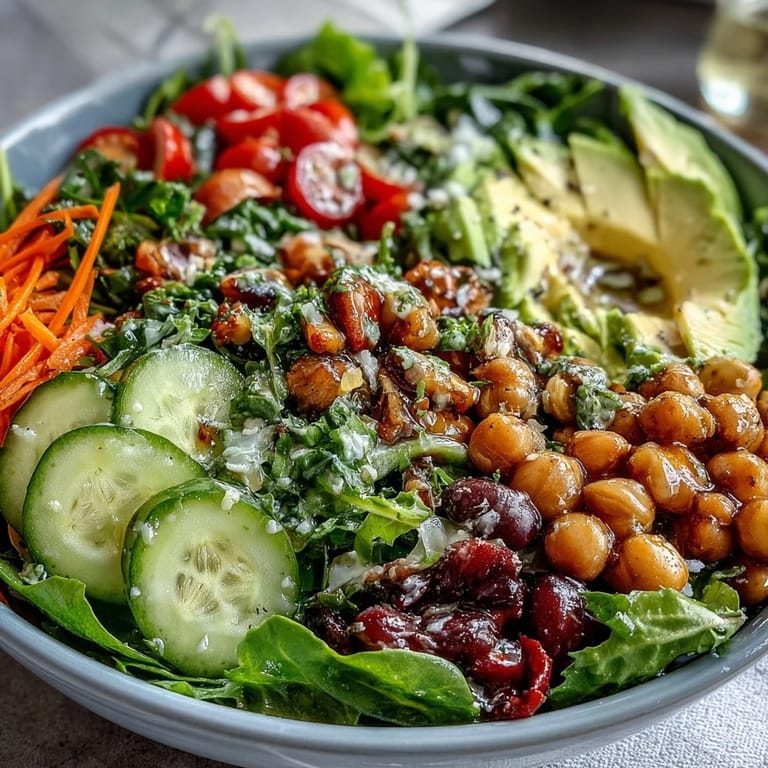
- Arrange the tomatoes, cucumber, bell pepper, carrot, and avocado over the greens in sections or scattered across, depending on whether you want it to look composed or casual. This step is purely aesthetic, so trust your instincts.
- Add your protein:
- Distribute the beans evenly across the bowl so every forkful has some, rather than clustering them in one spot where they'll all get eaten at once.
- Top with crunch:
- Sprinkle the nuts and seeds everywhere, getting them into the crevices between vegetables so they don't all slide to one side when you eventually (or don't) toss it.
- Make the dressing:
- Whisk olive oil, lemon juice, vinegar, mustard, and honey together in a small bowl until it emulsifies and thickens slightly—this takes about a minute of actual whisking, and you'll feel like you know what you're doing even if you don't. Taste it and adjust salt and pepper until it tastes brighter than you think salad dressing should taste.
- Finish and serve:
- Drizzle the dressing over the bowl just before eating, or pass it on the side if you're serving others and want them to control their own destiny. If you want to toss it, use two forks and be gentle; if you want to leave it layered, that's equally valid and arguably more fun to eat.
 Save
Save My neighbor asked me for the recipe one day, and when I started listing ingredients, she interrupted me to say she just wanted to know what made it taste like I'd actually put thought into feeding myself. That's when I realized this bowl isn't really about the ingredients—it's about deciding you're worth feeding well, even on a Tuesday.
Why This Works as a Complete Meal
Most salads feel like an apology for not cooking, but this one has enough protein and healthy fat to actually sustain you through an afternoon. The beans and nuts keep you full longer than greens alone ever could, while the dressing makes it taste indulgent enough that you don't feel like you're punishing yourself with health food. I stopped getting the 3 p.m. hunger crash after I started eating bowls like this, though I didn't consciously connect the two until my energy just quietly improved.
The Art of the Composed Salad
There's something deeply satisfying about arranging a salad instead of just tossing everything together—it gives you a moment to actually see what you're eating before it becomes a jumble. I started doing this more after reading a cookbook that insisted composed salads were somehow more sophisticated, and while I don't know if that's true, I do know that taking thirty seconds to make something look intentional changes how it tastes. Even if you're eating alone, your brain registers the care.
Storage and Make-Ahead Strategy
The beauty of this bowl is its flexibility with timing—prep everything the morning of and keep the dressing in a jar in the fridge, then assemble just before lunch so the greens stay crisp. I've learned the hard way that wet greens at the bottom of a container are depressing, but separated components waiting patiently in the fridge feel like potential. The beans and nuts actually get better as the flavors meld, so you can make those parts hours ahead with zero guilt.
- Store the dressing in a jar and shake it vigorously before using, since it will separate slightly as it sits.
- Keep avocado in a sealed container with the pit still in it if you're storing it, which somehow slows the browning process.
- Assemble the salad no more than an hour before eating if it's warm out, or it will wilt faster than you'd expect.
 Save
Save This bowl became my answer to the question I'd been asking myself for years: how do I feed myself well without overthinking it? Now I make some version of it at least twice a week, and each time it tastes a little different depending on what's in season and what I'm in the mood for.
Your Questions Answered
- → Can I make this bowl ahead of time?
Yes, prepare components separately and store in airtight containers. Keep the dressing aside and add just before serving to maintain crispness. The assembled bowl stays fresh for up to 24 hours when refrigerated properly.
- → What other proteins work well in this bowl?
Beyond chickpeas and black beans, try lentils, edamame, or grilled chicken. Hard-boiled eggs, baked tofu, or cooked shrimp also complement the fresh vegetables beautifully while adding different protein profiles.
- → How can I add more heartiness to this bowl?
Incorporate cooked quinoa, brown rice, or farro for extra substance. Roasted sweet potatoes, cooked grains, or even a drizzle of tahini-based dressing transforms this into a more substantial meal.
- → What dressings pair best with these ingredients?
The lemon-herb vinaigrette provided works beautifully. Alternatively, try balsamic vinaigrette, creamy avocado dressing, or light tahini for different flavor profiles while maintaining the bowl's fresh character.
- → Can I use different greens?
Absolutely. Spinach, arugula, kale, mixed spring greens, or even shredded cabbage work well. Consider combining sturdy greens like kale with tender lettuces for varied texture and nutritional benefits.
- → Is this suitable for meal prep?
Perfect for meal prep. Portion ingredients into separate containers for up to 4 days. Keep nuts and dressing separate until serving to preserve optimal texture and freshness.