 Save
Save There's something magical about the moment when roasted butternut squash transforms into silk, when umami whispers through miso and suddenly you're holding a bowl of pure comfort. I discovered this soup on a drizzly October afternoon when my farmer's market haul included a particularly beautiful squash and a jar of white miso I'd been meaning to use. What started as experimentation became something I make whenever the seasons shift and I need to feel grounded again.
I made this for my sister on her first week working from home, when she confessed she was eating sad desk lunches. Watching her reaction when that first spoonful hit, seeing her shoulders relax, reminded me that feeding people is sometimes the best conversation starter.
Ingredients
- Butternut squash (1 medium, about 2 lbs), peeled, seeded, and cubed: Roasting brings out the natural sweetness and creates those caramelized edges that give the soup depth.
- Yellow onion (1 medium), diced: The aromatic foundation that becomes almost imperceptible in the final silky blend.
- Garlic (2 cloves), minced: Fresh is non-negotiable here; it should smell sharp and lively as you mince.
- Fresh ginger (1-inch piece), peeled and grated: This adds warmth without spice, a gentle tingle that rounds out the flavors beautifully.
- Low-sodium vegetable broth (4 cups): The liquid canvas that lets the squash and miso shine without overpowering.
- White miso paste (2 tablespoons): The quiet umami star; white miso is milder and slightly sweet compared to darker varieties.
- Olive oil (1 tablespoon total), divided: Half goes to the squash for roasting, half to sauté the aromatics.
- Salt and black pepper: Start conservative; miso carries its own saltiness that becomes apparent after blending.
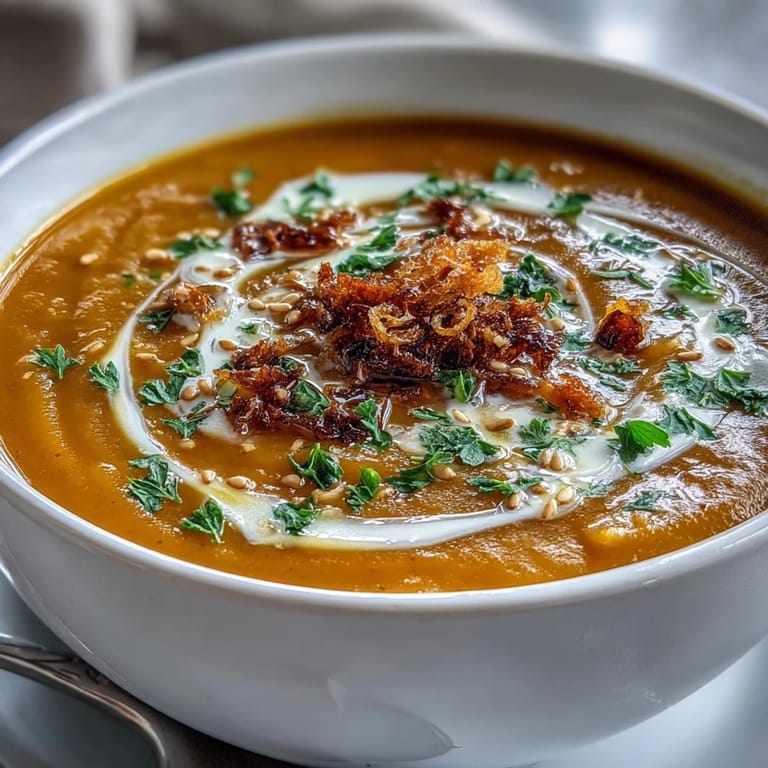
- Coconut cream or sour cream (2 tablespoons), optional garnish: A drizzle here adds richness and visual appeal without being heavy.
- Chives or scallions (1 tablespoon chopped), optional garnish: Fresh green against golden soup feels like edible punctuation.
- Toasted sesame seeds, optional garnish: They catch the light and add a subtle nuttiness with each spoonful.
Tired of Takeout? 🥡
Get 10 meals you can make faster than delivery arrives. Seriously.
One email. No spam. Unsubscribe anytime.
Instructions
- Prep and preheat:
- Set your oven to 400°F and line a baking sheet with parchment paper. This is your moment to get all your vegetables prepped so the cooking moves smoothly once you start.
- Roast the squash:
- Toss your cubed squash with half a tablespoon of olive oil, a pinch of salt, and a grind of pepper, then spread it out in one layer on the baking sheet. After about 15 minutes, give it a stir so it caramelizes evenly on all sides, then let it finish for another 15-20 minutes until the edges are golden and the flesh is fork-tender.
- Build the aromatic base:
- In a large pot over medium heat, warm the remaining oil and listen for it to shimmer slightly. Toss in your diced onion, minced garlic, and grated ginger, stirring occasionally until the kitchen smells like you're cooking something intentional and the onion has turned translucent.
- Combine and simmer:
- Add your roasted squash to the pot, pour in the vegetable broth, and bring everything to a gentle simmer. Let it bubble quietly for about 5 minutes so the flavors can start getting to know each other.
- Blend to silky perfection:
- Remove from heat and use an immersion blender to puree until completely smooth, working the blender in slow, patient circles. If you're using a countertop blender, work in batches and be careful with the heat.
- Temper and finish with miso:
- In a small bowl, whisk your miso paste with a ladleful of the hot soup liquid until it's completely smooth and dissolved, then stir this back into the pot. Taste it now, adjust salt and pepper as needed, and gently warm through without letting it boil, since high heat can damage miso's delicate probiotic qualities.
- Serve with intention:
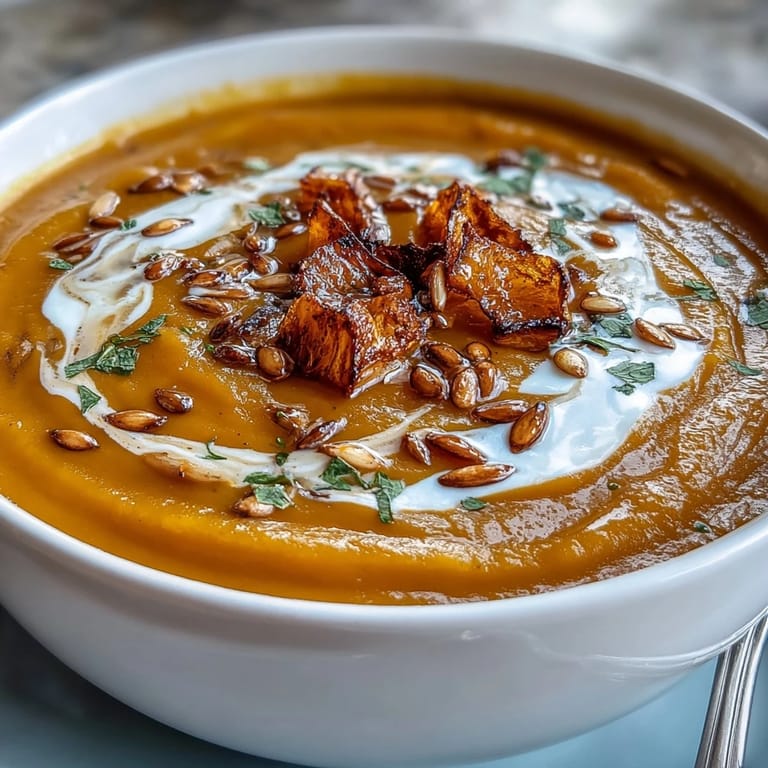
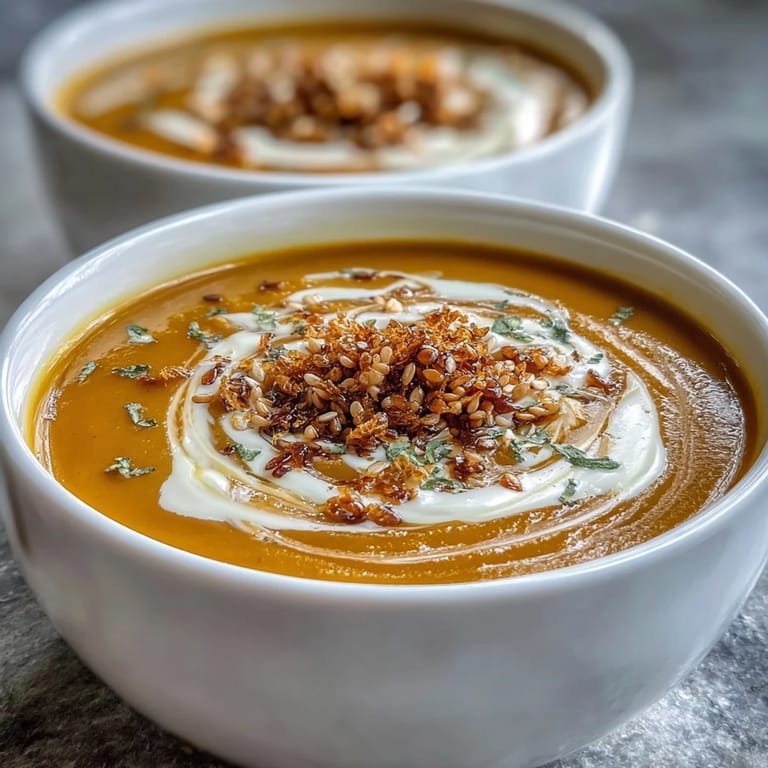
- Ladle into bowls and let people garnish as they like, whether that's a swirl of coconut cream, a scatter of chives, or a light dusting of sesame seeds.
 Save
Save There was a morning when my neighbor stopped by unannounced and I happened to have a pot of this simmering, and the aroma drew her in before she even said hello. We ended up talking for two hours over bowls of soup, and I realized food's real purpose isn't just nourishment—it's permission to sit still with someone.
The Magic of Roasting
Roasting the squash separately before adding it to the pot isn't extra fussiness; it's the difference between a bright soup and a truly memorable one. The dry heat of the oven concentrates the squash's natural sugars and creates these caramelized edges that add complexity no amount of stovetop cooking could achieve. When you taste it afterward, you'll understand why this step matters.
Miso as Your Secret Ingredient
White miso paste is one of those ingredients that makes people lean back and say, what is that? It adds umami and depth without announcing itself loudly like a darker miso would. The beauty is that it doesn't compete with the butternut squash's natural sweetness; instead, it lifts it and makes everything feel more intentional, more deliberate.
Customizing Your Soup
This soup is forgiving and adaptable, which is part of why I keep coming back to it. Kabocha squash or pumpkin work beautifully if butternut isn't what you have, and a splash of coconut milk stirred in before blending adds a luxurious richness. If you want to make it heartier, serve it alongside crusty bread for dipping or with steamed rice on the side.
- Swap the squash for kabocha or pumpkin and adjust roasting time based on how quickly they become tender.
- Stir in coconut milk before blending for a richer version that feels almost dessert-like in its creaminess.
- Always taste before serving and remember that miso is salty, so go easy on additional seasoning.
 Save
Save This soup has become my answer to almost everything—a sick friend, a busy week, the need for something that feels like a warm hug in a bowl. Make it once and you'll understand why.
Your Questions Answered
- → What is the best way to roast butternut squash?
Cube the squash evenly and toss with olive oil, salt, and pepper. Roast at 400°F (200°C) for 30-35 minutes until tender and caramelized, turning halfway through for even cooking.
- → Can I substitute miso paste with another ingredient?
White or yellow miso works best for subtle sweetness and umami depth. Alternative fermented pastes may alter the flavor profile significantly.
- → How do I achieve a smooth, creamy texture?
Use an immersion blender or transfer the cooked ingredients to a countertop blender and puree until silky and uniform.
- → What garnishes enhance the flavor?
Coconut cream adds richness, while chopped chives and toasted sesame seeds contribute freshness and texture.
- → Is this suitable for gluten-free and dairy-free diets?
Yes, provided gluten-free vegetable broth and miso are used. Coconut cream replaces dairy sources in garnishing.