 Save
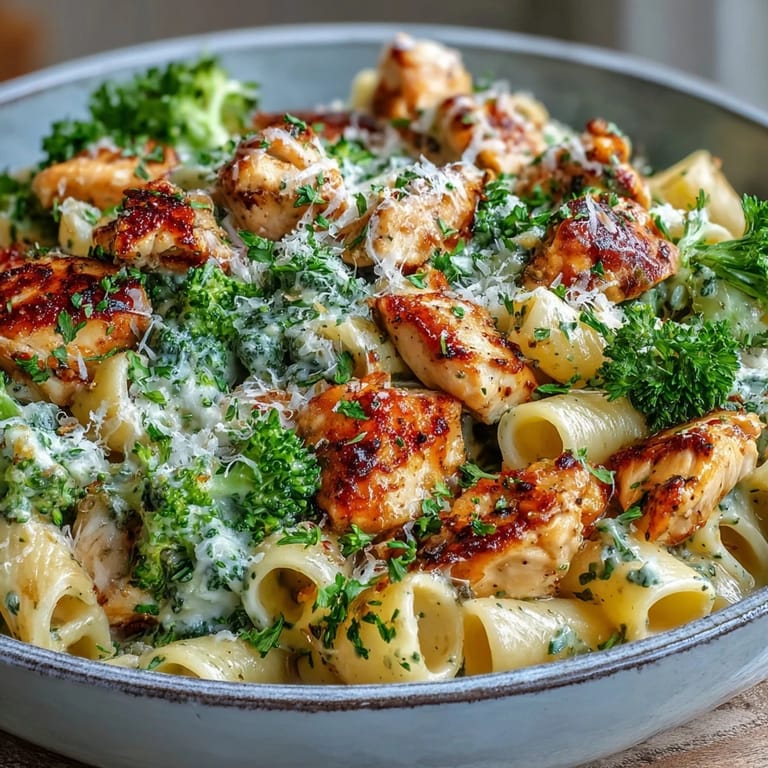
Save One Tuesday evening, my roommate came home complaining about a craving for something creamy but not heavy, and I found myself standing in front of the pantry with half a box of penne and a bunch of broccoli that needed rescuing. We threw together what felt like a lazy comfort dish, but when that garlic Parmesan sauce came together in the skillet, something clicked. Now whenever someone mentions wanting dinner that doesn't require fussing, this pasta is what I make.
I made this for my sister during her first week at her new apartment, when her kitchen was still mostly empty boxes and she had almost nothing to cook with. She borrowed my deep skillet, and within forty minutes she called to say she'd figured out dinner for the next three nights using the leftovers. That's when I realized this wasn't just a recipe, it was something that stuck with people.
Ingredients
- Boneless, skinless chicken breasts: Cut into bite-size pieces so they cook quickly and distribute evenly throughout the skillet without drying out.
- Penne, rigatoni, or rotini pasta: Choose a shape with little pockets or ridges that trap the sauce, making every forkful taste like it matters.
- Small broccoli florets: Keep them small enough to cook through in the same time as the pasta, and they'll stay tender without getting mushy.
- Garlic and onion: The onion mellows and sweetens while the garlic infuses the butter, creating that foundational flavor that makes people ask what smells so good.
- Heavy cream and milk: The combination gives you richness without being overwhelming; the milk keeps it from feeling too thick.
- Freshly grated Parmesan cheese: The difference between pre-shredded and freshly grated is noticeable the moment it hits the warm sauce, melting into something silky.
- Unsalted butter: It's your cooking foundation, so starting with unsalted means you control the salt level throughout.
- Low-sodium chicken broth: This is where the pasta actually absorbs flavor rather than just getting wet, so don't skip it or use water.
- Salt, black pepper, and optional red pepper flakes: Taste as you go because these seasonings make the difference between good and memorable.
- Dried Italian herb blend: Optional but it adds a subtle earthiness that feels intentional rather than improvised.
Tired of Takeout? 🥡
Get 10 meals you can make faster than delivery arrives. Seriously.
One email. No spam. Unsubscribe anytime.
Instructions
- Start with the chicken:
- Heat butter in your large deep skillet over medium heat until it's foaming but not browning, then add the chicken pieces seasoned lightly with salt and pepper. Let them cook undisturbed for about two minutes so they develop that light golden color, then stir and cook another two to three minutes until just cooked through.
- Build your flavor base:
- In that same skillet with all the chicken drippings, add your chopped onion and minced garlic, stirring constantly for about two minutes until the kitchen smells incredible and everything looks translucent and soft. This is when your mise en place really pays off because you don't want to step away from the stove.
- Bring the sauce together:
- Pour in the chicken broth, milk, and heavy cream all at once, stirring gently to combine and scraping up any brown bits from the bottom of the skillet. Once it reaches a gentle simmer with small bubbles breaking the surface, you're ready to add the pasta.
- Cook the pasta and broccoli together:
- Add the dry pasta and broccoli florets directly to the simmering liquid, stir well so nothing sticks to the bottom, then cover with a lid and reduce heat to medium-low. Stir occasionally, about every three minutes, and you'll watch as the pasta softens and the liquid reduces into a creamy sauce over about ten to twelve minutes.
- Finish with cheese and chicken:
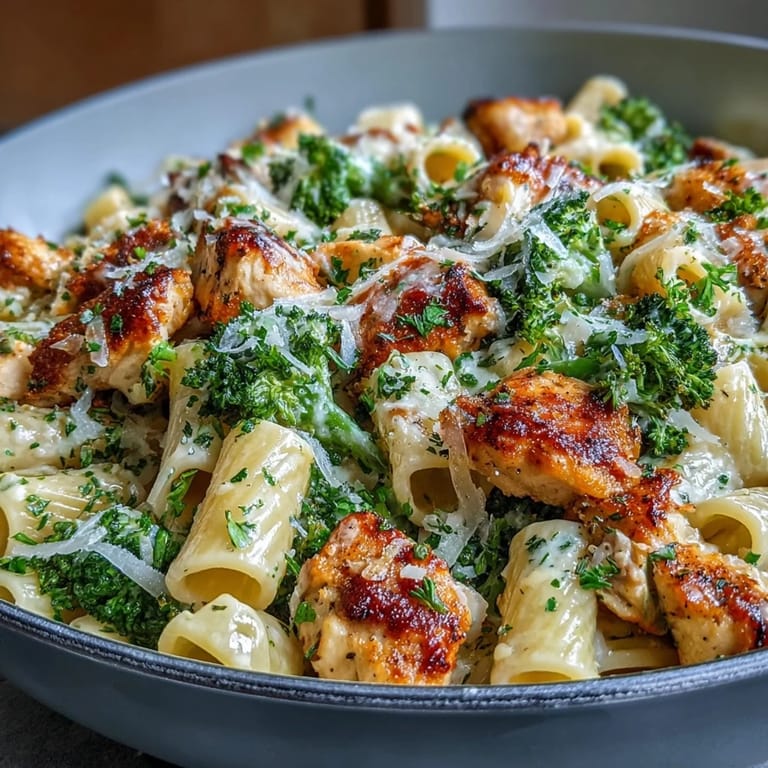
- Return the reserved cooked chicken to the skillet along with the Parmesan cheese, Italian herbs, and red pepper flakes if you want a subtle kick. Stir constantly for just a minute or so until the cheese melts completely and everything feels cohesive and creamy, not separated.
- Taste and adjust:
- Before serving, taste a small bite and decide if it needs more salt, pepper, or even a squeeze of lemon juice for brightness. This step takes thirty seconds but changes everything about how the dish tastes.
 Save
Save 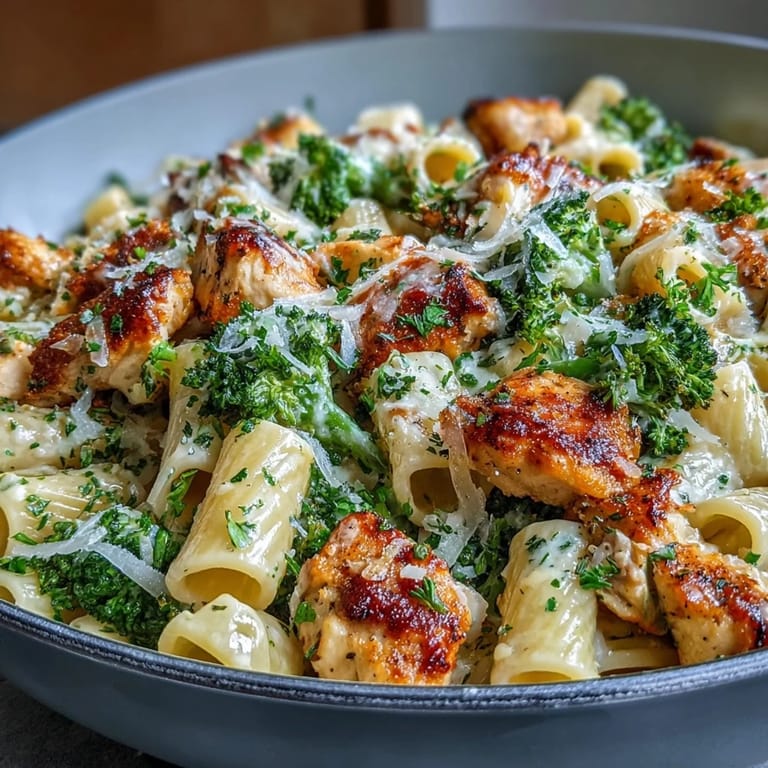 Save
Save My coworker Sarah brought leftovers to the office one day and three different people asked for the recipe, which somehow led to a spontaneous lunch club where we all made it the same week and compared notes like we'd discovered something ancient and secret. It wasn't the ingredients or the technique that mattered most to her; it was that it made her feel capable in the kitchen, and that's what cooking is really about.
Timing and Ingredient Prep
Mise en place sounds fancy but really just means having your chicken cut, garlic minced, and broccoli florets ready before you turn on the heat, because once the skillet is going, you won't have time to chop. I learned this the hard way my first time making this, when I was halfway through cooking and realized I'd forgotten to cut the chicken into pieces. Now I spend five minutes setting up, and the actual cooking feels calm and intentional instead of frantic.
Pasta Shapes and Sauce Adhesion
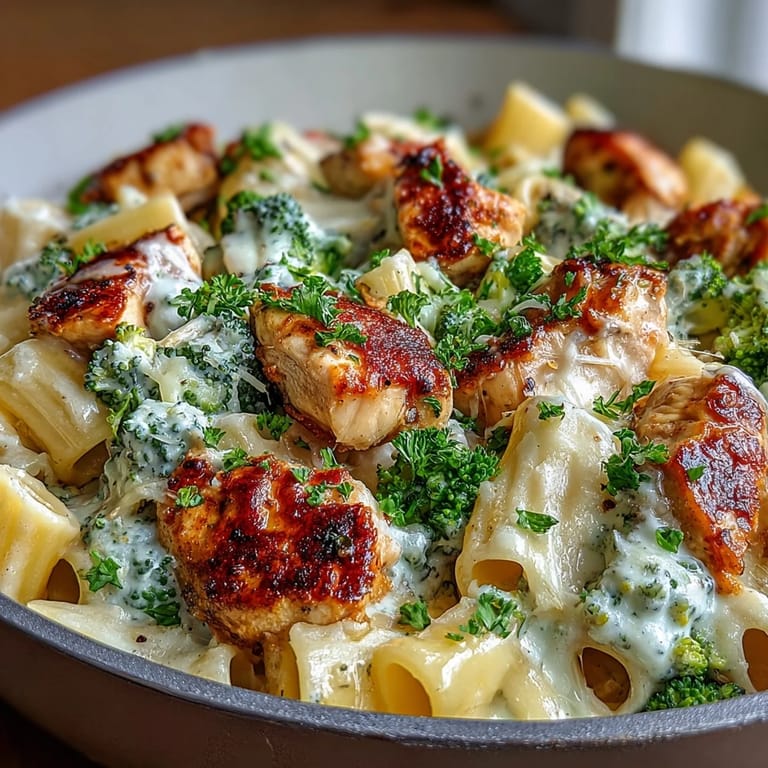
Penne and rigatoni have those little tubes and ridges that catch the sauce, so every piece of pasta comes out of the skillet tasting like it's been bathed in garlic and Parmesan rather than just coated. Rotini works too with its spirals, but if you use spaghetti or angel hair, the thin strands slip right through the sauce and you lose that richness. The shape matters more than people think, and it's usually worth choosing based on how the sauce will cling rather than just what's on sale.
Customization and Leftovers
This dish is forgiving enough that you can pull it in different directions depending on what you have in the fridge or what mood you're in. Add a squeeze of fresh lemon juice right before serving if you want brightness, or stir in sun-dried tomatoes for something unexpected, or use rotisserie chicken to save yourself fifteen minutes when you're too tired to cook. The leftovers reheat beautifully in a covered skillet over low heat with a splash of extra broth, and they taste somehow even better the next day when all the flavors have settled into each other.
- Make it vegetarian by skipping the chicken and using vegetable broth instead, which opens this up to more dinner guests than you might expect.
- If someone in your life needs gluten-free, pasta swaps in without changing a single other thing, and the sauce doesn't care what shape of noodle it coats.
- Fresh lemon zest or a handful of spinach stirred in at the very end brings a brightness that rounds out the richness and makes it feel less heavy.
 Save
Save  Save
Save This pasta has become the thing I make when I want to feel like I'm taking care of someone, whether that's myself on a rough day or someone who's had a week that needs softening. It's not fancy, but it tastes like attention.
Your Questions Answered
- → Can I use different pasta shapes?
Absolutely. Penne, rigatoni, and rotini work exceptionally well because their ridges and curves capture the creamy sauce effectively. Short pasta with tubes or twists are ideal, though macaroni or farfalle would also be suitable alternatives.
- → How do I prevent the sauce from becoming too thick?
If the sauce reduces too much while cooking, simply add small splashes of warm chicken broth or water. The liquid should mostly absorb, but you want enough remaining to create a silky coating rather than a dry dish.
- → Can I make this vegetarian?
Yes. Replace the chicken with additional vegetables like bell peppers, zucchini, or mushrooms. Substitute vegetable broth for the chicken broth, and consider adding cannellini beans or chickpeas for protein.
- → How do I store and reheat leftovers?
Store in an airtight container in the refrigerator for up to 3 days. Reheat gently over medium-low heat, adding a splash of milk or broth to restore creaminess. The pasta will absorb more liquid as it sits, so additional moisture helps maintain the desired consistency.
- → Can I use pre-cooked chicken?
Certainly. Rotisserie chicken or leftover cooked chicken works perfectly. Add it during the final few minutes of cooking just to warm through, which also prevents the meat from becoming dry or overcooked.
- → What can I serve alongside this dish?
A crisp green salad with vinaigrette provides a refreshing contrast to the rich pasta. Garlic bread or crusty Italian bread helps soak up any remaining sauce. For a lighter touch, roasted vegetables or a simple tomato salad complement the creamy flavors nicely.